Proudly serving Tempe, Mesa, Chandler, Scottsdale, Gilbert & surrounding areasCall or Text 24/7: +1 (480) 571-0856

Asphalt Paving and Maintenance Services Throughout Tempe, AZ

Tempe Asphalt provides residential driveway paving, commercial parking lot paving, and asphalt resurfacing throughout Tempe, Arizona. Our crews also handle seal coating, crack sealing, patching, striping, industrial paving, and scheduled maintenance. Each project is planned around the property's traffic, drainage, and existing pavement condition. We serve homes, businesses, HOAs, and public-sector paving needs across Tempe and Maricopa County.

Tempe pavement faces surface temperatures above 150 degrees, intense UV, caliche-heavy soil, and monsoon runoff. Those conditions can soften binder, open cracks, and let water weaken the aggregate base. We evaluate soil, drainage, load class, and existing distress before recommending repair, overlay, or reconstruction. That project-specific approach helps owners avoid a thin surface fix over a failing base.

Tempe Asphalt is a licensed and insured Valley contractor serving properties near Arizona State University, Tempe Town Lake, Priest Drive, South Tempe, and Kyrene. Request a free, itemized asphalt paving quote based on the base work, material, labor, and access your site requires.

5-star rating4.9/5 Average Rating - 20+ Years of Experience - Tempe Water Treatment Experts - Residential & Commercial
Asphalt Paving Services

Asphalt Services in Tempe, AZ

Choose the service that matches the pavement's structure, use, and current condition. Tempe Asphalt also serves nearby Mesa with the same assessment-led approach to base preparation, drainage, and paving.

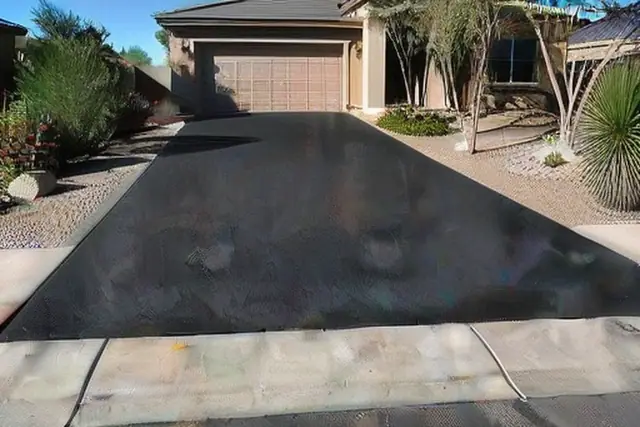
Residential Driveway Paving

Residential driveway paving in Tempe, AZ

We excavate as needed, compact an aggregate base course for the site, and place asphalt at a thickness suited to residential vehicle loads. Proper slope toward the street helps prevent pooling during summer storms.

Explore Service

Commercial Parking Lot Paving

Commercial parking lot paving in Tempe, AZ

Parking lots are designed around traffic volume, delivery-truck loads, drainage, and ADA-compliant striping. Thicker structural sections can be used where repeated truck traffic demands more support.

Explore Service

Asphalt Resurfacing & Overlays

Asphalt resurfacing & overlays in Tempe, AZ

When surface distress sits over a sound base, milling and overlay can avoid the cost of full removal. After failed areas are repaired, a new wear course is typically placed 1.5 to 2 inches thick.

Explore Service

Asphalt Seal Coating

Asphalt seal coating in Tempe, AZ

Sealcoat slows UV oxidation, resists gas and oil spotting, and restores a dark, maintained finish. Depending on traffic and sun exposure, the recommended cycle is every two to three years.

Crack Sealing & Patching

Crack sealing & patching in Tempe, AZ

Cracks are routed and filled with hot-pour rubberized sealant before water can reach the base. Pothole repairs use clean saw-cut edges, removal to sound material, and compacted hot mix placed in lifts.

Road & Municipal Paving

Road & municipal paving in Tempe, AZ

Municipal work follows Maricopa Association of Governments specifications and City of Tempe engineering standards for base depth, density, and material grade. Traffic-control planning supports projects aligned with the citywide road improvement program scheduled through 2028.

Industrial Asphalt Paving

Industrial asphalt paving in Tempe, AZ

Industrial sections are engineered for repeated axle loads from semis, forklifts, and loading equipment. Stiffer binder grades, stronger base sections, and careful drainage help limit rutting near loading docks.

Asphalt Maintenance Programs

Asphalt maintenance programs in Tempe, AZ

Custom cycles combine seal coating, crack sealing, and patching for HOAs, property managers, and municipal clients. Proactive care can extend pavement life well past the typical 15 to 20 years cited for unmaintained residential streets.

Parking Lot Striping

Parking lot striping in Tempe, AZ

Line painting can be completed with a paving project or as a standalone restriping service. Layouts account for ADA accessibility, curb ramps, circulation, and the local requirements applicable to the lot.

Asphalt Milling & Base Repair

Asphalt milling & base repair in Tempe, AZ

Milling removes a distressed surface so the underlying pavement can be evaluated before a new course is placed. Any failed base areas are addressed first to keep surface defects from returning through the overlay.

Project Planning

How to Choose the Right Asphalt Approach

The right scope depends on what is happening below the surface as much as what is visible on top. Because producer prices for asphalt paving mixture rose nearly 30% in 2025 before easing slightly, a clear assessment helps owners direct the budget toward the work the pavement actually needs.

Existing Base Condition

A sound base with surface distress may support an overlay, while soft or failed areas require removal and base repair. Covering structural failure with a new wear course only postpones the same problem.

Traffic & Load Class

Passenger vehicles, delivery trucks, semis, and forklifts place very different demands on pavement. The expected load class guides base depth, structural thickness, and binder selection.

Drainage & Grade

Slope must move monsoon water away from structures and prevent ponding on flat lots. Drainage is evaluated before paving because standing water accelerates base failure.

Asphalt Thickness

A standard residential section is often 2 to 3 inches when the base is properly compacted. RVs, boat trailers, and other heavier vehicles may call for 3 inches or more with a stronger base.

Mix & Material Specification

Aggregate, binder, filler, and material grade should match the pavement's use. Industrial areas may need a stiffer binder, while municipal work must also meet the applicable City of Tempe and regional specifications.

Access & Work Phasing

Retail lots and office properties may need construction sequenced in phases so operations can continue. Site access, cure time, and traffic routing are considered before the schedule is finalized.

Tempe Pavement Issues

Common Asphalt Problems for Local Properties

In this climate, unmaintained asphalt can show serious distress in half the time it might in a milder region. Heat, rapid temperature swings, monsoon water, soil movement, and heavy traffic can turn small surface defects into base failure.

Request a Pavement Assessment

Extreme Heat & UV Oxidation

Dark pavement in Tempe regularly exceeds 150 degrees in July. That heat softens asphalt binder while intense UV exposure oxidizes the surface and makes it more brittle.

Thermal Expansion & Cracking

Winter nights near the Salt River can dip below freezing, and temperatures can swing 40 degrees in a single day. Repeated expansion and contraction open cracks that grow under traffic.

Monsoon Water Intrusion

Storms can drop an inch of rain in under an hour during the July-through-September monsoon season. Water entering unsealed cracks can displace aggregate and speed the formation of potholes.

Caliche & Expansive Soil

Caliche-heavy and expansive soils do not drain or move like sandy loam. Base depth, compaction, and finished grade must reflect the actual soil found on the property.

Heavy-Load Rutting

Repeated loads from delivery trucks, semis, forklifts, and loading equipment can deform an undersized pavement section. Rutting is especially damaging where standing water collects near loading areas.

Delayed Crack & Surface Repair

Open cracks allow water to undermine the aggregate layer until a small defect becomes a pothole or base failure. Addressing the cause early is more practical than repeatedly patching the same weak area.

Why Choose Us

Why Choose Tempe Asphalt for Local Paving?

Paving in the Salt River Valley requires decisions shaped by local soil, heat, UV, and stormwater conditions. Tempe Asphalt explains the recommended base work, materials, thickness, drainage, phasing, and timeline before a contract is signed.

Tempe Climate Knowledge

Project planning reflects conditions around Tempe Town Lake, Downtown Tempe, Warner Ranch, Kyrene, Alameda, and the Rio Salado corridor. Local access, soil, drainage, and sun exposure help shape each scope.

Licensed & Insured Crews

Tempe Asphalt provides licensed and insured crews for residential driveways, commercial lots, industrial yards, and municipal paving. The team arrives with the equipment needed to carry the planned work through completion.

Clear Scope & Documentation

Bids explain base preparation, material specifications, and the expected sequence so owners can compare work line by line. Evaluating the base first helps avoid a surface patch that could fail in eighteen months, and documented compaction provides a clear record if questions arise later.

Simple Process

Our Asphalt Paving Process in Tempe

Every scope begins with the condition below the surface and ends with details that protect the finished pavement. The sequence is adjusted for the property, but the core steps keep drainage, density, and traffic needs in view.

01.

Site Assessment

We evaluate soil, drainage, existing pavement condition, intended vehicle loads, access, and any areas of visible base failure before recommending a scope.

02.

Demolition or Milling

Failed pavement is removed to sound material, or a distressed surface is milled when the base can support an overlay. Clean removal exposes conditions that need repair.

03.

Grading & Drainage

The site is graded and sloped to direct runoff away from structures and reduce ponding. This step is especially important for flat commercial lots during monsoon storms.

04.

Aggregate Base Compaction

An aggregate base course is installed and compacted to the specification appropriate for the soil and load. A stable base supports the asphalt and limits movement from caliche or expansive clay.

05.

Asphalt Lift Placement

Binder and surface courses are placed in controlled lifts, then compacted with steel-drum and pneumatic rollers. Standard testing targets 92% or higher of theoretical maximum density.

06.

Joints, Striping & Opening

The finish includes surface leveling, joint sealing, and striping where applicable. A residential driveway is often paved in a single day, while larger commercial lots may take several days including cure time before traffic returns.

Project Outcomes

Asphalt Results for Tempe Homes & Businesses

Case Study 1: Residential driveways: A compacted base, load-appropriate asphalt thickness, and slope toward the street create a cleaner finished surface with a planned route for stormwater.

Case Study 2: Commercial and industrial pavement: Load-based structural sections, phased access, drainage planning, and code-conscious striping support daily traffic without overlooking operational needs.

Case Study 3: Resurfacing and maintenance: Milling, base repairs, overlays, seal coating, and crack treatment preserve serviceable pavement before full reconstruction becomes necessary.

Plan Your Project

Request an Asphalt Paving
Quote

Tell us about the property type, current pavement concerns, traffic, and desired timing. Tempe Asphalt will assess the site and prepare a free, itemized quote covering base work, material, and labor.

Tempe Asphalt Answers

FAQs About Asphalt Paving in Tempe, AZ

Use these answers to compare paving, repair, resurfacing, maintenance, and scheduling options for a Tempe property. A site visit is still the best way to confirm base condition, drainage needs, thickness, and cost.

Call Tempe Asphalt

A 20x20 driveway covers roughly 400 square feet and typically costs between $1,800 and $3,200 installed in the Tempe market. The final amount depends on excavation, base compaction, asphalt thickness, and access. A site visit is needed to turn that range into a firm quote.

A 200-foot driveway is priced by total square footage, width, base preparation, grading, and asphalt thickness rather than length alone. Long runs may need more drainage work to move monsoon water away from the pavement. Tempe Asphalt provides an itemized quote after evaluating the site.

The terms are often used interchangeably, although blacktop technically describes an asphalt mixture with a higher stone-to-bitumen ratio and may include recycled material. Both use aggregate and binder, and both need protection from Tempe's UV exposure. The mix should be selected for the project's load and site conditions.

Two inches can be adequate for passenger vehicles when the underlying base is properly compacted. A typical residential section may be 2 to 3 inches, while RVs, boat trailers, or other heavier vehicles may require 3 inches or more with a stronger base. Soil and intended use should be assessed before thickness is specified.

Asphalt generally needs ambient and ground temperatures above 50 degrees for proper compaction, making Tempe's milder fall, winter, and spring months favorable. Peak summer paving is possible, but surface temperatures above 150 degrees require careful timing. The July-through-September monsoon season can also introduce sudden rain delays.

Seal coating is generally recommended every two to three years, depending on traffic and sun exposure. The coating slows UV oxidation, resists gas and oil spotting, and restores the dark surface. Cracks should be repaired before sealcoat is applied.

An overlay is a strong option when the pavement has surface distress but the underlying base remains sound. The existing surface is milled, isolated base failures are repaired, and a wear course typically 1.5 to 2 inches thick is placed. Widespread base failure usually calls for more extensive removal and reconstruction.

Open cracks give stormwater a direct route into the aggregate base. Tempe storms can deliver an inch of rain in under an hour, so small openings can quickly contribute to lost support and potholes. Routing and hot-pour rubberized sealing help close that path before wider failure develops.

A residential driveway is often paved in a single day once preparation is complete. Larger commercial lots may require several days because of removal, phasing, placement, striping, and cure time before reopening. The final schedule depends on project size, access, weather, and base repairs.

The process begins with assessment of soil, drainage, traffic, and existing pavement. It then moves through removal or milling, grading, aggregate base installation, asphalt placement in controlled lifts, and roller compaction. Surface leveling, joint sealing, and striping complete the work where applicable.

Yes. Tempe Asphalt handles commercial parking lots, industrial yards, municipal and road paving, resurfacing, repair, striping, and maintenance programs. Municipal work is planned around City of Tempe engineering standards and Maricopa Association of Governments specifications.

Service covers Tempe locations near Arizona State University, Downtown Tempe, Tempe Town Lake, South Tempe, Warner Ranch, Kyrene, Alameda, Priest Drive, and the Rio Salado corridor. The stated service area also extends to Mesa, Chandler, Scottsdale, Guadalupe, parts of Phoenix bordering Tempe, and broader Maricopa County projects.

Caliche-heavy and expansive soils can limit drainage and move beneath the pavement, so base depth, compaction, and grading matter. A thick surface over a weak base can still crack or rut. DIY patches or bargain paving can fail within a year or two when the base is not properly compacted or the asphalt is too thin for the soil.

Yes. Asphalt striping and line painting are available as a standalone service for lots that need restriping without full paving. The layout can account for ADA accessibility, curb ramps, circulation, and the applicable local requirements.

A scheduled cycle of crack sealing, patching, and seal coating can extend service life well past the typical 15 to 20 years cited for unmaintained residential streets. In Tempe's climate, professional installation and timely care can be the difference between pavement lasting about 20 years and serious failure in eight. The right interval depends on traffic volume, sun exposure, and current condition.