Asphalt Grading & Site Preparation
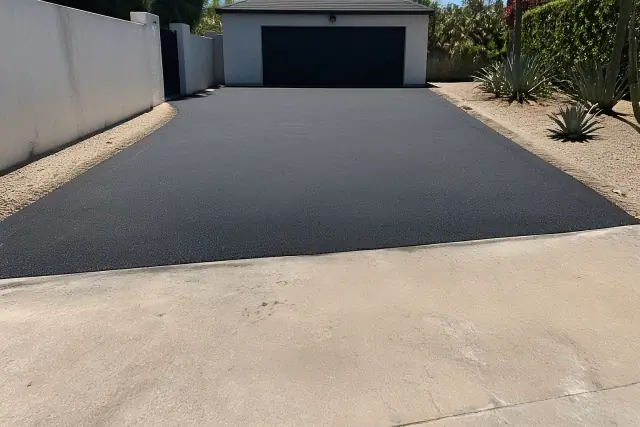
We grade and prepare asphalt sites by correcting elevations, drainage, subgrade, and aggregate base before paving begins.
Explore Service
Tempe Asphalt is a family-owned asphalt contractor serving residential and commercial properties across Tempe, Arizona. We handle asphalt installation, driveway paving, driveway repair and replacement, and commercial parking lot paving and repair. Our crews also provide seal coating, crack filling, pothole repair, overlays, resurfacing, patching, striping, and line painting. Each project receives site-specific base preparation and compaction rather than a one-size-fits-all approach.
Exposed pavement in Tempe regularly exceeds 150 degrees, while short, intense monsoon rainfall can saturate base material over expansive desert clay. Those conditions accelerate oxidation, cracking, rutting, and structural failure when drainage or compaction falls short. Tempe Asphalt is licensed, bonded, and insured under Arizona Registrar of Contractors requirements and builds to Maricopa Association of Governments specifications. We walk the property before providing a free, itemized estimate so the recommendation reflects slope, soil, access, and existing base condition.
We coordinate residential and commercial work around the property's access, drainage, and use. Call Tempe Asphalt to discuss paving, repair, resurfacing, or a maintenance plan for your driveway or parking lot.
Tempe Asphalt Standards
From new driveways to active commercial parking lots, Tempe Asphalt matches the pavement section, repair method, and maintenance approach to the site's traffic, drainage, soil, and access conditions.
We grade and prepare asphalt sites by correcting elevations, drainage, subgrade, and aggregate base before paving begins.
Explore Service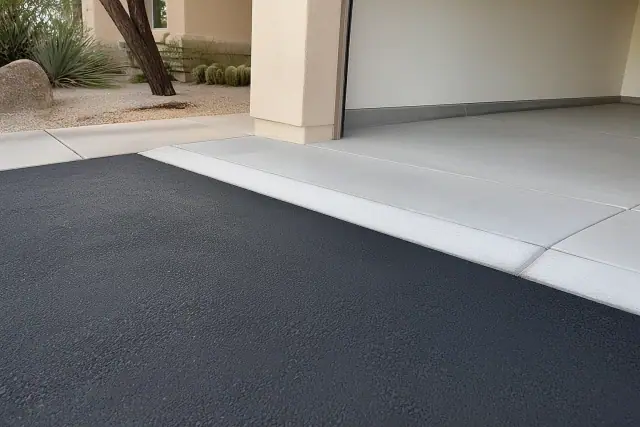
We address cracks, potholes, failed edges, drainage damage, and isolated base failure with the repair method appropriate to the pavement's condition. Maintenance planning helps correct small defects before traffic and monsoon water turn them into larger structural repairs.
Explore Service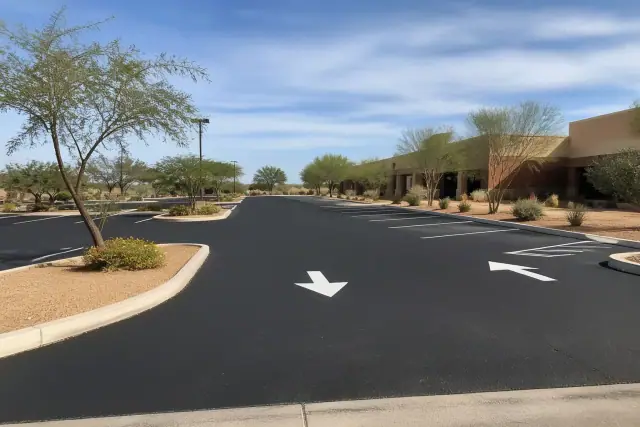
Parking lots require pavement sections designed for traffic volume, loading areas, turning movements, drainage, and accessible routes. We plan the work in practical phases so entrances, tenant access, and deliveries can remain coordinated during construction.
Explore Service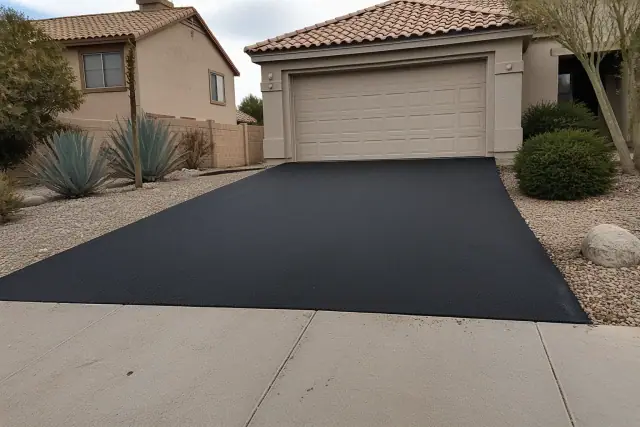
Driveway installation starts with the property's slope, soil, equipment access, and drainage constraints. We prepare and compact the base, place the specified asphalt section, and roll the surface while the mix remains within its workable temperature range.
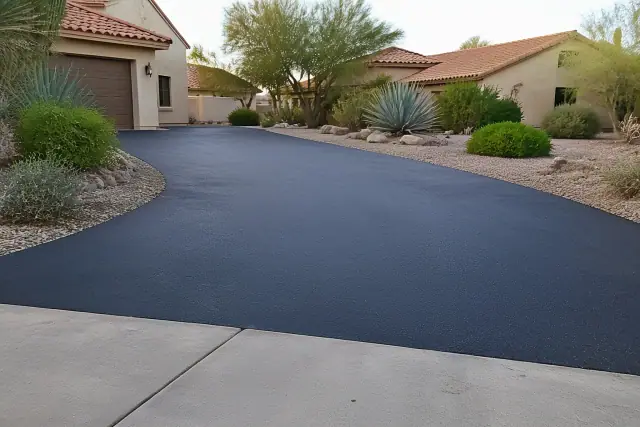
Where the underlying pavement remains structurally sound, resurfacing places a new asphalt layer over the prepared surface. We evaluate cracking, rutting, drainage, elevations, and base condition first so an overlay is recommended only where it can perform as intended.
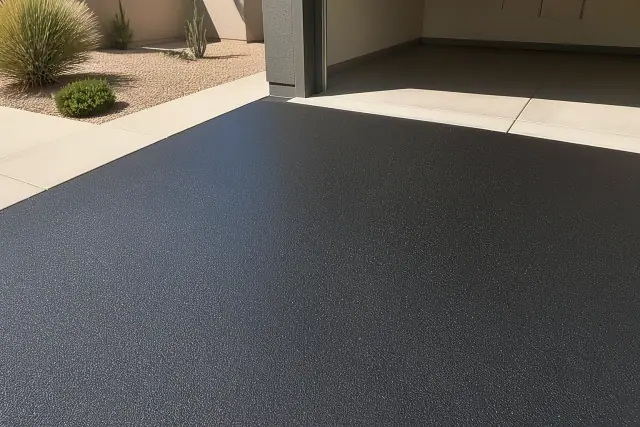
Seal coating limits UV penetration that dries and embrittles asphalt binder. It also helps the surface resist the oil and fuel exposure common on Tempe driveways and parking lots.
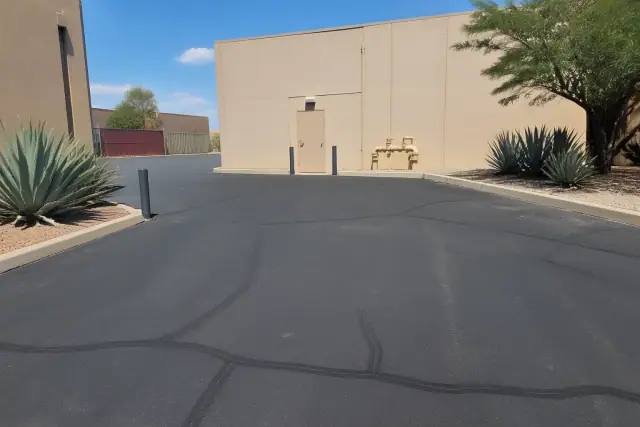
Cracks under a quarter inch may look cosmetic but still admit water into the base course. We use hot-pour rubberized crack filler that flexes with pavement movement instead of a cold-pour product likely to crack out again in one summer.
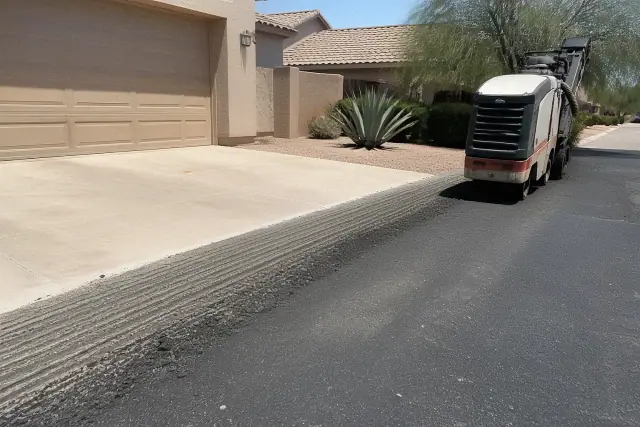
Milling removes a controlled depth of worn asphalt before an overlay or grade correction. It creates clean transitions at curbs, drains, entrances, and adjoining pavement while preserving suitable material below the planned cut depth.
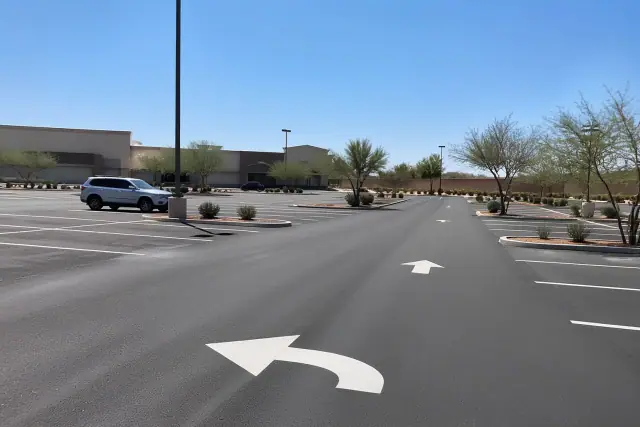
Commercial paving is planned around vehicle loads, service traffic, site access, drainage, and construction phasing. We coordinate the pavement section and work sequence with the property's operating requirements before equipment arrives.
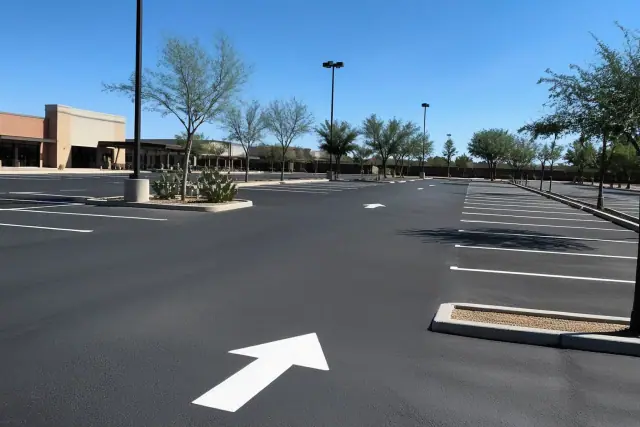
Clear striping organizes stalls, traffic flow, fire lanes, loading areas, and accessible parking. We prepare the pavement and lay out markings to match the approved lot plan before applying the specified traffic paint.
Durable asphalt in Tempe depends on what happens beneath the surface, which mix is selected, how the property is used, and how the finished pavement is maintained through desert heat and monsoon rainfall.
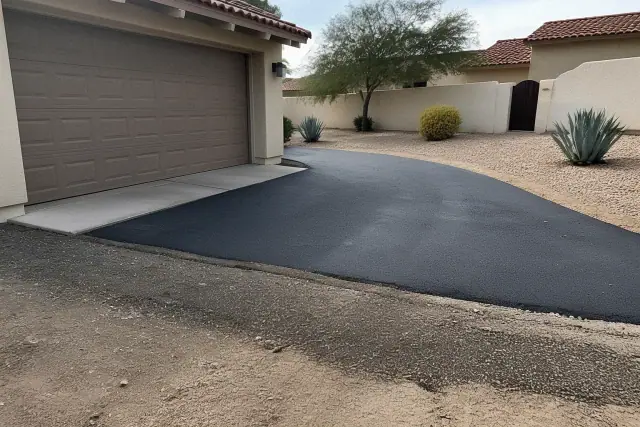
Tempe's flat topography and clay-heavy soils require a grading and drainage plan that directs monsoon runoff away from foundations and building entries. Base preparation is adjusted to the lot instead of copied from a generic detail.
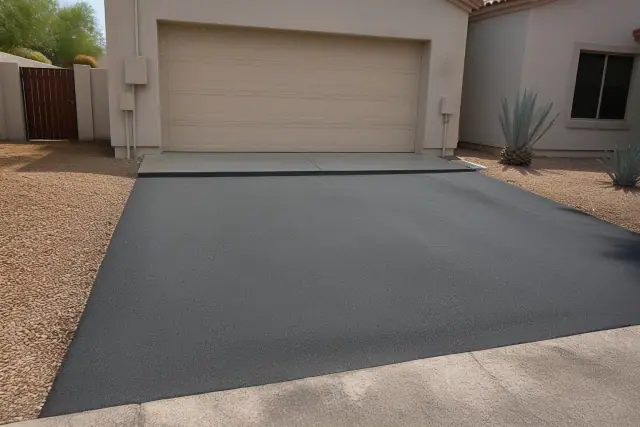
We source hot mix from Valley plants using current Superpave designs and specify crumb-rubber-modified binder where appropriate. With paving-mixture producer prices up roughly 30% industry-wide in 2025, early material sourcing supports a firm, itemized estimate.
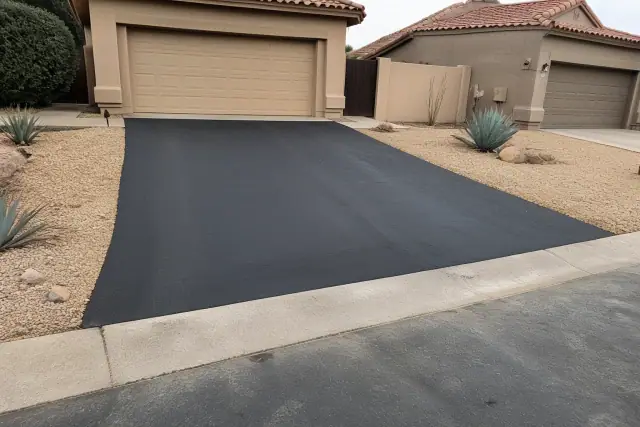
Older neighborhoods near downtown can have driveways below street level, while new construction in south Tempe may involve HOA drainage requirements. We design residential pavement around the individual property's slope, soil, and access.
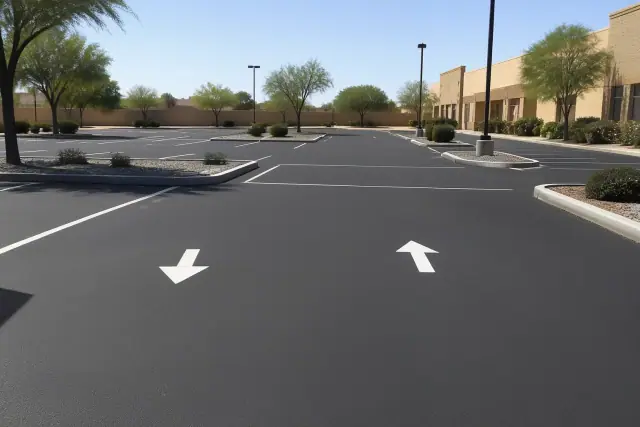
Parking lots must carry daily traffic without unnecessarily closing access for tenants, customers, or deliveries. Our planning covers structural demand, site logistics, local permitting, striping, and ongoing maintenance.
Serving a city of over 180,000 residents means working across post-war neighborhoods, new construction, retail properties, and office lots. Tempe Asphalt brings the same specification-driven base preparation and local site knowledge to residential and commercial projects.
Tempe Asphalt operates under Arizona Registrar of Contractors requirements and is fully insured and bonded. We also account for Maricopa County Air Quality Department dust-control requirements during excavation and haul-off.
We build residential and commercial pavement to Maricopa Association of Governments specifications and control excavation, base placement, and compaction in-house. That discipline can be the difference between a driveway that lasts 13 years and one that lasts 25.
Our Tempe-based team has worked on driveways and commercial lots around McClintock, Rural Road, Kyrene, Southern Avenue, the Elliot Road corridor, and the Tempe Marketplace area. That local experience informs subgrade treatment, drainage, inspection expectations, and project scheduling.
Heat, UV exposure, monsoon water, and moving clay soils can turn a small surface defect into base failure. An on-site assessment helps distinguish maintenance needs from isolated repair or full-depth reconstruction.
Request Free AssessmentSustained desert heat softens binder, while UV exposure dries it out over time. The result can be brittleness and raveling as loose aggregate begins lifting from the surface.
Short, intense downpours can send water through open cracks and into the base. Once saturated aggregate and subgrade lose support, potholes and depressed pavement can form quickly under traffic.
Clay-heavy subgrades change as moisture conditions shift, stressing the pavement above. Where the soil will not hold properly, correction may include additional excavation or lime treatment before base material is placed.
Oil, transmission fluid, and gasoline break down asphalt binder on contact. Affected pavement can soften under tire loads, so the damaged material should be removed and tied back into sound asphalt rather than covered with a thin skim coat.
Ruts and interconnected alligator cracks often point to inadequate density, weak base material, or failure below the surface. Covering them without correcting the structural cause only postpones the same problem.
Tempe's flat lots do not always shed water naturally. Incorrect grade can leave runoff ponding near building entries or soaking through pavement seams, so slope must be addressed before new asphalt is placed.
The right repair or paving plan starts below the visible surface. We evaluate the site, correct drainage and support problems, control placement and compaction, and leave the owner with a climate-appropriate maintenance plan.
We inspect existing pavement, access, slope, drainage, cracking, rutting, and visible base concerns before preparing the free estimate.
The design sets slope, pavement thickness, and runoff direction so monsoon water moves away from foundations and building entries.
Crews remove failed pavement and unsuitable material to the planned depth, then address weak clay subgrade with additional correction or lime treatment where needed.
Aggregate base course is installed and compacted to specification so the asphalt above has stable, load-bearing support.
Hot-mix asphalt is placed in the specified lift or lifts and rolled to target density before it drops below workable temperature.
We check grade, slope, seams, and the completed surface, then explain the seal coating and crack-filling schedule suited to Arizona exposure.
Tempe Asphalt serves driveways, parking lots, retail properties, office sites, and new construction across the city, including the neighborhoods, landmarks, roads, and commercial corridors named below.
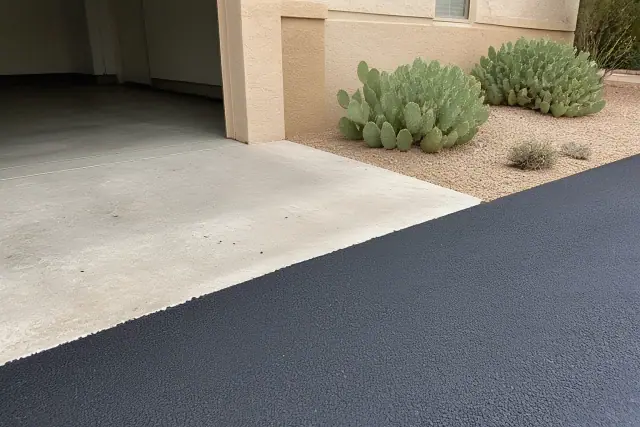
Tell us whether you are planning new paving, repairing failed areas, evaluating an overlay, or organizing ongoing maintenance. Tempe Asphalt will walk the property and prepare a free, itemized estimate based on its actual base, drainage, access, and use.
These answers cover Tempe driveway pricing, Arizona paving conditions, maintenance, repair choices, and local project planning. A site visit is still needed to confirm base condition, access, drainage, and the right structural section.
Call Tempe AsphaltA 20x20 driveway is 400 square feet and typically costs between $1,600 and $3,200 installed in the Tempe area. Asphalt generally runs $3 to $5 per square foot, depending on base condition, excavation needs, thickness, equipment access, and material delivery. We walk the site before quoting because identical-size driveways can require very different subgrade work. Pricing is locked at the time of contract to avoid mid-project material surprises.
Yes. The Arizona Department of Transportation uses rubberized asphalt on many highway paving projects, incorporating recycled crumb rubber into the binder for a smoother, quieter surface and added resistance to temperature extremes. Similar rubberized formulations can be appropriate for Tempe driveways and lots with full desert sun exposure.
A 200-foot driveway costs more overall than a small pad because it requires additional excavation, aggregate base, paving footage, haul-off, and equipment access. Width and existing subgrade condition also change the total. Tempe Asphalt provides a written, itemized estimate after an on-site visit rather than quoting from length alone.
Hot-mix asphalt generally needs ambient and surface temperatures above 50 degrees Fahrenheit to compact and bond properly. Below that point, the mix can cool too quickly to reach adequate density. Tempe winter daytime temperatures usually remain above that threshold.
Fifty degrees is close to the practical minimum, so success also depends on ground temperature, wind, delivery timing, and how quickly the mix can be compacted. We monitor air and surface temperature before scheduling placement. Tempe's climate usually permits a nearly year-round paving season.
Tempe 311 is the city's non-emergency service request line and online portal for public issues such as street potholes and drainage concerns. Private driveways, parking lots, and other property-owned pavement fall outside that public-road scope and require a contractor directly.
Tempe's noise ordinance generally restricts construction-related noise during nighttime hours, which is especially relevant for residential paving. We plan crews and equipment deliveries around those local restrictions while moving the project from excavation through final compaction.
We recommend seal coating every 2 to 3 years in Tempe to limit UV oxidation and keep the surface from becoming brittle. Commercial lots also benefit from annual crack sealing so openings do not admit monsoon water into the base.
An overlay makes sense when the existing asphalt has a worn surface but the underlying base remains sound. We use core samples, rutting depth, and cracking patterns to evaluate that condition. Resurfacing over a failed base can move the problem forward only a year or two, so full-depth removal and reconstruction is more appropriate when cracking reaches the structure below.
A properly installed and maintained residential driveway in this climate can last 15 to 20 years. Scheduled seal coating and prompt crack filling are key variables; they can help a driveway reach 20 years instead of needing replacement at 10.
Intense heat and UV exposure age the binder, while monsoon water enters openings and weakens the base over moving clay soil. That combination can turn a surface flaw into structural cracking. Flexible hot-pour crack filler helps close suitable cracks before more water reaches the base.
Yes. Tempe Asphalt can divide repair work into sections and schedule night or off-peak activity where needed so parking, customer access, and deliveries continue. The sequence is planned around failed areas, traffic flow, and the property's operating needs.
New base material is needed when moisture or traffic has compromised support beneath the pothole. We cut back to a clean square edge, remove failed material, rebuild the base as needed, and compact fresh mix in lifts. Dumping cold patch into a wet hole does not correct that loss of support.
Professional installation is a layered process: site grading and drainage design, excavation, subgrade correction, aggregate base placement, and hot-mix asphalt compaction. Each lift must reach the required density before it cools. Skipping those steps increases the risk of premature rutting and alligator cracking.