Proudly serving Tempe, Mesa, Chandler, Scottsdale, Gilbert & surrounding areasCall or Text 24/7: +1 (480) 571-0856

Asphalt Repair, Crack Filling, and Pavement Maintenance Services in Tempe, AZ

Tempe Asphalt provides asphalt repair and maintenance for homeowners, businesses, and property managers in Tempe, Arizona. Our work includes crack filling and sealing, pothole and full-depth patching, sealcoating, driveway resurfacing, parking lot maintenance, line striping, and asphalt overlays. We also repair private roads and access drives where heat, traffic, and water have worn the surface. Each recommendation begins with a pavement inspection to match the repair method to the condition.

Tempe pavement surface temperatures regularly climb past 150 degrees Fahrenheit, accelerating oxidation and leaving asphalt brittle. Monsoon downpours can then drive water through open cracks and into the base course. We distinguish surface-level thermal or reflective cracking from binder-layer and base-course failure so the repair addresses the actual problem. As a licensed and insured Arizona contractor, we prepare a clear scope of work before starting.

Permanent repairs use hot mix asphalt, while cold patch asphalt can stabilize emergency damage when immediate access is needed or hot mix plants are not running. Overlay work includes a tack coat between the old surface and new wearing course, with work guided by Maricopa Association of Governments standard specifications referenced by Valley municipalities, including the City of Tempe.

Tempe Asphalt provides asphalt repair and maintenance throughout Tempe, Mesa, Chandler, Scottsdale, and the greater Phoenix metro area.

★ ★ ★ ★ ★4.9/5 Average Rating · 20+ Years of Experience · Thousands of Customers Helped · Licensed & Insured · Residential & Commercial

Asphalt Repair Options & Benefits

What Is Asphalt Repair & Maintenance?

Asphalt repair corrects localized damage such as open cracks, potholes, crumbling edges, and failed pavement sections. The right method depends on whether deterioration is limited to the wearing course or extends through the binder layer into the base course.

Maintenance slows the cycle that turns flexible black pavement into a gray, brittle surface. Crack sealing, surface cleaning, sealcoating, drainage checks, and timely patching help keep water away from the structural layers below.

A complete pavement plan can combine small repairs with resurfacing, line striping, or commercial lot work. This lets driveways, parking lots, private roads, HOA streets, and industrial access areas receive a method suited to their traffic and condition.

Benefits of Timely Asphalt Maintenance

Preventive work addresses small defects before heat, water, and traffic turn them into structural failures. It also gives property owners a clearer basis for deciding between sealing, patching, resurfacing, and replacement.

  • Blocks water pathways into the base course
  • Slows UV-driven oxidation and surface brittleness
  • Reduces the need for more extensive full-depth repairs
  • Supports a 20- to 30-year lifespan for a well-maintained driveway, while neglected pavement may need replacement in half that time
  • Restores a finished black surface and improves curb appeal
  • Keeps parking and access areas easier to navigate
  • Refreshes stall lines, fire lanes, and accessible markings
  • Creates a documented scope for budgeting and scheduling
Asphalt Repair Services

Complete Asphalt Repair & Maintenance

From a single open crack to widespread lot deterioration, the repair should match the depth, cause, and traffic demands of the damage. Our Tempe services cover targeted repairs, preventive surface care, resurfacing, and commercial pavement needs.

Crack Filling & Sealing

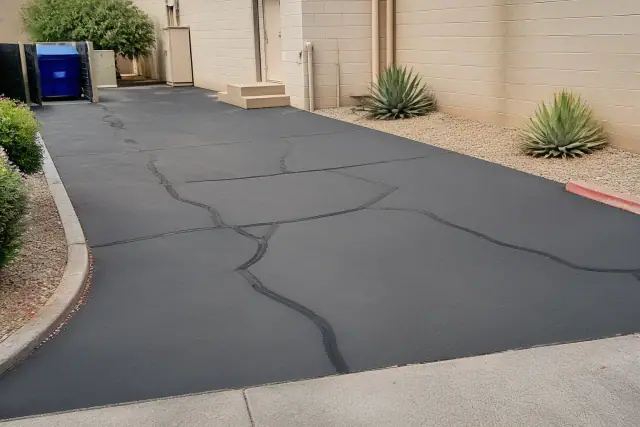
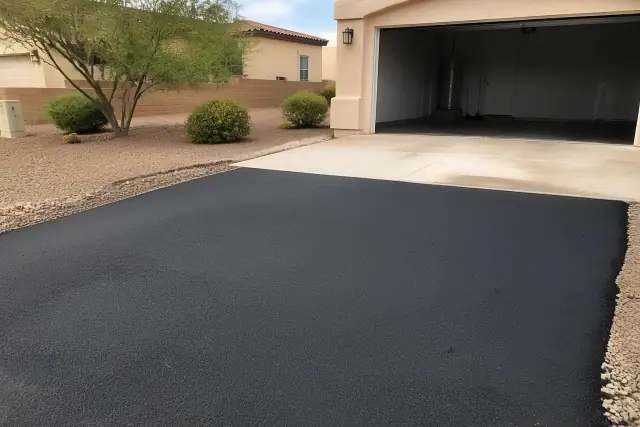
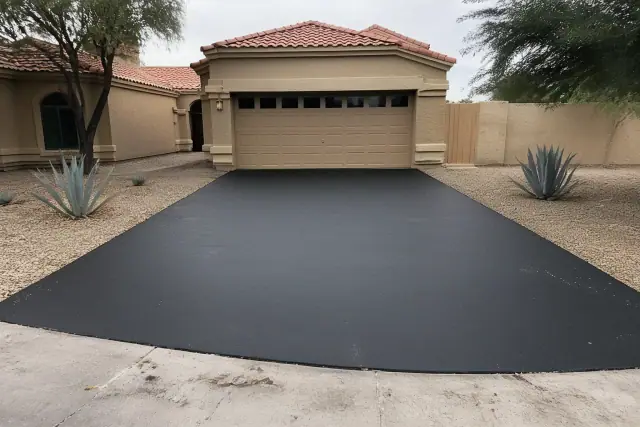
Freshly sealed asphalt cracks on a residential driveway in Tempe, AZ.

We assess whether cracking is thermal, reflective, or connected to deeper failure before choosing a treatment. Suitable cracks are routed into a clean reservoir, cleared of debris, and sealed with hot-applied rubberized material that flexes with temperature change.

Request Estimate

Pothole & Full-Depth Patching

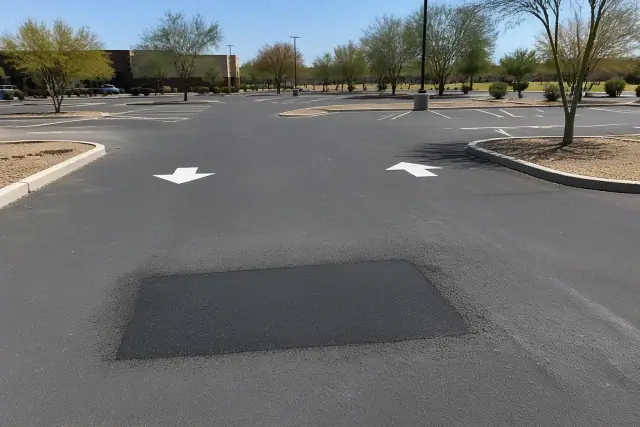
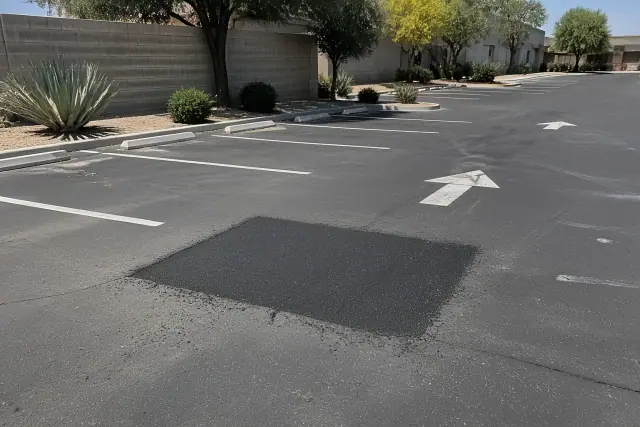
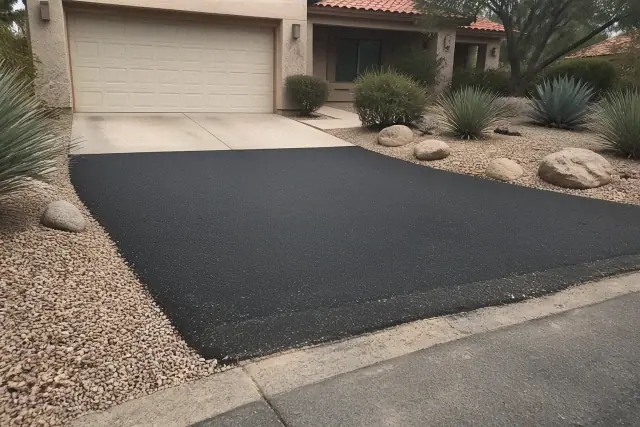
Pothole & full Depth patching in Tempe, AZ

For potholes and failed sections, we remove deteriorated material down to solid base rather than applying a surface skim. The base is prepared and compacted before new hot mix asphalt is placed in lifts, addressing the structural weakness beneath the visible hole.

Request Estimate

Sealcoating & Preventive Maintenance

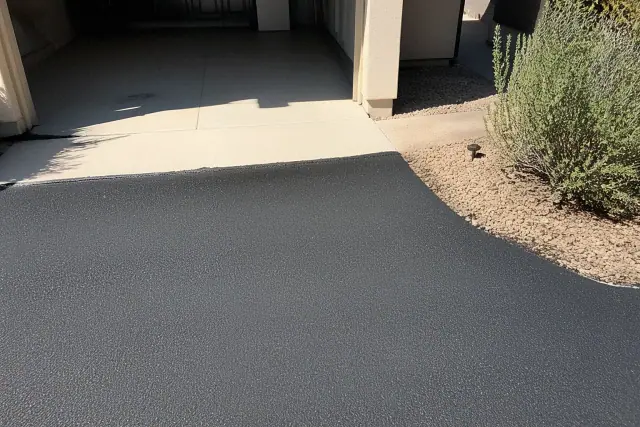
Sealcoating & preventive maintenance in Tempe, AZ

Sealcoating protects the wearing course from intense UV exposure and slows oxidation. A maintenance visit can also include crack sealing, removal of oil and chemical spills, drainage checks, and planning for seasonal surface care.

Request Estimate

Asphalt Resurfacing & Overlays

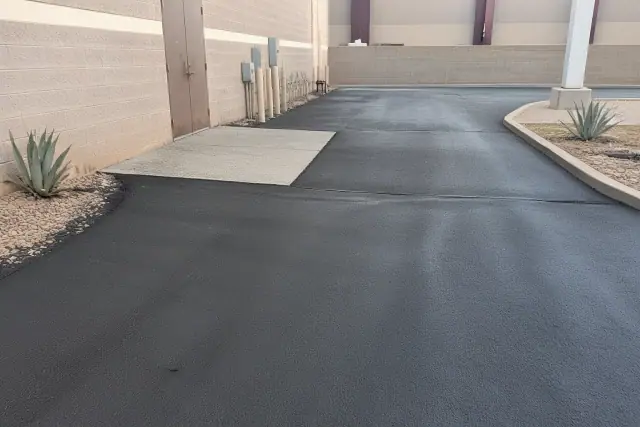
Asphalt resurfacing & overlays in Tempe, AZ

When the existing pavement remains structurally sound but surface failure is widespread, an overlay can renew the wearing course without a full tear-out. Preparation includes cleaning, isolated base repair, drainage review, and a tack coat that bonds the old and new asphalt layers.

Request Estimate

Parking Lot Repair & Line Striping

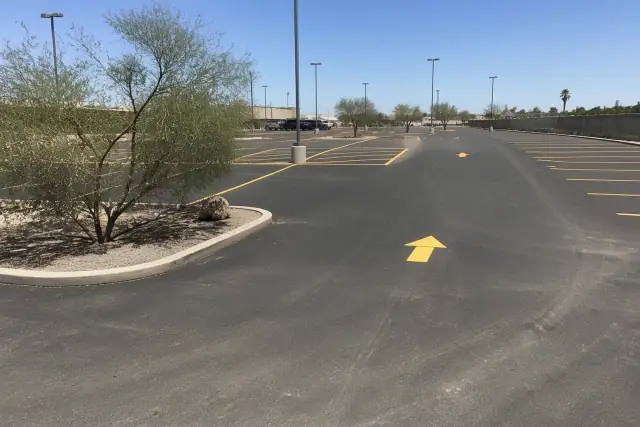
Parking lot repair & line striping in Tempe, AZ

Commercial maintenance can combine pavement condition assessment, pothole repair, resurfacing, and fresh striping. We address parking stalls, fire lanes, van-accessible aisles, routes, and signage placement according to applicable Americans with Disabilities Act requirements and Tempe specifications.

Request Estimate

Driveway, Road & Industrial Repairs

Driveway, road & industrial repairs in Tempe, AZ

Repair plans are available for residential driveways, private roads, HOA streets, access drives, and industrial pavement. Structural sections are selected for the expected load, from passenger vehicles to repeated trucks, trailers, deliveries, and equipment.

Request Estimate
Repair & Maintenance Options

Types of Asphalt Repair & Maintenance Options

The most useful repair plan separates surface preservation from structural correction. These options show how the material, preparation, and service scope change with the type of pavement failure.

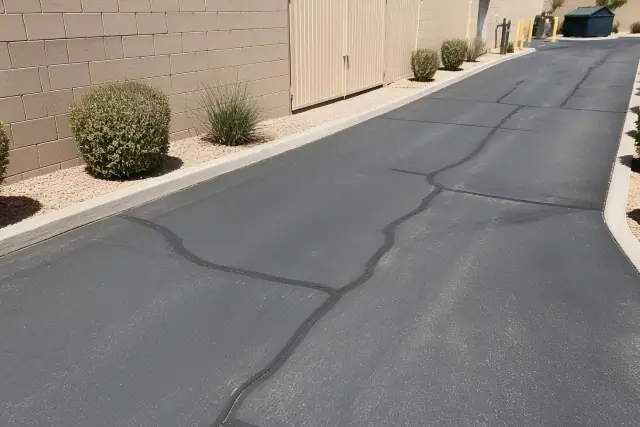
Crack sealing & small Damage repair in Tempe, AZ

Crack Sealing & Small-Damage Repair

Open cracks are direct pathways for water into the base course. Timely sealing keeps a surface-level defect from developing into a full-depth patch or resurfacing need.

  • Crack routing creates a clean sealant reservoir
  • Debris is blown clear before material is applied
  • Hot rubberized sealer bonds to the crack walls and flexes with temperature change
  • Cold-pour fillers can shrink and fail within a year in Tempe's heat
  • Small holes receive patch material only after their depth and base condition are checked
Request Estimate
Full Depth asphalt patching in Tempe, AZ

Full-Depth Asphalt Patching

Potholes form after water reaches and saturates the base, allowing the wearing course to collapse under vehicle weight. Full-depth patching removes the failed structure and rebuilds it from stable material upward.

  • Failed asphalt is cut out to solid base
  • Base material is prepared and compacted before paving
  • Hot mix asphalt is placed and compacted in lifts for permanent repairs
  • Cold patch asphalt can stabilize emergency damage until permanent work is scheduled
  • Storm damage, sinkholes, and utility cuts receive a damage assessment before repair
Request Estimate
Sealcoating & surface care in Tempe, AZ

Sealcoating & Surface Care

Sealcoating protects residential driveways and commercial lots from UV damage while slowing the oxidation that makes asphalt gray and brittle. Preparation and crack repair are part of an effective surface-care plan.

  • Fill open cracks before coating the surface
  • Remove oil and chemical spills that can break down the binder
  • Prioritize protection before peak summer heat
  • Check existing cracks after warm days and cooler winter nights
  • Restore a uniform black finish for curb appeal
Request Estimate
Overlay resurfacing in Tempe, AZ

Overlay Resurfacing

When cracking and surface failure cover more than 20 to 30 percent of a driveway or lot, continued patching often stops making financial sense. A typical overlay adds a new wearing course 1.5 to 2 inches thick over pavement that remains structurally sound.

  • Confirm the existing base course and binder layer can support an overlay
  • Clean the surface and cut out isolated base failures
  • Check that drainage slopes have not changed
  • Apply tack coat across the existing surface to prevent delamination that can appear within a year or two when bonding is skipped
  • Use recycled asphalt pavement or millings as a leveling course where appropriate
Request Estimate
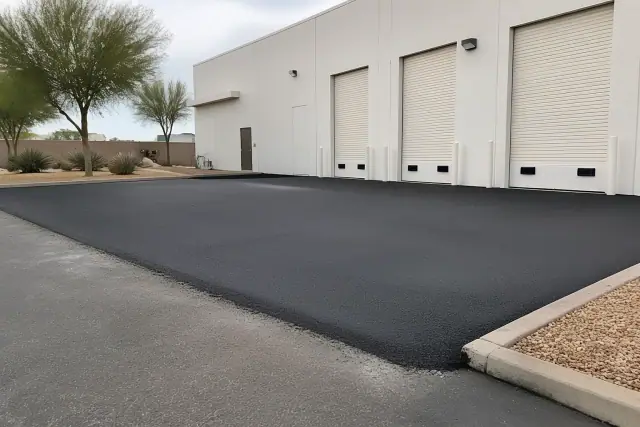
Commercial & heavy Duty pavement in Tempe, AZ

Commercial & Heavy-Duty Pavement

Commercial and industrial pavement requires attention to repeated wheel paths, heavier point loads, active-site access, and safety markings. The repair scope should reflect how the property is used rather than treating every lot like a residential driveway.

  • Assess pavement condition across the full lot instead of only visible potholes
  • Plan around concentrated traffic loading and delivery routes
  • Coordinate milling, base repair, and overlay work to limit disruption
  • Size base, binder, and wearing courses for passenger or truck traffic
  • Use tighter compaction tolerances for industrial loads
Request Estimate
A Repair Plan That Fits

Why Tempe Asphalt for Asphalt Repair

A lasting repair starts by identifying the failed layer, preparing the material below it, and documenting the work before placement begins. That approach helps avoid paying for a cosmetic fix where structural correction is needed or rebuilding pavement that can still be preserved.

Detailed Pavement Assessment

We inspect cracks, holes, crumbling, drainage, and traffic patterns to determine whether damage is surface-level, reflective from an old joint, or structural. Commercial lots can also be evaluated with a pavement condition index approach to prioritize work across the property.

Base Preparation and Compaction

A durable patch depends on solid base material and compaction to the right density, not only the asphalt visible at the surface. We prepare failed areas, place material in appropriate lifts, and confirm compaction for the planned traffic load.

Clear Scope and Local Standards

As a licensed and insured Arizona contractor, we provide a clear scope before work begins and explain why the selected method fits the pavement. Repair and paving work follows Maricopa Association of Governments standard specifications referenced by the City of Tempe and other Valley municipalities.

Know the Warning Signs

Common Asphalt Problems We Repair

Cracks, potholes, loose edges, faded markings, and separating overlays point to different causes and require different fixes. An inspection shows whether maintenance can preserve the surface or whether damaged material and base course must be rebuilt.

Request a Free Quote

Heat and Oxidation Cracking

Sustained summer heat and UV exposure bake binder out of the wearing course, turning flexible asphalt brittle and gray. Daily temperature swings then stress the aged surface and open thermal cracks.

Monsoon Water Intrusion

Monsoon rain can enter cracks that formed during the dry season and saturate the base course beneath the surface. Standing water and changed drainage slopes accelerate the same failure process.

Potholes and Base Failure

Once water weakens the base, vehicle weight can collapse the wearing course and form a pothole. A surface skim does not restore that support; failed material must be removed and the base compacted before patching.

Crumbling Driveway Edges

Driveway edges lack the lateral support found in the center and absorb tire loading during turns. Rebuilding damaged edge sections against properly compacted adjacent base helps stop erosion from moving inward.

Faded Safety Markings

Faded stall lines and fire lanes create confusion, slow traffic flow, and can leave a property out of alignment with its approved site plan. Accessible stalls, van-accessible aisles, routes, and signage also require correct layout and placement.

Overlay Separation

A new wearing course can slide or peel away when it is placed over old asphalt without a complete tack coat. Cleaning, base-failure patching, and liquid asphalt emulsion help the layers act as one pavement section.

How It Works

Our Asphalt Repair & Maintenance Process

The process moves from visible symptoms to the pavement layers beneath them, then matches preparation and materials to the diagnosed condition. You receive a defined scope before work starts and maintenance guidance suited to the finished repair.

01.

On-Site Pavement Inspection

We walk the driveway, lot, road, or access area to locate cracks, potholes, crumbling, drainage concerns, worn markings, and traffic-loading patterns.

02.

Condition and Failure Assessment

We determine whether deterioration is limited to the surface, reflects through an old joint, reaches the binder layer, or indicates a failed base course.

03.

Written Repair Scope

The scope identifies whether crack sealing, patching, sealcoating, resurfacing, striping, or reconstruction fits the condition and explains what will be done before work begins.

04.

Surface and Base Preparation

Crews clean the work area, route cracks or remove failed asphalt as needed, stabilize the base, and correct isolated damage before new material is placed.

05.

Material Placement and Compaction

The selected hot mix, cold patch, rubberized sealer, tack coat, or wearing course is installed for its intended role, with lifts compacted to the required density.

06.

Maintenance Guidance

We explain how crack response, surface cleaning, sealcoating, drainage checks, and seasonal planning can protect the repaired pavement from the next heat and monsoon cycle.

Plan Your Pavement Repair

Request an Asphalt
Repair & Maintenance
Quote

Tell us about cracks, potholes, crumbling, faded striping, or widespread surface wear at your Tempe property. We will walk the pavement with you, explain the recommended approach, and provide a free asphalt quote before work begins.

Asphalt Repair Help

Asphalt Repair & Maintenance FAQs

These answers cover repair costs, maintenance timing, resurfacing decisions, materials, and common pavement problems in Tempe. A property inspection is still the best way to separate a surface defect from base-course failure.

Call Tempe Asphalt

Crack repair typically costs $1 to $3 per linear foot, and a full driveway crack-sealing job generally runs $100 to $400 depending on total footage and severity. Larger pothole or crumbling-section repairs typically cost $2 to $5 per square foot, with most patch jobs ranging from $250 to $800. We provide a written estimate after walking the property because damage depth and access affect the final price.

Yes, when the base underneath remains structurally sound. Small crumbling spots and quarter-sized holes or smaller may be filled with quality crack filler and patch material, while larger areas require the deteriorated asphalt to be cut out and replaced with compacted hot mix. Widespread aged-binder failure may call for a patch-and-seal plan or an overlay.

Fill cracks as soon as they appear, clean oil and chemical spills that can break down the binder, and check drainage for standing water. Residential driveways and commercial parking lots generally need sealcoating every two to three years to protect against intense UV exposure. Seasonal checks before peak heat and after monsoon weather help catch new damage.

Yes, when the existing pavement is properly prepared and structurally sound. A thin tack coat of liquid asphalt emulsion is applied across the old surface before the new wearing course is placed, bonding the layers together. Skipping that step can allow the overlay to slide or peel away.

Tempe 311 is the City of Tempe's non-emergency service request line and information system. Residents can use it to report street potholes, damaged public pavement, and other city infrastructure concerns. Private driveway and parking lot repairs are separate from public right-of-way reports.

A properly installed crack seal can hold for several years before reapplication is needed, while a full-depth patch with correct base compaction can last as long as the surrounding pavement. Longevity depends on whether the work corrected the failed layer or covered only the visible symptom. Ongoing crack response, drainage care, and surface maintenance also matter.

A pavement condition index, or PCI, is a numeric score used to describe the surface and structural condition of asphalt. It helps property owners and municipalities prioritize maintenance and repair spending. A similar full-property assessment can show whether patching, sealcoating, or an overlay offers the better value for a private driveway or commercial lot.

Resurfacing becomes the better option when cracking and surface failure are widespread but the underlying base and binder layer remain sound. Repeated spot patches on a broadly deteriorated wearing course can stop making financial sense. An inspection should still identify and repair isolated base failures before the overlay is placed.

Hot mix asphalt is used for permanent repairs after the failed material and base have been prepared. Cold patch asphalt is useful for emergency stabilization when a damaged area must be made accessible quickly or hot mix plants are not running. A permanent repair can then be scheduled for the stabilized section.

Potholes develop when water enters open cracks, saturates the base course, and weakens the support beneath the wearing course. Vehicle weight then collapses the unsupported surface. Tempe's combination of heat-driven cracking and sudden monsoon water creates that damaging cycle.

Hot-applied rubberized sealer bonds to prepared crack walls and flexes as pavement temperatures change. Routing and cleaning the crack first creates a reservoir for the material. Cold-pour fillers can shrink and fail faster under Tempe's heat.

Line striping can refresh parking stalls and fire lanes as part of resurfacing or as a standalone maintenance service. Accessible stalls, van-accessible aisles, and route striping must follow Americans with Disabilities Act requirements and applicable local specifications. Proper signage placement is part of that layout.

Industrial pavement carries heavier point loads from trucks, trailers, deliveries, and equipment. It therefore needs a structural section sized for that traffic, often with thicker asphalt and tighter compaction tolerances than a passenger-vehicle lot. Base, binder, and wearing courses should be planned together for the expected load.