Proudly serving Tempe, Mesa, Chandler, Scottsdale, Gilbert & surrounding areasCall or Text 24/7: +1 (480) 571-0856

Parking Lot Striping, Line Painting, and ADA-Compliant Layouts in Tempe, AZ

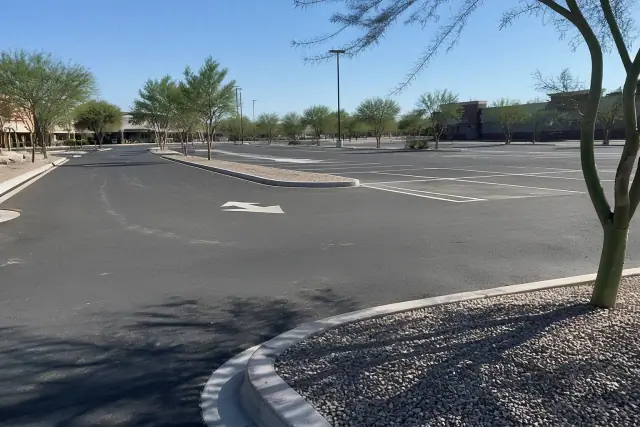
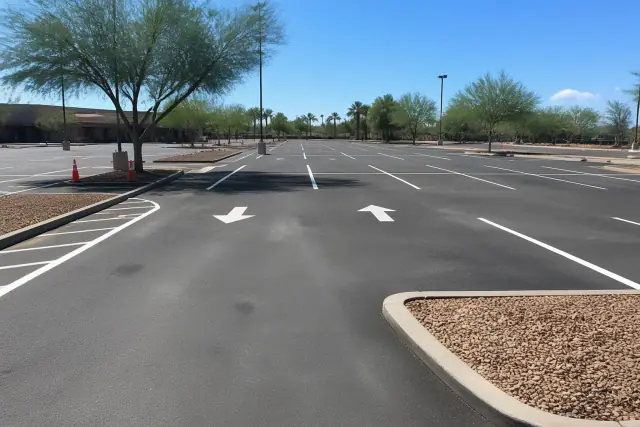
Tempe Asphalt provides parking lot striping for commercial properties throughout Tempe, Arizona. Our work includes line striping, ADA-compliant accessible spaces, directional arrows, loading zones, and full parking lot restriping. We serve retail centers, apartment complexes, office buildings, and industrial sites. Each layout is planned around the property's traffic patterns rather than a one-size template.

Asphalt surface temperatures near Mill Avenue and Arizona State University routinely exceed 160 degrees in July, which can fade standard traffic paint within a single monsoon season. We match waterborne traffic paint or thermoplastic marking materials to the lot's traffic volume and budget. Layouts are measured against ADA accessibility requirements and MUTCD line specifications. When cracking, potholes, loose aggregate, or oil residue would undermine adhesion, we address surface preparation and needed asphalt repair before striping.

Our crews carry the licensing and insurance coverage commercial property managers and general contractors require before a work order is signed. Service is available across the 85281, 85282, 85283, and 85284 ZIP codes, and every project begins with a free parking lot striping estimate.

Tempe Asphalt provides parking lot striping throughout Tempe, Mesa, Chandler, Scottsdale, and the greater east Phoenix metro area.

★ ★ ★ ★ ★4.9/5 Average Rating · 20+ Years of Experience · Thousands of Customers Helped · Licensed & Insured · Residential & Commercial

Parking Lot Striping Options & Benefits

What Is Professional Parking Lot Striping?

Professional striping turns a measured parking layout into clear stall lines, accessible spaces, access aisles, loading zones, fire lanes, and directional markings. The work coordinates vehicle movement, pedestrian access, and the way a commercial property is actually used.

A sound layout begins with field measurements or an existing site plan. Standard spaces are laid out at roughly 9 feet by 18 feet, while drive aisles and angled configurations are adjusted to the traffic pattern and available dimensions.

Material choice matters as much as layout. Waterborne acrylic traffic paint fits many standard-traffic lots, while thermoplastic offers greater resistance to tire abrasion, oil exposure, UV degradation, and Tempe's summer surface heat.

Benefits of Clear, Measured Striping

Well-planned markings make a parking lot easier to navigate, support accessible use, and reduce the ambiguity caused by faded or overlapping lines. Careful preparation also helps the selected marking material bond to the asphalt and perform as intended.

  • Clearly defined standard and accessible parking spaces
  • Directional arrows that guide drivers through the property
  • Loading zones and fire lanes identified in the planned layout
  • ADA space counts and access aisles measured before application
  • Consistent 4-inch stall lines applied with airless equipment
  • Material options matched to traffic volume and budget
  • Surface defects identified before fresh markings are installed
  • Cleaner reconfigured layouts without distracting ghost lines
Tempe Striping Services

Professional Parking Lot Striping Services

From a simple repaint to a newly measured traffic pattern, each service addresses a specific part of parking lot visibility and use. We combine long-run machine striping with hand-applied stencils and tight-radius work around curbs and islands.

Parking Lot Line Striping

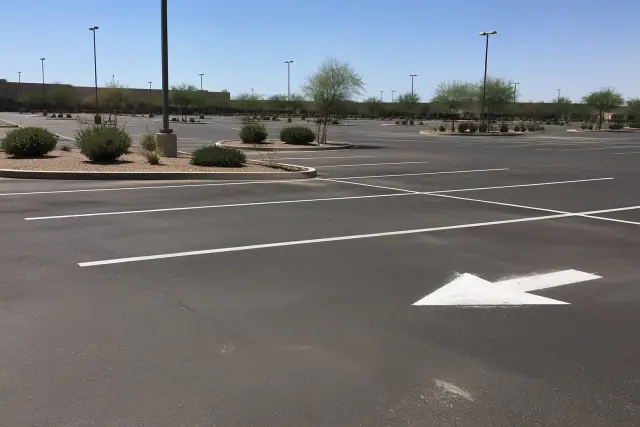
Parking lot line striping in Tempe, AZ

We measure and apply consistent stall lines for properties ranging from a 20-stall office lot to a 300-stall retail center. Truck-mounted airless striping machines handle long runs, while chalk lines and measuring wheels keep spacing consistent.

Request Estimate

ADA-Compliant Space Striping

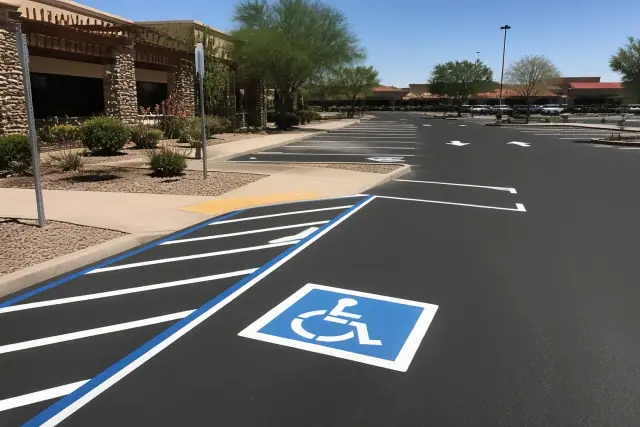
Ada Compliant space striping in Tempe, AZ

Accessible stall counts, van-accessible spaces, access aisles, blue markings, and the International Symbol of Accessibility are built into the layout from day one. We calculate the required count from the lot's total number of spaces and can document the completed layout and space counts for property records.

Request Estimate

Directional Arrows & Traffic Markings

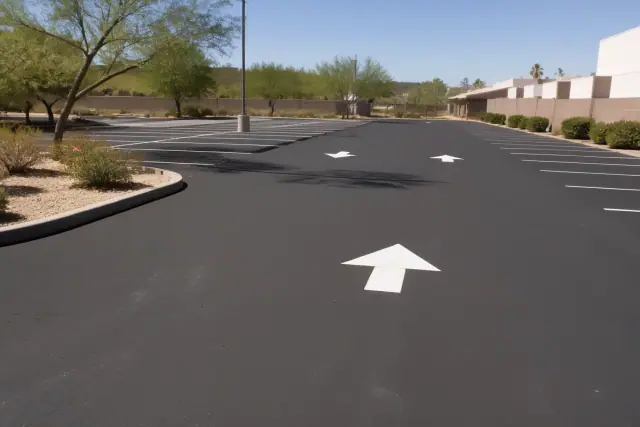
Directional arrows & traffic markings in Tempe, AZ

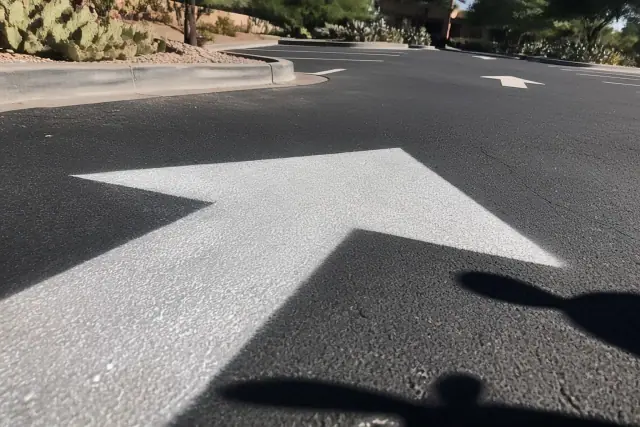
Directional arrows, drive aisle markings, and stencil work make traffic flow easier to follow. We position these markings during layout so they work with entrances, exits, curbs, islands, and the property's actual traffic pattern.

Request Estimate

Loading Zone & Fire Lane Striping

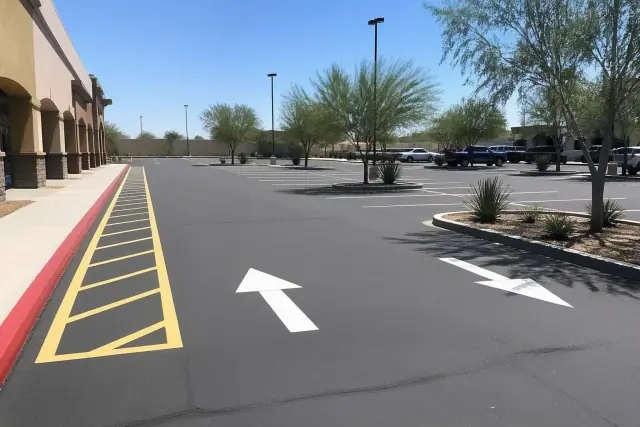
Loading zone & fire lane striping in Tempe, AZ

We mark loading areas and fire lanes as part of a coordinated site layout. These zones are measured alongside stalls and drive aisles so commercial access needs do not conflict with normal parking circulation.

Request Estimate

Parking Lot Restriping

Parking lot restriping in Tempe, AZ

Restriping restores visibility when an existing layout is still suitable but the markings have faded. The lot is cleaned, failing paint is addressed, and the layout is checked before fresh waterborne paint or thermoplastic is applied.

Request Estimate

Line Removal & Layout Reconfiguration

Line removal & layout reconfiguration in Tempe, AZ

For changed traffic flow, added accessible spaces, or compact-stall conversions, we remove or obscure obsolete markings before laying out the new pattern. Grinding, targeted black-out paint, or water blasting may be used according to the surface and amount of material that must come up.

Request Estimate
Materials & Layouts

Parking Lot Marking Options

The right striping approach depends on traffic, desired service life, nighttime visibility, layout geometry, surface condition, and budget. These options can be combined to fit a standard-traffic office lot, a busy retail center, or an industrial property.

Waterborne traffic paint in Tempe, AZ

Waterborne Traffic Paint

Waterborne acrylic traffic paint costs less upfront and works well for many standard-traffic parking lots. In Arizona heat and UV exposure, painted markings generally last 1 to 2 years before they need attention.

  • Lower initial material cost than thermoplastic
  • Suitable for standard-traffic commercial lots
  • Applied in consistent 4-inch stall lines
  • Works with machine striping and hand stencils
  • Practical for planned repainting cycles
Request Estimate
Thermoplastic markings in Tempe, AZ

Thermoplastic Markings

Thermoplastic is heated to a molten state and applied to a properly prepared, dry surface, where it bonds as it cools. Its 5 to 8 year lifespan, compared with paint's 1 to 2 years, can mean fewer restriping cycles over a decade on high-traffic properties.

  • Fuses into the asphalt instead of sitting only on top
  • Resists tire abrasion and oil exposure
  • Better suited to heavy-traffic retail and industrial lots
  • Holds reflective glass beads effectively
  • Requires specialized heating and application equipment
Request Estimate
Reflective glass beads in Tempe, AZ

Reflective Glass Beads

Reflective glass beads can be specified to improve marking visibility at night. Where the specification calls for them, we apply two coats with even paint thickness and incorporate the beads into the marking system.

  • Improves nighttime visibility
  • Available with specified paint applications
  • Retained effectively by thermoplastic material
  • Useful for traffic arrows and long line runs
  • Applied after the surface is clean and dry
Request Estimate
Standard & angled stall layouts in Tempe, AZ

Standard & Angled Stall Layouts

Standard spaces are roughly 9 feet wide by 18 feet long. For two-way, 90-degree parking, drive aisles are typically 24 to 26 feet wide; angled spaces can use narrower aisles but require more precise layout calculations.

  • Field measurements matched to available lot dimensions
  • Stall widths kept consistent across each run
  • Drive aisles adjusted for parking angle and traffic direction
  • Accessible spaces integrated into the total count
  • Chalk-line review before permanent markings
Request Estimate
Maintenance & touch Up striping in Tempe, AZ

Maintenance & Touch-Up Striping

Industry guidance generally recommends restriping standard paint every 3 to 5 years, but Tempe's UV exposure can shorten that interval to 2 to 3 years for high-traffic lots. An annual visual inspection helps catch fading stall lines, handicap symbols, and directional arrows before a full restripe is needed.

  • Annual review of stall-line visibility
  • Accessible symbols and access aisles checked for fading
  • Directional arrows reviewed for clear traffic guidance
  • Touch-up striping available in ongoing maintenance plans
  • Material performance considered when planning the next cycle
Request Estimate
Finding Your Right Fit

Choosing the Right Striping Approach

A standard-traffic property may get the right balance from waterborne paint and planned maintenance, while a busy retail or industrial lot may justify thermoplastic's higher upfront cost. We also account for the current layout, ADA space count, traffic direction, reflective-marking needs, existing surface damage, and whether old lines must be removed before recommending an approach.

Standards-Based Layouts

We measure stall width, stripe width, directional markings, accessible-space ratios, and access aisles against ADA Standards for Accessible Design, MUTCD line specifications, and the accessibility requirements enforced through Tempe's building and zoning code.

Heat-Aware Material Selection

Tempe's summer heat and intense UV exposure are part of the material decision. We compare the lower initial cost of waterborne paint with the abrasion resistance and longer service life of thermoplastic, then match the option to traffic volume and budget.

Surface-First Preparation

Fresh markings should not be applied over a failing base. We sweep away debris and loose aggregate, address oil residue and flaking paint, and identify cracking, alligatoring, ponding, or potholes that call for repair before striping.

What Sets Us Apart

Why Choose Tempe Asphalt for Parking Lot Striping?

Tempe Asphalt combines measured layouts, climate-appropriate materials, surface assessment, and the licensing and insurance coverage commercial projects require. We can coordinate asphalt and pothole repair before striping, document completed accessible-space counts, and provide a free estimate before work begins.

Get a Free Estimate

Faded UV-Worn Markings

Tempe's heat can turn white and yellow lines dull gray, and the difference between materials may become visible within a year. Faded stall lines, arrows, and accessible symbols make circulation harder to read and signal that inspection or restriping is due.

Ghost Lines from Old Layouts

Painting over obsolete markings can let the old pattern bleed through within a few months. Grinding to bare asphalt, targeted black-out paint, or water blasting can prepare the surface for a cleaner reconfigured layout.

Noncompliant Accessible Spaces

Miscounted accessible stalls, missing van-accessible spaces, or undersized access aisles can leave a commercial lot out of alignment with accessibility requirements. We calculate the required count from the total number of stalls and lay out the space and aisle dimensions before applying markings.

Damaged or Contaminated Asphalt

Cracking, alligatoring, potholes, ponding, loose aggregate, oil residue, and flaking old paint all interfere with a clean application. Surface repair, pressure washing, or grinding may be needed before new markings can adhere properly.

Confusing Traffic Flow

Inconsistent stall spacing, unclear arrows, and drive aisles that do not fit the parking angle can create an awkward traffic pattern. A field survey and chalk-line layout catch clearance and circulation problems before the markings become permanent.

Short-Lived Material Choice

Standard traffic paint may be the economical choice for a lower-traffic lot but can lead to earlier repainting under heavy vehicle use. Thermoplastic costs more initially, yet its resistance to UV exposure, tires, and oil can make it the better long-term fit for busy properties.

How it works

Our Parking Lot Striping Process

A durable striping job starts below the paint line. We assess the lot, prepare the surface, verify the layout, apply the selected material, and review the finished markings so surface defects and measurement errors are handled before they become permanent.

01.

Property Walk & Free Estimate

We walk the property in person, review lot size, stall count, traffic pattern, material preferences, and layout complexity, then provide a free parking lot striping estimate before work begins.

02.

Clean & Assess the Surface

The lot is swept free of debris and loose aggregate, then checked for oil residue, cracking, alligatoring, ponding, potholes, and flaking old paint that could interfere with adhesion.

03.

Repair Damage & Remove Failing Lines

Asphalt repair or pothole repair is completed when the base calls for it. Failing or obsolete markings are pressure washed, ground down, blacked out, or water blasted according to the surface and the planned layout.

04.

Measure & Mark the Layout

Using a site plan or fresh field measurements, we mark stalls, drive aisles, accessible spaces, loading zones, fire lanes, and directional arrows with measuring wheels and chalk lines before permanent material is applied.

05.

Apply Paint or Thermoplastic

Airless striping machines create even 4-inch lines on long runs, while hand tools handle symbols, arrows, curbs, and islands. Thermoplastic is heated and bonded to a dry surface; specified reflective applications receive two coats and glass beads.

06.

Review, Document & Maintain

We review the finished layout and can provide documentation of accessible-space counts for property records. A standard 50-stall commercial lot typically takes 4 to 6 hours from preparation through final cure, weather and lot condition permitting, and annual visual checks help plan future touch-ups.

Plan Your Lot

Schedule a Parking Lot
Striping Estimate

Get a property-specific recommendation for layout, materials, surface preparation, accessible spaces, and pricing. Tempe Asphalt provides free parking lot striping estimates for commercial properties in Tempe and the supported east Phoenix service area.

Striping Help

Parking Lot Striping FAQs

These answers cover Tempe parking lot striping prices, layout measurements, ADA spaces, materials, project timing, and maintenance. A property walk is still the most reliable way to account for surface condition and layout complexity.

Call Our Experts

Most commercial restriping projects in the Tempe area run between $2,500 and $5,000, depending on lot size, stall count, and layout complexity. A small 20-stall office lot may fall well below that range, while a 200-plus-stall retail center may run higher. We provide a free estimate after walking the property.

Standard stalls typically cost $4 to $5 each, accessible stalls run $25 to $30 each because of symbol and signage coordination, and directional arrows generally run $15 to $20 each. Tempe pricing averages around $3.94 for an 18-foot, 4-inch white stripe, compared with an Arizona statewide average of about $4.07. Existing-layout repainting usually runs $1,200 to $2,500 for a standard commercial lot.

The total price depends on lot size, material, surface preparation, and layout complexity rather than a flat rate. A new configuration generally adds roughly 20 to 30 percent over repainting an unchanged layout, while accessible stalls, loading zones, and directional arrows add work beyond standard lines. Our estimate separates the cost categories for the property owner.

Pricing reflects line count, material type, mobilization, equipment, stencil work, accessible-layout measurements, and the condition of the asphalt. Cracks, potholes, oil residue, or failing old paint can require repair or removal work before striping. Thermoplastic costs more upfront than paint but may offer better long-term value on a high-traffic lot.

A standard vehicle space is approximately 9 feet wide by 18 feet long, with a 4-inch line used for the stall marking. Two-way drive aisles in a 90-degree layout typically need 24 to 26 feet of clearance. Angled parking may use narrower aisles, but the spacing must be calculated for the angle and traffic direction.

Common mistakes include painting over failing lines, miscounting accessible stalls, omitting a compliant access aisle, using inconsistent stall widths, and skipping preparation on cracked or oil-stained asphalt. Choosing standard paint for a high-traffic property that would be better suited to thermoplastic can also shorten the repainting cycle.

We begin with a field survey or existing site plan, then calculate stall count, drive aisle widths, accessible-space requirements, loading areas, and directional markings. The layout is marked with measuring wheels and chalk lines before paint or thermoplastic is applied. This review catches clearance and placement problems while they can still be corrected.

The calculation starts with the total linear footage and the rate for the chosen material. Per-stall costs for standard spaces, accessible spaces, and directional arrows are added along with mobilization, layout, line removal, and any surface work. An in-person property walk captures lot condition and complexity more accurately than an online calculator.

Painted lines generally last 1 to 2 years in Arizona heat and UV exposure, while thermoplastic markings can last 5 to 8 years before needing attention. Actual performance varies with traffic, surface preparation, oil exposure, and lot condition. High-traffic properties should be inspected regularly for early fading.

Waterborne paint costs less upfront and works well on many standard-traffic lots. Thermoplastic bonds into a prepared asphalt surface, resists UV degradation, tire abrasion, and oil exposure, and often makes more sense for heavy-traffic retail or industrial properties. The right choice depends on traffic volume, budget, and the expected maintenance cycle.

For lots up to 100 stalls, the source guidance calls for at least one accessible space per 25 total spaces, with at least one of every six accessible spaces designated van-accessible. A standard accessible space requires a minimum 96-inch width with an adjacent 60-inch access aisle. A van-accessible layout uses either a 132-inch space or a 96-inch space paired with a 96-inch aisle.

A standard 50-stall commercial lot typically takes 4 to 6 hours from surface preparation through final cure, weather and lot condition permitting. Repairs, old-line removal, a new layout, extensive stencils, or thermoplastic application can change the schedule. The property walk identifies those factors before work begins.

Inspect stall lines, accessible symbols, and directional arrows visually once a year. Industry guidance generally suggests restriping standard paint every 3 to 5 years, although Tempe's UV exposure can shorten the interval to 2 to 3 years on high-traffic lots. Material, traffic, and surface condition determine the actual schedule.