Proudly serving Tempe, Mesa, Chandler, Scottsdale, Gilbert & surrounding areasCall or Text 24/7: +1 (480) 571-0856

Commercial Parking Lot Paving, Replacement, and Resurfacing in Tempe, AZ

Tempe Asphalt provides parking lot paving, full-depth asphalt replacement, and mill-and-overlay resurfacing for commercial, industrial, and institutional properties in Tempe, Arizona. Our crews also handle pothole repair, crack sealing, sealcoating, and ADA-compliant striping. Each project is planned around the property's traffic loads, pavement condition, subgrade, and drainage patterns.

Tempe pavement faces more than 300 days of sun each year, daily temperature swings that can reach 40 degrees between a June afternoon and early morning, and monsoon downpours in August and September. Those conditions dry asphalt binder, widen cracks, and allow water to undermine the base. We grade lots to move stormwater away from entrances and toward approved drainage points. Property owners get a pavement plan tied to actual site conditions rather than a generic section.

Our crews build to Maricopa Association of Governments Uniform Standard Specifications and verify the subgrade, aggregate base, asphalt mix, and compaction before closeout. Tempe Asphalt is a licensed Arizona contractor working under the Arizona Registrar of Contractors and carries the insurance coverage commercial property managers and general contractors require.

Tempe Asphalt provides parking lot paving throughout Tempe and serves Mesa, Chandler, Scottsdale, and the greater Phoenix metro area.

★ ★ ★ ★ ★4.9/5 Average Rating · 20+ Years of Experience · Thousands of Customers Helped · Licensed & Insured · Residential & Commercial

Parking Lot Paving Options & Benefits

What Is Commercial Parking Lot Paving?

Commercial parking lot paving creates or restores the asphalt surface, structural base, drainage grades, and markings that support daily vehicle and pedestrian traffic. The work may involve new construction, full-depth replacement, localized repair, or resurfacing over a sound base.

A retail lot designed mainly for passenger cars needs a different pavement section than an industrial yard carrying loaded delivery trucks. Site evaluation therefore covers existing pavement condition, subgrade soil, drainage flow, expected loads, and access requirements before thickness or repair scope is selected.

The finished lot should provide a stable driving surface, move stormwater toward approved drainage points, and clearly organize parking spaces, access aisles, loading zones, and fire lanes. Those details affect curb appeal, vehicle movement, accessibility, and liability exposure from potholes or uneven pavement.

Benefits of Professional Parking Lot Paving

A properly designed asphalt lot balances surface condition, structural capacity, drainage, markings, and maintainability. The right scope addresses the cause of pavement distress while helping the property remain usable during construction.

  • Stable pavement for expected passenger and heavy-vehicle loads
  • Grading that directs stormwater away from building entrances
  • Clear parking stalls, access aisles, loading zones, and fire lanes
  • Targeted repairs that keep isolated damage from spreading
  • Resurfacing that can add 8 to 12 years of service life when the base is sound
  • Sealcoating protection against UV exposure, spills, and water infiltration
  • Phased work for properties that need continued parking access
  • A cleaner arrival surface for customers, tenants, patients, and staff
Commercial Asphalt Services

Parking Lot Paving Services

Tempe Asphalt handles the full pavement lifecycle, from new parking lot construction and failed-section replacement to resurfacing, repair, preventive maintenance, and final striping. The scope is matched to base condition, drainage, traffic load, and the property's operating schedule.

New Parking Lot Paving

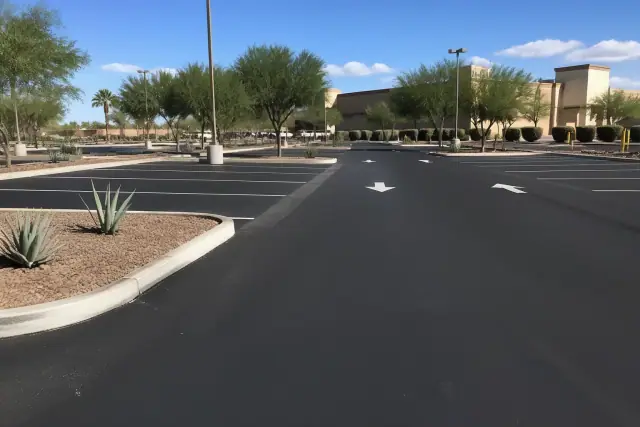
New parking lot paving in Tempe, AZ

New parking lot paving starts with soil assessment, drainage review, and traffic-load planning. We design the asphalt and aggregate base section for the site's heaviest anticipated vehicles, then place and compact each layer before striping the approved layout.

Request Estimate

Full-Depth Asphalt Replacement

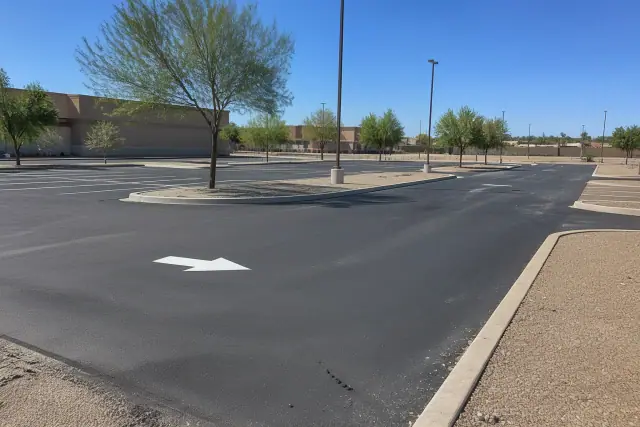
Full Depth asphalt replacement in Tempe, AZ

Full-depth replacement removes failed pavement and any saturated or unstable base material instead of covering structural damage. The subgrade is prepared, a new aggregate base is compacted, and the asphalt section is rebuilt for the property's traffic and drainage conditions.

Request Estimate

Mill-and-Overlay Resurfacing

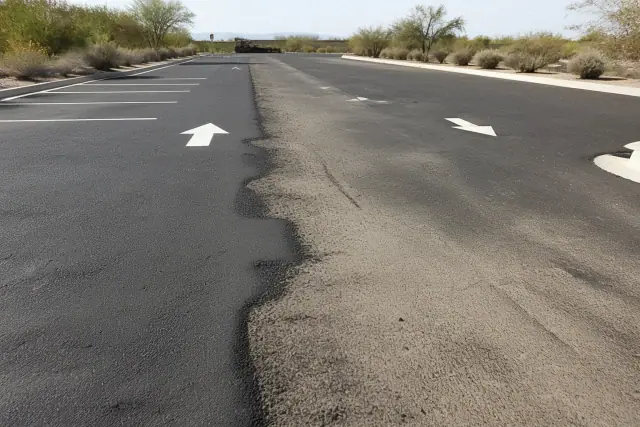
Mill And Overlay resurfacing in Tempe, AZ

Milling removes the top 1.5 to 2 inches of deteriorated asphalt so a new lift can bond to a clean, properly graded surface. When the underlying base remains sound, this approach corrects surface oxidation and minor drainage issues without the disruption of full-depth reconstruction.

Request Estimate

Hot-Mix Pothole Repair

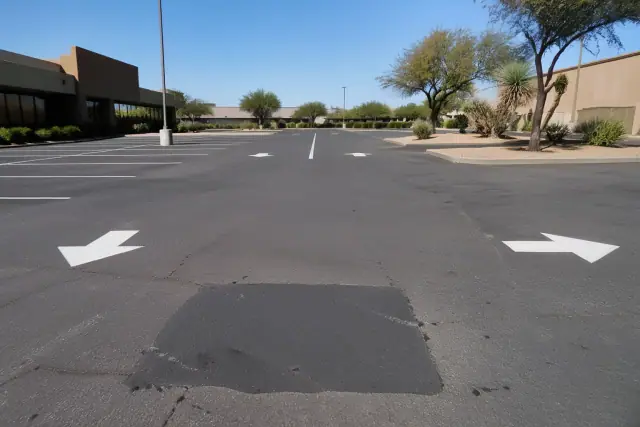
Hot Mix pothole repair in Tempe, AZ

For a durable pothole patch, we cut the damaged area back to sound pavement, remove saturated base, compact new aggregate, and place hot-mix asphalt. Cold-patch material is temporary and typically fails within one to two seasons in Tempe's heat, so it is not the preferred long-term repair.

Request Estimate

Crack Sealing and Sealcoating

Crack sealing and sealcoating in Tempe, AZ

Hot-applied rubberized crack sealant keeps water from reaching the base, while sealcoating limits UV penetration, oil and gas exposure, surface raveling, and oxidation. We recommend crack sealing and sealcoating every 2 to 3 years, with crack work ideally completed before the monsoon season begins in late June.

Request Estimate

ADA-Compliant Parking Lot Striping

Ada Compliant parking lot striping in Tempe, AZ

We lay out and stripe parking stalls, accessible spaces, access aisles, curb ramps, loading zones, and fire lanes to match approved site plans. Under the 2010 ADA Standards for Accessible Design, lots provide one accessible space for every 25 total spaces up to the first 100 spaces, including van-accessible spaces at the required proportion.

Request Estimate
Pavement Design Options

Parking Lot Paving Solutions

Parking lots perform best when the pavement section, repair method, maintenance plan, property use, and drainage approach are considered together. These options show how we adapt the work to the site's condition and expected traffic.

Traffic Based pavement sections in Tempe, AZ

Traffic-Based Pavement Sections

Asphalt and base thickness are selected around subgrade conditions and the heaviest anticipated load, not a one-size-fits-all specification. Proper section design helps prevent rutting, settling, and early structural cracking.

  • 3 inches of asphalt for standard passenger-vehicle parking areas
  • 4 inches of asphalt for drive lanes with turning and braking loads
  • 4 to 6 inches of asphalt for industrial and regular truck traffic
  • 4 to 8 inches of compacted aggregate base based on soil and load conditions
  • Extra capacity where delivery trucks, fire apparatus, or waste vehicles enter
Request Estimate
Resurfacing and overlay options in Tempe, AZ

Resurfacing and Overlay Options

Resurfacing is appropriate when the base remains intact and failure is limited to the surface course. Milling can remove damaged material and restore grade, while a direct overlay may suit pavement that is aged but still reasonably sound.

  • Mill 1.5 to 2 inches of deteriorated surface where removal is needed
  • Place a typical 1.5- to 2-inch overlay for a renewed surface course
  • Correct minor grade and surface-level oxidation during milling
  • Confirm the base is structurally sound before resurfacing
  • Use full-depth replacement where water or base failure would reflect through
Request Estimate
Preventive pavement maintenance in Tempe, AZ

Preventive Pavement Maintenance

Routine crack sealing and sealcoating slow the preventable damage caused by sunlight, traffic, spills, and stormwater. Scheduling both services together helps keep small openings from becoming base-related repairs.

  • Seal cracks before monsoon water reaches the aggregate base
  • Apply sealcoating every 2 to 3 years for standard commercial lots
  • Schedule sealcoating in late spring or fall for suitable curing conditions
  • Limit UV, oil, gas, and water exposure at the asphalt surface
  • Reduce fine cracking and raveling while refreshing the lot's finish
Request Estimate
Commercial property applications in Tempe, AZ

Commercial Property Applications

Property use determines traffic loads, access planning, and construction phasing. We coordinate work around operating hours and divide projects into sections when a property cannot close its entire parking area.

  • Retail parking lots with customer access and fire-lane needs
  • Apartment complex lots that require phased resident parking
  • Industrial yards designed for tractor-trailer traffic
  • Hospital lots with continuous patient-access requirements
  • School lots scheduled around the academic calendar
Request Estimate
Drainage and specialty paving in Tempe, AZ

Drainage and Specialty Paving

Drainage planning is central to asphalt performance in a monsoon climate. We establish grades and base details according to how water should leave or pass through the pavement system.

  • Move runoff away from entrances and toward approved drainage points
  • Address standing-water patterns near washes and low-lying sites
  • Correct minor surface drainage during mill-and-overlay work
  • Use an open-graded base for permeable parking lot paving
  • Adjust base and drainage plans for recycled asphalt paving
Request Estimate
Finding the Right Pavement Scope

Choosing the Right Parking Lot Paving Approach

Localized patching or a mill and overlay often makes sense when failure is limited to the surface and less than 25% of the lot has alligator cracking. Once base failure is widespread, water has undermined the subgrade, or potholes keep returning in the same locations, full-depth replacement is usually the more durable long-term choice.

Climate-Aware Pavement Design

Desert UV exposure, thermal cycling, and monsoon runoff are treated as design conditions from the start. Asphalt mix, pavement thickness, drainage grades, and maintenance recommendations are selected with Tempe's operating environment in mind.

Base and Compaction Testing

We proof roll the compacted base, verify aggregate thickness and gradation against MAG specifications, and test subgrade compaction before paving. Each asphalt lift is compacted to a minimum 95% of maximum density per AASHTO T-180, with core samples used on larger projects to confirm mat density.

Commercial Project Planning

Most Tempe commercial paving projects range from two days for a straightforward overlay to two to three weeks for full-depth replacement with base, drainage, and striping work. We schedule around business hours where possible and phase retail or apartment projects to preserve access.

What Sets Our Work Apart

Why Choose Tempe Asphalt for Parking Lot Paving?

Tempe Asphalt combines local pavement planning with documented commercial-job requirements. We are a licensed Arizona contractor working under the Arizona Registrar of Contractors, carry the insurance coverage property managers and general contractors require, and provide a written estimate after evaluating base condition, drainage needs, and expected traffic.

Request a Site Evaluation

UV Oxidation and Raveling

Intense sun pulls oils from asphalt binder, leaving the surface brittle and less able to flex with temperature changes. As the binder coating breaks down, aggregate loosens and the lot begins to ravel.

Alligator Cracking

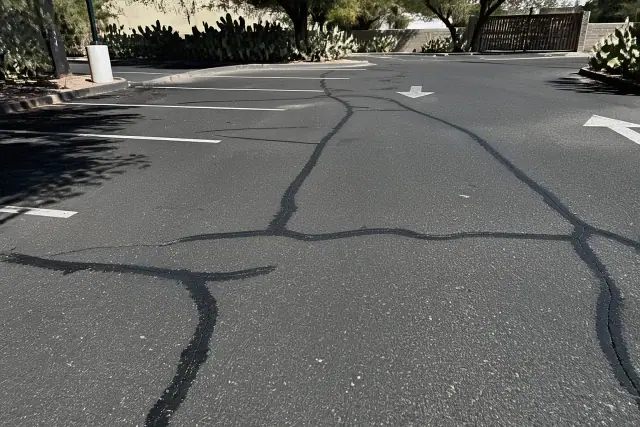
Interconnected alligator cracks often indicate base failure under repeated traffic loads rather than a surface-only defect. Covering them with an overlay without correcting the support below allows the cracking to reflect back through.

Potholes and Base Failure

Water enters unsealed cracks, weakens the aggregate base, and allows traffic to break the unsupported surface into a pothole. Repeated potholes in the same area are a warning that the failed base may need full-depth repair.

Standing Water and Poor Drainage

Low-lying properties and sites near washes or Tempe Town Lake can hold water after summer storms when grades or outlets are inadequate. Standing water accelerates oxidation, crack infiltration, potholes, and base deterioration.

Faded or Noncompliant Striping

Standard paint can fade and chip quickly under Tempe's sun and temperature swings. Worn parking lines, unclear access aisles, or incorrect fire-lane clearances create navigation, accessibility, inspection, and site-plan problems.

Underbuilt Pavement Sections

A lot designed only for average passenger traffic can fail when delivery trucks, fire apparatus, or waste vehicles repeatedly use it. Undersized asphalt or base sections are a common reason commercial pavement develops trouble within 5 to 7 years.

How It Works

Our Parking Lot Paving Process

Every project follows a consistent sequence adapted to the site's pavement condition, soil, drainage, traffic, and access needs. Testing and verification are built into the work before the final striping and walkthrough.

01.

Site Evaluation and Soil Assessment

We inspect existing pavement distress, trace drainage flow, identify subgrade soil conditions, and document expected vehicle loads. This determines whether the lot needs localized repair, resurfacing, or full-depth replacement.

02.

Pavement and Drainage Design

We specify asphalt and aggregate base thickness for the anticipated traffic and establish grades that move stormwater toward approved drainage points. Striping layouts are coordinated with the property's approved site plan and access requirements.

03.

Demolition and Subgrade Preparation

Where full-depth work is required, failed pavement and unstable base are removed. The exposed subgrade is prepared and tested so weak conditions are addressed before they are buried under new material.

04.

Aggregate Base and Proof Roll

Aggregate base is placed to the designed thickness and compacted to specification. A proof roll checks the finished base for soft spots before asphalt paving begins.

05.

Asphalt Placement and Compaction

Hot-mix asphalt is placed in one or two lifts depending on total design thickness. Each lift is rolled while the mat remains hot enough to achieve the required density, and larger projects may be verified with asphalt core samples.

06.

Striping and Final Walkthrough

After paving, we lay out parking stalls, accessible markings, access aisles, curb ramps, loading zones, and fire lanes. The project closes with a walkthrough so the property owner can review the completed pavement and markings.

Plan Your Parking Lot Project

Schedule a Parking Lot Paving
Consultation

Request a site evaluation for a written estimate based on pavement condition, base repair, drainage, traffic loads, access phasing, and striping needs. Tempe Asphalt will help identify whether repair, resurfacing, or replacement fits the lot.

Parking Lot Paving Help

Parking Lot Paving FAQs

These answers cover common questions about parking lot cost, pavement thickness, maintenance, repair decisions, project scheduling, striping, and Tempe-area performance conditions.

Call Our Paving Team

Regional Arizona pricing for a standard 2-inch asphalt overlay runs about $1.43 to $1.62 per square foot for materials, averaging around $1.53 per square foot. Full-depth replacement costs more because it includes demolition, base repair or reconstruction, and a thicker asphalt section. Tempe Asphalt provides a written estimate after evaluating base condition, drainage, and traffic load.

Yes. Sealcoating limits UV degradation, oil and gas spills, and water infiltration that break down asphalt binder. It also helps resist surface raveling and preserves a cleaner finish for commercial properties.

Standard passenger-vehicle parking areas need 3 inches of asphalt, while drive lanes need 4 inches. Industrial lots and areas with regular truck traffic require 4 to 6 inches over a thicker base. Aggregate base typically ranges from 4 to 8 inches depending on subgrade soil and expected loads.

Most commercial lots need resurfacing every 15 to 20 years, depending on traffic, drainage, and maintenance. Regular crack sealing and sealcoating every 2 to 3 years can help a lot reach or exceed that range. Full-depth replacement is generally a once-in-30-years event for a well-maintained lot, although base failure or poor drainage can require it sooner.

Patching or a mill and overlay often makes sense when damage is surface-level and less than 25% of the lot shows alligator cracking. Full-depth replacement is the stronger choice when the base has failed, water has undermined the subgrade, or potholes keep returning in the same areas.

A straightforward overlay may take about two days. Full-depth replacement with new base, drainage work, and striping may take two to three weeks. The final schedule depends on lot size, site conditions, and whether work must be phased around property access.

A typical striping job takes about 4 to 6 hours to complete and cure enough for traffic, depending on lot size and layout complexity. Fast-drying traffic paint or thermoplastic striping is selected for Tempe's UV exposure and temperature swings.

Our crews build to Maricopa Association of Governments Uniform Standard Specifications for aggregate base, asphalt mix design, and related work. Each asphalt lift is compacted to a minimum 95% of maximum density per AASHTO T-180. Larger projects may also use asphalt core samples to verify mat density.

Hot-mix repair allows the damaged area to be cut back, unstable material removed, the base rebuilt, and a new asphalt patch compacted into place. Cold patch is a temporary measure that typically fails within one to two seasons in Tempe's heat.

Yes, retail centers, apartment complexes, hospitals, and other active properties can often be paved section by section. Phasing is planned around business hours, parking access, patient or resident movement, and the work sequence.

Monsoon water that enters cracks or stands in low areas can weaken the base and accelerate potholes, alligator cracking, and surface deterioration. Proper grading directs runoff away from entrances and toward approved drainage points. Permeable paving requires a different open-graded base that lets water pass through.

Tempe Asphalt paves retail centers, apartment complex lots, industrial yards, hospital parking areas, and school lots. Structural design and scheduling are adjusted for each property's traffic, heavy-vehicle access, operating hours, and code requirements.

Projects may incorporate recycled asphalt paving or permeable parking lot paving when those methods fit the site. Permeable pavement needs an open-graded base for stormwater movement, while recycled asphalt work requires the base and drainage plan to be adjusted to the project.