Proudly serving Tempe, Mesa, Chandler, Scottsdale, Gilbert & surrounding areasCall or Text 24/7: +1 (480) 571-0856

Asphalt Sealcoating and Surface Protection Services in Tempe, AZ

Tempe Asphalt provides asphalt sealcoating in Tempe, Arizona, for residential driveways and commercial parking lots. Our services include driveway crack sealing, asphalt crack filling, oil spot pre-treatment, and full-scale parking lot sealing. We apply commercial-grade sealers selected for desert heat, UV exposure, and monsoon conditions. Homeowners and property managers can request a free estimate for a scope matched to the pavement's condition.

Summer pavement surface temperatures in Tempe regularly climb past 140 degrees Fahrenheit, while ambient highs routinely top 110 degrees. Monsoon downpours from July through September can push water into cracks and weaken the base beneath exposed pavement. Our crews prepare stains and cracks before applying sealer to ASTM D3319 and D5893 standards. We are licensed through the Arizona Registrar of Contractors, carry full liability insurance, and use formulations that meet Arizona Department of Environmental Quality VOC compliance standards.

We serve properties near Kyrene Corridor, Rural Road, Tempe Town Lake, and residential streets south of Guadalupe Road. Every project begins with an asphalt condition assessment so preparation, coating, cure time, and access can be planned around the surface and property.

Tempe Asphalt provides asphalt sealcoating in Tempe and nearby Mesa, Chandler, Guadalupe, and South Scottsdale.

★ ★ ★ ★ ★4.9/5 Average Rating · 20+ Years of Experience · Thousands of Customers Helped · Licensed & Insured · Residential & Commercial

Asphalt Sealcoating Options & Benefits

What Does Asphalt Sealcoating Do?

Sealcoating is a protective barrier applied over prepared asphalt to slow oxidation, resist oil penetration, and keep water from entering the pavement structure. It also restores the deep black finish of faded pavement, but its main purpose is preventive protection rather than appearance alone.

Tempe, in Maricopa County, had a 2020 population of 180,587, and its residential and commercial pavement faces unusually intense heat and UV exposure. Those conditions dry out the petroleum-based binder, leaving asphalt gray, brittle, and porous within a few seasons. Sustained desert exposure can break down unprotected asphalt in roughly half the time the same process might take in a milder climate.

We use commercial-grade asphalt emulsion and coal tar-based sealers with NexaNano protective sealing technology, then apply them by squeegee, spray, and hand edging as the surface requires. Preventive sealcoating costs a fraction of reconstruction: an application can cost a few hundred to a few thousand dollars depending on size, while a full overlay or reconstruction can run tens of thousands of dollars.

Benefits of Preventive Sealcoating

A properly prepared sealcoat protects the pavement surface from the forces that drive early failure in the Sonoran Desert. The practical benefits extend from the asphalt binder at the surface to the base course beneath it.

  • Blocks UV exposure that accelerates asphalt oxidation
  • Helps the petroleum-based binder remain flexible through heat cycling
  • Keeps monsoon water above the pavement instead of in the base course
  • Reduces motor oil, transmission fluid, and gasoline penetration after proper pre-treatment
  • Restores a deep black, uniform finish to faded pavement
  • Limits loose aggregate and edge deterioration by sealing porous surfaces
  • Supports a two-to-three-year preventive maintenance cycle for residential driveways
  • Helps well-maintained asphalt with a consistent sealcoating history last 20 years or more
Residential & Commercial Service

Asphalt Sealcoating Services

Tempe Asphalt handles sealcoating and related surface preparation for driveways, parking lots, retail centers, office parks, apartment complexes, and industrial properties. Each service is matched to pavement condition, traffic, access, stains, cracks, and the coating method needed for consistent coverage.

Residential Driveway Sealcoating

Residential driveway sealcoating in Tempe, AZ

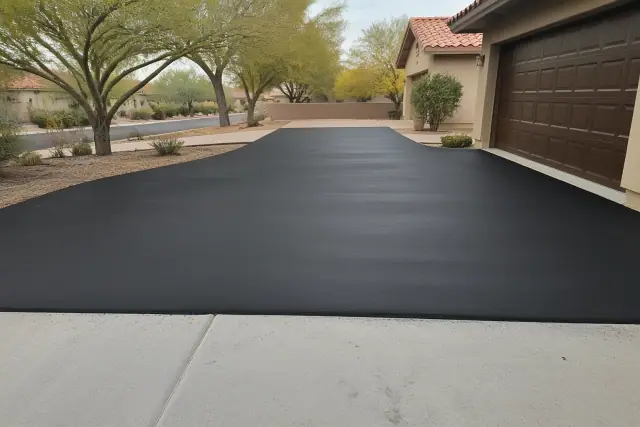
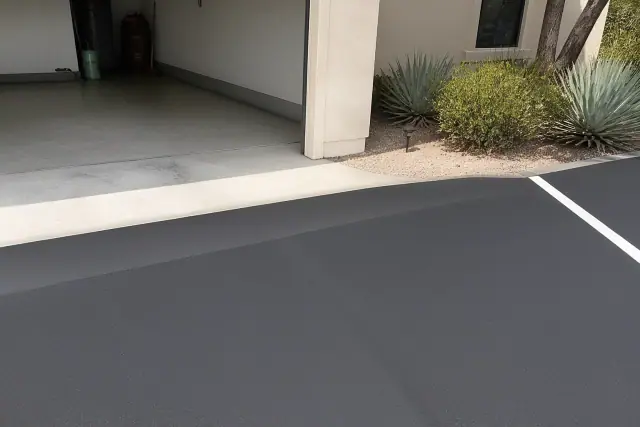
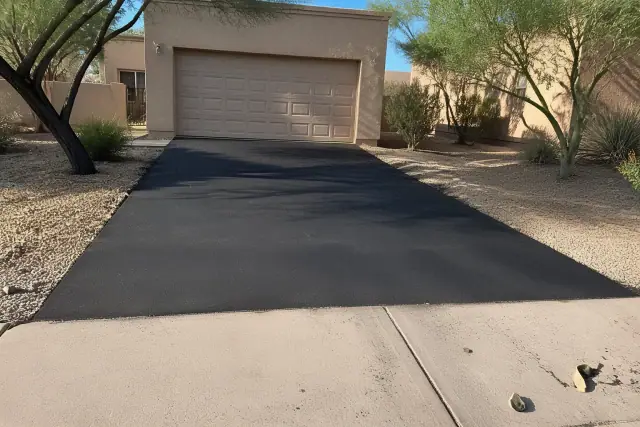
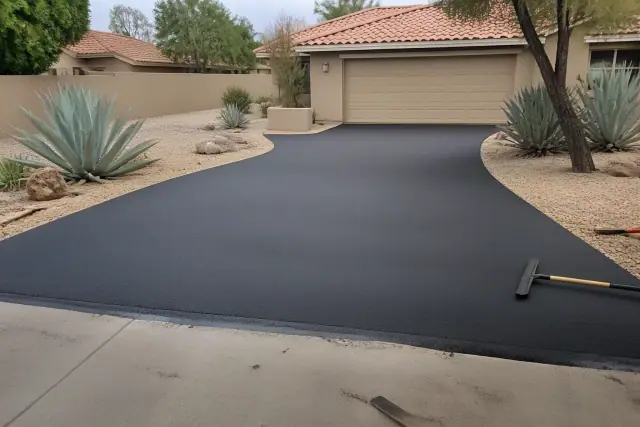
Residential driveway sealcoating protects faded or porous asphalt from Tempe sun, heat cycling, and seasonal rain. We assess the driveway, clean it, address cracks and stains, and apply the coating plan needed for regular vehicle traffic.

Request Estimate

Commercial Parking Lot Sealing

Commercial parking lot sealing in Tempe, AZ

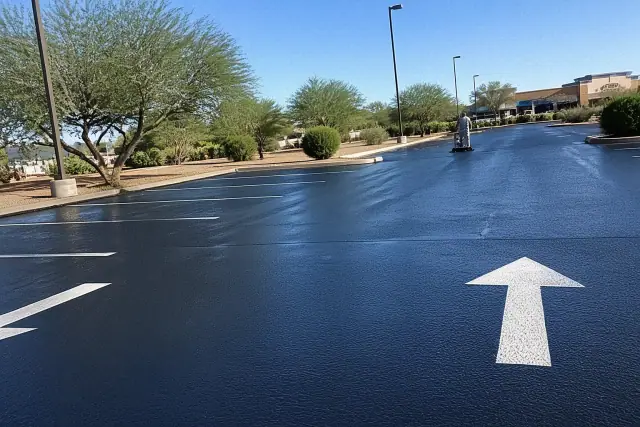
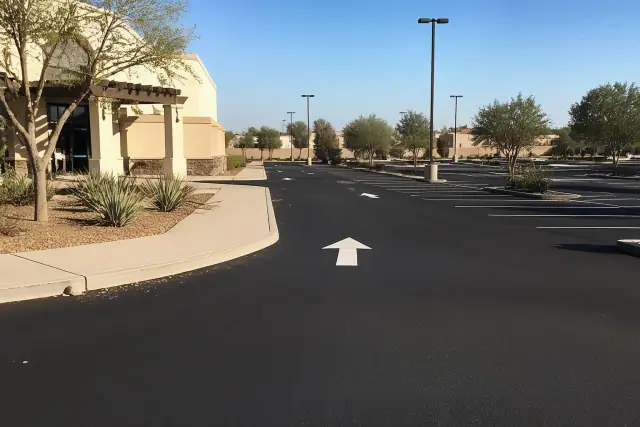
Commercial parking lot sealing combines surface protection with scheduling that accounts for tenants, customers, and operating hours. Large lots can be completed in phases so part of the property remains accessible while other sections cure.

Request Estimate

Driveway Crack Sealing

Driveway crack sealing in Tempe, AZ

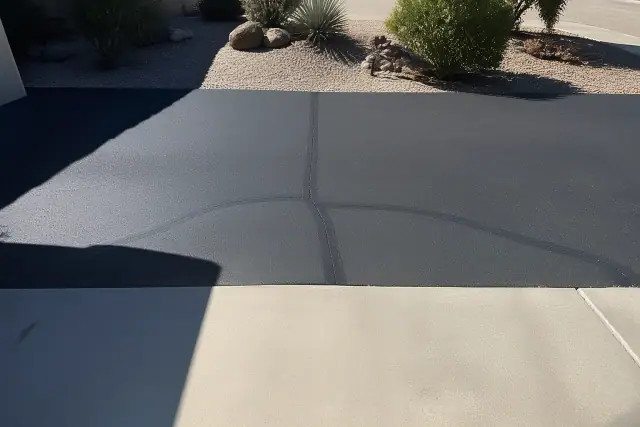
Cracks wider than a quarter inch are filled with hot-pour rubberized crack filler before sealcoat is applied. Closing those openings helps keep monsoon water out of the base and gives the finished coating a sounder surface.

Request Estimate

Asphalt Crack Filling

Asphalt crack filling in Tempe, AZ

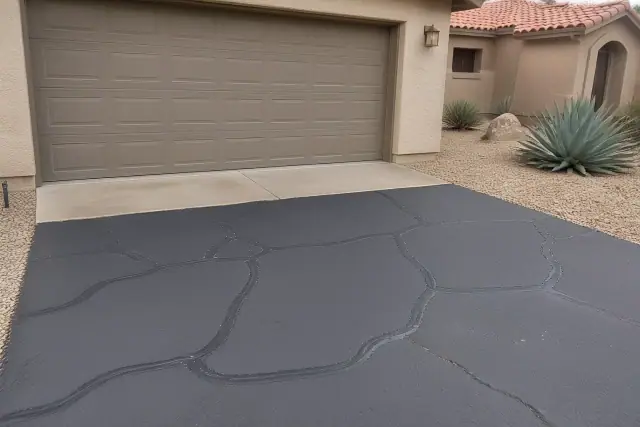
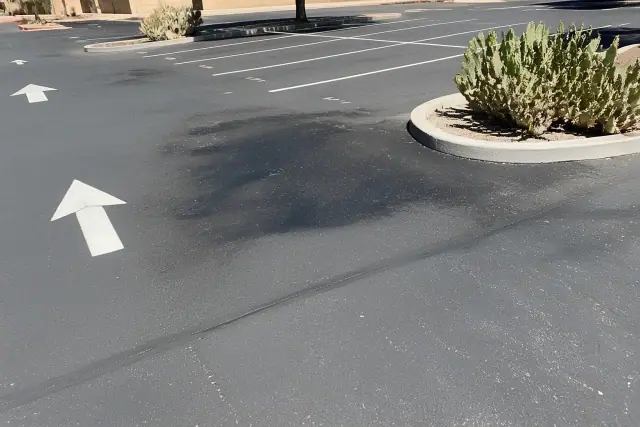
We distinguish hairline surface cracking from wider openings, alligatoring, and soft areas during the condition assessment. Crack filling supports sealcoating where the pavement remains serviceable, while more extensive deterioration may require deeper repair before a protective coat makes sense.

Request Estimate

Oil Spot Pre-Treatment

Oil spot pre Treatment in Tempe, AZ

Oil spots and fluid stains are treated with a penetrating primer before sealing. This preparation helps the coating bond over contaminated areas instead of lifting or peeling after motor oil, transmission fluid, or gasoline has softened the binder.

Request Estimate

Slurry Seal and Line Striping

Slurry seal and line striping in Tempe, AZ

Commercial work can include asphalt slurry seal services and line striping after the coating cures. We restore ADA-compliant parking spaces, fire lane markings, and directional arrows using Maricopa Association of Governments specifications for layout and spacing.

Request Estimate
Sealcoating Options

Sealcoating Methods for Tempe Pavement

The right sealcoating approach depends on property type, traffic load, existing damage, coating material, application method, and the available cure window. These options show how we adapt preparation and placement to Tempe driveways and commercial lots.

Residential driveway protection in Tempe, AZ

Residential Driveway Protection

Residential work focuses on uniform protection for driveways that are fading, developing small cracks, or beginning to lose aggregate. Preparation and application are organized around the condition of the surface and normal household vehicle use.

  • Condition assessment for graying, hairline cracks, alligatoring, and soft spots
  • Power blowing and sweeping to remove sand, dirt, and loose debris
  • Primer treatment for oil and vehicle-fluid stains
  • Hand edging for clean boundaries along adjoining surfaces
  • Vehicle traffic held for at least 24 to 48 hours while the coating cures
Request Estimate
Commercial parking lot protection in Tempe, AZ

Commercial Parking Lot Protection

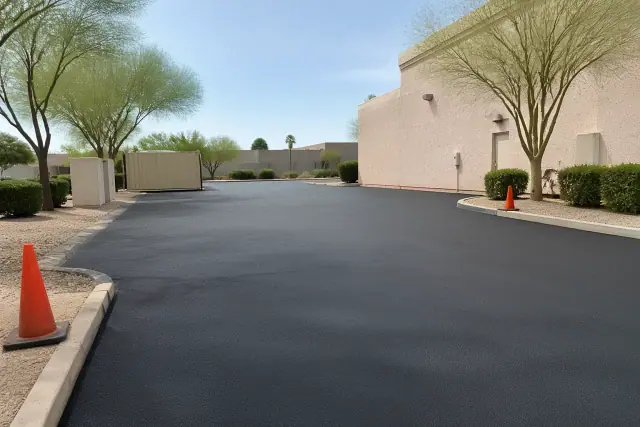
Commercial parking lots generally need sealing every one to two years because higher traffic volume and axle loads wear the coating faster. We build the project sequence around property access, business hours, weather, and striping needs.

  • Service for retail centers, office parks, apartment complexes, and industrial properties
  • Phased closures that preserve partial tenant and customer access
  • Off-peak or overnight scheduling when conditions and operations allow
  • Rain-free cure planning before each section is opened to traffic
  • Re-striping for accessible spaces, fire lanes, and directional markings
Request Estimate
Commercial Grade sealer materials in Tempe, AZ

Commercial-Grade Sealer Materials

Our sealer selection is based on resistance to UV degradation and repeated heat cycling in an extreme desert environment. Material choice is paired with application standards and emissions requirements rather than treated as a one-product decision.

  • Commercial-grade asphalt emulsion for prepared pavement surfaces
  • Coal tar-based sealer options named in the service specification
  • NexaNano protective sealing technology for UV and heat resistance
  • Application practices aligned with ASTM D3319 and D5893
  • Formulations that meet Arizona Department of Environmental Quality VOC compliance standards
Request Estimate
Squeegee and spray application in Tempe, AZ

Squeegee and Spray Application

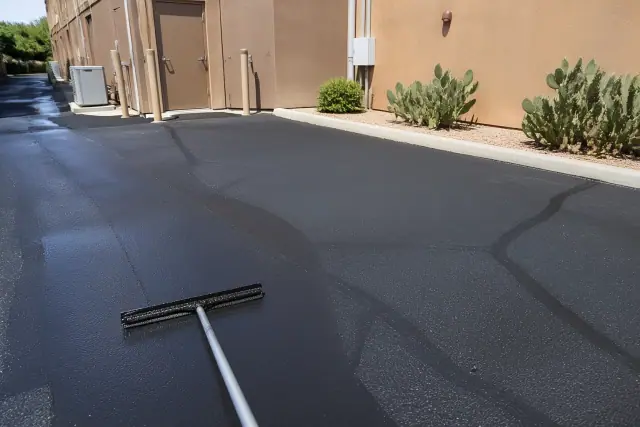
Application technique is selected to achieve penetration, even coverage, and clean edges. Driveways and larger paved areas may use a combination of squeegee and spray passes based on surface texture and project scale.

  • Squeegee placement that works sealer into the asphalt texture
  • A spray application pass for uniform coverage on larger areas
  • Hand edging for controlled lines at pavement boundaries
  • Two coats as the standard for residential driveways carrying regular vehicle traffic
  • Coating depth planned to avoid a single thin layer that can wear through in under a year
Request Estimate
Seasonal resealing and maintenance in Tempe, AZ

Seasonal Resealing and Maintenance

Residential driveways typically follow a two-to-three-year resealing cycle, while annual sealing can trap oils, soften the surface, and increase peeling risk. Scheduled maintenance plans help owners time inspection and reapplication before widespread deterioration appears.

  • Spring and fall are the preferred application windows in Tempe
  • Air and surface temperatures must stay above 50 degrees Fahrenheit through curing
  • The forecast should provide at least 24 hours without rain
  • Tempe's warm climate provides a longer workable season than colder regions
  • Maintenance timing is adjusted for pavement condition, traffic, and prior coating wear
Request Estimate
What Sets Us Apart

Why Choose Tempe Asphalt for Sealcoating

Technical preparation matters as much as the sealer itself. Tempe Asphalt combines desert-specific material selection, documented application practices, and careful surface preparation for a coating plan suited to the property.

Desert-Ready Sealcoating Methods

Our material and scheduling choices account for intense UV exposure, pavement heat, daily temperature cycling, and monsoon rain. That local focus helps protect the binder instead of treating sealcoating as a purely cosmetic spray job.

Licensed and Insured Service

Tempe Asphalt is licensed through the Arizona Registrar of Contractors and carries full liability insurance. Our crews also follow the ASTM application standards and Arizona VOC requirements stated for this service.

Detailed Surface Preparation

We power-blow and sweep the pavement, identify cracks and soft areas, prime oil spots, and plan clean hand-edged boundaries before coating begins. This preparation addresses common bonding failures that can cause early peeling.

Pavement Warning Signs

Common Asphalt Problems Sealcoating Helps Prevent

Fading, cracking, loose aggregate, and peeling are signals that the pavement surface or a previous coating needs attention. A free driveway inspection can help determine whether sealcoating is appropriate now or whether repair should come first.

Request Free Assessment

Oxidation and Surface Fading

A shift from black to dull gray, a chalky feel, or a porous surface indicates that UV exposure is oxidizing the binder. Once the binder becomes rigid, normal thermal movement is more likely to create cracks.

Hairline and Wider Cracks

Hairline cracks show early surface stress, while wider openings give rain a direct route to the base layer. Timely crack treatment and sealcoating can slow progression when the surrounding pavement remains sound.

Oil and Fuel Damage

Motor oil, transmission fluid, and gasoline soften asphalt binder and can create weak spots that develop into potholes. Sealer placed over untreated contamination may lift within weeks, so stains need primer before coating.

Monsoon Water Intrusion

Monsoon water entering open cracks can weaken the subgrade and contribute to heaving or settling as moisture evaporates under heat. Tempe pavement can suffer this base damage even without freeze-thaw cycling.

Crumbling Edges and Loose Aggregate

Loose stone underfoot and crumbling driveway edges indicate that the surface is losing binder and aggregate. Sealing a properly prepared, still-serviceable surface helps limit continued exposure, while severe deterioration may call for patching or resurfacing.

Peeling or Uneven Sealcoat

Premature peeling often starts with dirt, untreated oil spots, poor bonding, or application outside a workable temperature window. Excessive heat can make sealer skin over too quickly, while cold conditions slow curing and leave it vulnerable to traffic.

How It Works

Our Asphalt Sealcoating Process

Our process moves from inspection and preparation through treatment, coating, cure protection, and a practical maintenance plan. Each step is adjusted for pavement condition, weather, access, and residential or commercial traffic.

01.

Asphalt Condition Assessment

We walk the pavement, identify cracks, alligatoring, oil spots, stains, and soft areas, then measure exact square footage. The assessment also records gated access, tight approaches, and any traffic-control needs that affect the scope.

02.

Cleaning and Surface Preparation

The full surface is power-blown and swept to remove dirt, sand, and loose debris. We also establish edges, phase boundaries, and a workable route for people or vehicles before wet material is placed.

03.

Crack and Oil Spot Treatment

Wider cracks receive hot-pour rubberized filler, and oil or fluid stains receive a penetrating primer. These treatments create a better bonding surface and address openings that could admit water beneath the coating.

04.

Sealcoat Application

We use squeegee placement for penetration, a spray pass for consistent coverage on larger areas, and hand edging for a clean finish. The planned number of coats reflects surface texture and traffic, with two coats standard for regularly used residential driveways.

05.

Curing and Traffic Control

The sealed area stays closed while the coating cures, generally keeping vehicles off for at least 24 to 48 hours. We require a rain-free window of at least 24 hours because rain within 12 hours can wash out uncured sealer and force reapplication.

06.

Reopening and Maintenance Planning

After curing, we confirm the area is ready for traffic and complete required commercial striping. We then set a maintenance interval based on property type, traffic volume, surface condition, and the wear pattern of the new coating.

Protect Your Pavement

Schedule an
Asphalt Sealcoating
Estimate

Standard residential driveway sealcoating typically runs $1,200 to $2,800, while larger or full-scope residential projects may fall between $3,500 and $7,000. Typical combined material and labor pricing is about $1.25 to $1.50 per square foot, and crack sealing alone can run $0.06 to $0.38 per linear foot depending on crack width and depth. We measure the pavement and review condition, coats, preparation, access, and traffic control before providing a firm free estimate.

Sealcoating Help

Asphalt Sealcoating FAQs

These answers cover pricing, timing, preparation, curing, maintenance intervals, and service coverage for Tempe asphalt sealcoating. Call if you need help deciding whether your pavement is ready for sealing or needs repair first.

Call About Sealcoating

Standard residential driveway sealcoating typically costs $1,200 to $2,800, while larger or full-scope residential projects may run $3,500 to $7,000. Typical combined material and labor pricing is about $1.25 to $1.50 per square foot, but preparation, access, surface condition, and coat count affect the firm estimate.

No, not when the pavement is suitable and the work follows the right maintenance interval. Sealing every year can cause trouble by trapping oils, softening asphalt, or creating layers that peel, so residential driveways are generally resealed every two to three years.

Spring and fall usually offer the most dependable combination of moderate temperatures and dry weather. Peak summer heat can make sealer flash-dry, while the July-through-September monsoon period makes rain-free scheduling less predictable.

A properly applied residential sealcoat typically lasts two to three years in Tempe, with intense UV exposure often pushing performance toward the shorter end. Commercial parking lots commonly need resealing every one to two years because of heavier traffic and axle loads.

Rain within 12 to 24 hours can wash out uncured sealer and leave the surface blotchy, uneven, or bare. Affected areas generally need reapplication after the pavement and weather are dry.

Residential driveways generally need sealcoating every two to three years, while busy commercial lots may need it every one to two years. The final interval should reflect traffic, UV exposure, pavement condition, and how evenly the previous coat has worn.

Air and pavement surface temperatures need to stay above 50 degrees Fahrenheit through the curing window. Conditions that are too hot can skin the coating before it bonds, while cold conditions slow curing and increase vulnerability to early traffic.

Vehicles should remain off the surface for at least 24 to 48 hours so the coating can cure. The exact reopening time depends on temperature, weather, shade, and the coating plan used on the driveway.

Look for a change from black to dull gray, hairline cracking, a chalky surface, loose aggregate, or edges beginning to crumble. These signs indicate that the existing protection has worn and the asphalt is becoming exposed to oxidation and water.

Motor oil, transmission fluid, and gasoline soften asphalt binder and interfere with adhesion. A penetrating primer helps the new coating bond over stained areas instead of lifting soon after application.

Cracks wider than a quarter inch are filled with hot-pour rubberized crack filler before sealing. Hairline cracking, alligatoring, and soft spots are assessed separately because extensive damage may require more than a surface coating.

Yes, larger commercial jobs can be scheduled in phases so tenants and customers retain partial access. Off-peak or overnight work may also be possible when the forecast, curing requirements, and property operations allow.

Tempe Asphalt serves residential and commercial properties throughout Tempe and the surrounding East Valley. The stated nearby service areas include Mesa, Chandler, Guadalupe, and South Scottsdale.