Proudly serving Tempe, Mesa, Chandler, Scottsdale, Gilbert & surrounding areasCall or Text 24/7: +1 (480) 571-0856

Commercial Asphalt Paving, New Site Construction, and Pavement Repair in Tempe, AZ

Tempe Asphalt is a commercial asphalt paving contractor serving Tempe, Arizona, and the greater Phoenix metro area. We build new asphalt sections and commercial parking lots, then support existing pavement with repaving, resurfacing, milling, patching, and crack sealing. Our crews also provide seal coating, striping, and emergency asphalt repair for commercial and municipal properties.

Dark pavement surface temperatures in Tempe regularly exceed 150 degrees, while monsoon downpours can drop an inch of rain in under an hour. That heat-and-water cycle drives oxidation, movement, and base infiltration when mix design, drainage grade, or compaction is wrong. We engineer pavement around actual traffic loads and expansive desert soils, using hot mix asphalt aligned with Arizona Department of Transportation and Maricopa Association of Governments Uniform Standard Specifications.

We are licensed through the Arizona Registrar of Contractors and operate as a bonded and insured asphalt contractor. Crews plan ADA-compliant site layouts and verify asphalt compaction with nuclear density testing so property managers and general contractors receive documented job-site accountability.

Tempe Asphalt provides commercial asphalt paving in Tempe and across the greater Phoenix metro area, including Mesa, Chandler, Scottsdale, and Guadalupe.

★ ★ ★ ★ ★4.9/5 Average Rating · 20+ Years of Experience · Thousands of Customers Helped · Licensed & Insured · Residential & Commercial

Commercial Paving Options & Benefits

What Is Commercial Asphalt Paving?

Commercial asphalt paving uses hot mix asphalt with a dense aggregate structure and a stiffer binder suited to sustained loads, frequent traffic, and delivery vehicles. The pavement section includes prepared subgrade, compacted aggregate base, and one or more asphalt lifts selected for the property's use.

A retail parking area, restaurant drive-through, warehouse dock, industrial yard, and municipal roadway each place different demands on pavement. Section thickness, base depth, binder grade, traffic flow, accessibility, and drainage grade should therefore be designed around actual loading and site conditions.

Commercial asphalt paving in Tempe typically costs $3 to $7 per square foot for new construction and $2.50 to $4.50 per square foot for resurfacing. Heavy-duty industrial sections and complex drainage work can approach $10 per square foot, which is why we begin with a detailed site evaluation and written scope.

Benefits of Commercial Asphalt Paving

A correctly designed commercial pavement section supports daily operations while addressing Tempe's heat, monsoon moisture, expansive soils, traffic patterns, and accessibility requirements. The result depends on matching the mix, base, thickness, drainage, and maintenance plan to the property.

  • Dense commercial mix designed to resist rutting under repeated heavy loads
  • Section thickness and base depth matched to actual vehicle use
  • Drainage grades planned to limit standing water and base saturation
  • ADA-compliant stalls, curb ramps, and pedestrian circulation
  • Base and asphalt compaction verified against project specifications
  • Binder and aggregate choices adjusted for intense heat and monsoon moisture
  • Resurfacing options that preserve a structurally sound existing base
  • Crack sealing and seal coating that help extend pavement service life
Commercial Paving Services

Commercial Asphalt Paving Services

Tempe Asphalt handles commercial pavement from ground-up construction through rehabilitation and preventive maintenance. We match each method to the condition of the base, the traffic load, drainage needs, and the way the property operates.

New Asphalt Construction

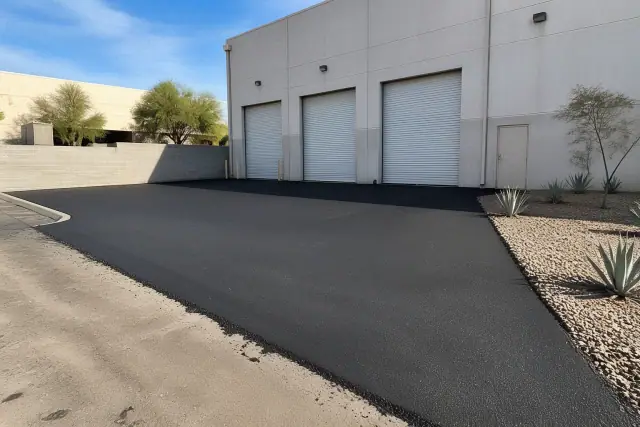
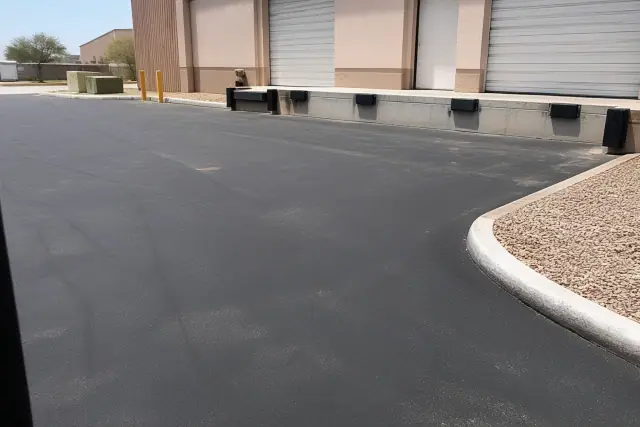
New asphalt construction in Tempe, AZ

New construction starts with subgrade evaluation, proof-rolling, and moisture conditioning. We place aggregate base in compacted lifts, then install hot mix asphalt in one or two lifts according to the designed section thickness.

Request Estimate

Commercial Parking Lot Paving

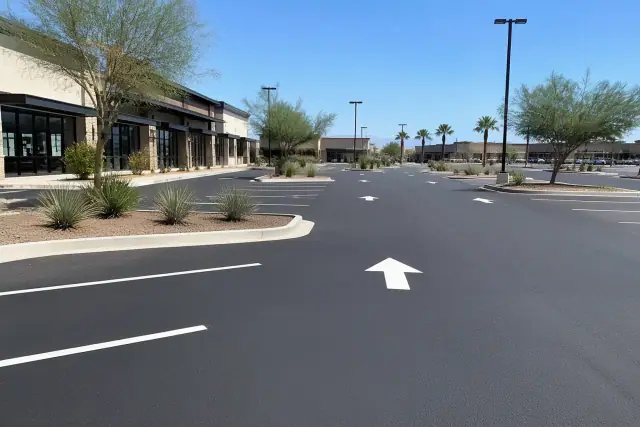
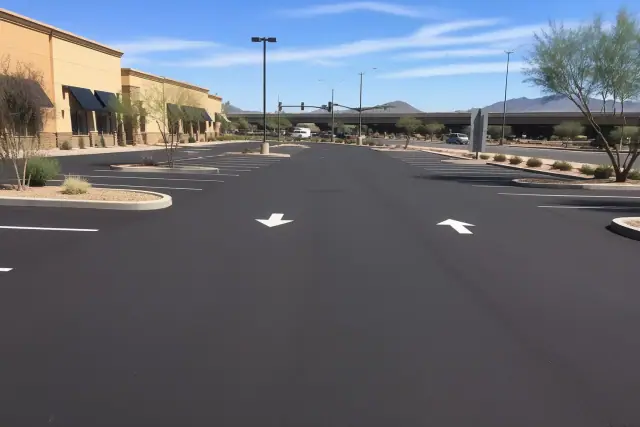
Commercial parking lot paving in Tempe, AZ

Parking lot plans account for stall counts, drive aisle widths, truck turning radii, fire-lane access, stormwater retention, and tenant delivery schedules. We also plan ingress, egress, internal circulation, accessible stalls, and pedestrian routes before paving begins.

Request Estimate

Asphalt Resurfacing and Repaving

Asphalt resurfacing and repaving in Tempe, AZ

Resurfacing renews a worn surface when the underlying base remains sound. After milling and applying a tack coat, a fresh overlay restores the mat while allowing drainage grades to be corrected where ponding has shortened pavement life.

Request Estimate

Milling and Overlay

Milling and overlay in Tempe, AZ

A cold planer removes the top 1.5 to 2 inches of deteriorated asphalt, restores the original grade, and exposes a sound bonding surface. With routine seal coating, a properly selected mill-and-overlay project can reset surface life for another 12 to 15 years.

Request Estimate

Patching and Emergency Asphalt Repair

Patching and emergency asphalt repair in Tempe, AZ

We use infrared patching for smaller surface defects and full-depth patching when the base has failed. Pothole repairs are saw-cut to clean edges, cleared to sound material, and rebuilt in compacted lifts so the repair addresses more than the visible opening.

Request Estimate

Crack Sealing, Seal Coating, and Striping

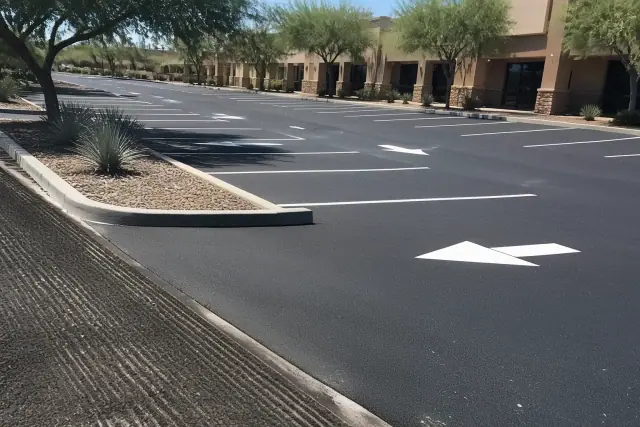
Crack sealing, seal coating, and striping in Tempe, AZ

Crack sealing limits water and debris entry before small defects grow into base failures. Seal coating protects binder from UV oxidation and moisture penetration, while striping completes the marked layout for the finished commercial lot.

Request Estimate
Pavement Design Options

Commercial Asphalt Pavement Options

Commercial pavement is not a single standard section. The correct approach depends on vehicle weight, traffic frequency, turning movements, existing base condition, accessibility, drainage, and the operating needs of the site.

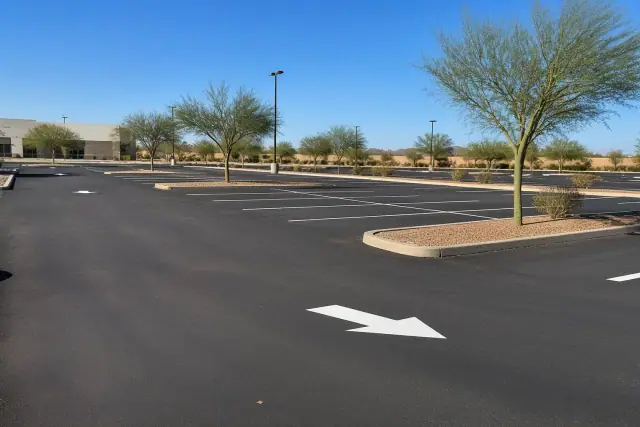
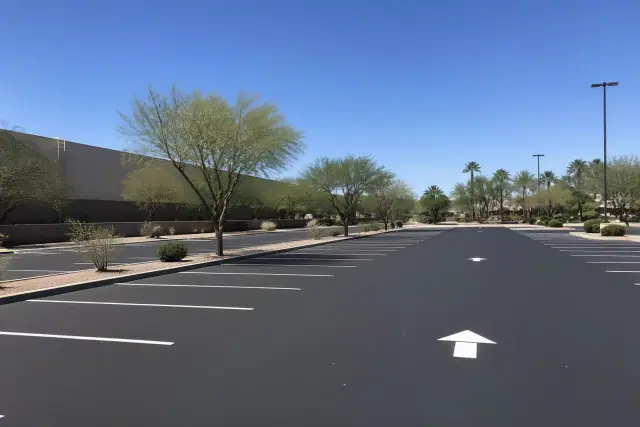
Passenger vehicle parking in Tempe, AZ

Passenger Vehicle Parking

Passenger vehicle parking generally calls for 2 to 2.5 inches of asphalt over a properly prepared base, with final depth determined by site conditions and use. Layout planning must support customers, tenants, accessible routes, and daily circulation.

  • Recommended asphalt thickness of 2 to 2.5 inches
  • Stall counts and drive aisles planned for the tenant mix
  • Ingress, egress, and internal traffic flow evaluated together
  • Accessible parking slopes kept under 2 percent
  • Fire-lane access and stormwater retention built into the layout
Request Estimate
Light commercial drive lanes in Tempe, AZ

Light Commercial Drive Lanes

Light commercial drive lanes are commonly designed with 3 inches of asphalt, subject to the engineered base and actual loading. Mix stiffness, turning paths, and drainage become more important where traffic is frequent or slow-moving.

  • Recommended asphalt thickness of 3 inches
  • Commercial mix selected for repeated daily traffic
  • Drive-through and service-lane turning demands considered
  • Entry and exit geometry planned for consistent circulation
  • Drainage grade adjusted to limit ponding in wheel paths
Request Estimate
Truck and dock areas in Tempe, AZ

Truck and Dock Areas

Truck lanes and dock areas generally require 4 inches or more of asphalt over an engineered base. The section must account for tandem-axle loads, repeated braking, tight turns, and slow traffic that can concentrate stress and cause rutting.

  • Recommended asphalt thickness of 4 inches or more
  • Engineered base selected for sustained heavy loading
  • Stiffer binder and dense aggregate structure
  • Turning radii planned around delivery vehicles
  • Rutting resistance prioritized at docks and loading zones
Request Estimate
Municipal and highway sections in Tempe, AZ

Municipal and Highway Sections

Municipal and highway pavement sections commonly use 4 to 6 inches of asphalt over an engineered base, depending on design requirements. Mix production and placement can follow Arizona Department of Transportation and Maricopa Association of Governments Uniform Standard Specifications.

  • Recommended asphalt thickness of 4 to 6 inches over engineered base
  • Traffic loading reflected in base depth and lift design
  • Hot mix asphalt produced to applicable project specifications
  • Field density testing used to verify compaction
  • Drainage and grade coordinated with roadway performance
Request Estimate
Existing pavement rehabilitation in Tempe, AZ

Existing Pavement Rehabilitation

Existing pavement may need a surface overlay, localized patching, full-depth reconstruction, or preventive maintenance. The decision follows the condition of the asphalt, aggregate base, subgrade, and drainage rather than the appearance of the surface alone.

  • Mill 1.5 to 2 inches when the existing base remains sound
  • Apply a tack coat before placing the fresh overlay
  • Use full-depth reconstruction for widespread base failure
  • Pair a sound overlay with routine maintenance for 12 to 15 years of surface life
  • Schedule seal coating every 2 to 3 years
Request Estimate
Finding Your Right Fit

Choosing the Right Commercial Paving Approach

The right method starts with how the property is used and what is happening below the surface. We evaluate traffic loads, pavement distress, base support, expansive soil, drainage, accessibility, and future maintenance before recommending new construction, resurfacing, patching, or full-depth repair.

Tempe Climate and Soil Experience

Our crews have worked across South Tempe, the Kyrene corridor, and industrial areas near Priest Drive. That local experience informs binder selection, drainage planning, base preparation, and work on caliche and expansive clay soils.

Specifications and Field Verification

We compact aggregate base to 95 percent or greater of maximum dry density under modified Proctor testing and check asphalt mat compaction with a nuclear density gauge. These field controls document whether the pavement was built to the specified section.

Licensed, Bonded, and Insured

Tempe Asphalt operates under Arizona Registrar of Contractors licensing requirements as a bonded and insured asphalt contractor. Workers' compensation coverage, general liability protection, and a documented project trail provide the accountability commercial property owners and general contractors need.

What Sets Us Apart

Why Choose Tempe Asphalt for Commercial Paving?

We combine local site knowledge with load-specific pavement design, documented compaction testing, and job-site accountability. Before equipment arrives, you receive a detailed evaluation and written scope explaining the recommended method and the factors driving cost.

Request Site Evaluation

Standing Water and Poor Drainage

Ponding lets monsoon water work into cracks and saturate the base, rapidly shortening pavement life. Correcting the drainage grade during paving or resurfacing addresses the source of the problem instead of covering it with a new surface.

Alligator Cracking and Base Failure

Interconnected alligator cracking across a large area usually points to failure below the asphalt surface. The appropriate repair removes the asphalt and aggregate base to native subgrade, reconstructs the section, and repaves.

Potholes and Failed Patches

Potholes form when infiltrating water weakens base material and traffic collapses the unsupported section. A patch placed over unresolved drainage or base damage can fail again within months, so the repair method must match the underlying cause.

Heavy-Traffic Rutting

Rutting develops when the asphalt mix, thickness, or base support is inadequate for repeated heavy loads. Delivery routes, dock approaches, tight turns, and frequent braking need a stiffer commercial mix and a section designed for actual traffic.

Open Cracks and Water Infiltration

Cracks wider than a quarter inch allow water and debris into the base course. Sealing them before the rainy season is a low-cost way to slow deterioration and reduce the chance that a surface defect becomes a full-depth repair.

UV Oxidation and Monsoon Moisture

Intense sun oxidizes asphalt binder while monsoon moisture can promote stripping in the mat. Climate-appropriate binder and aggregate choices, followed by routine seal coating, help protect the surface from both forms of exposure.

How It Works

Our Commercial Asphalt Paving Process

Our process moves from site conditions and operating needs to an engineered scope, prepared foundation, controlled paving, and final verification. Each step is intended to solve the cause of pavement distress and build the section required for the property's traffic.

01.

Walk the Site and Evaluate Conditions

We inspect pavement distress, standing water, drainage, base condition, subgrade, access, and current site use. The findings support a written scope that explains the recommended work and the factors affecting cost.

02.

Define Loads, Traffic, and Layout

We identify vehicle types, traffic frequency, turning movements, delivery schedules, stall needs, fire-lane access, and accessible routes. Those inputs determine the layout, section thickness, base depth, and drainage plan.

03.

Engineer the Pavement Section

The scope matches aggregate base, asphalt thickness, mix design, binder grade, and drainage grade to the site's expansive soil and expected loads. New layouts also account for stormwater retention and ADA requirements before construction.

04.

Prepare and Compact the Base

Crews evaluate and proof-roll the subgrade, moisture-condition it as needed, and place aggregate base in lifts. Each lift is compacted to specification, with the base targeted at 95 percent or greater of maximum dry density under modified Proctor testing.

05.

Place and Compact Hot Mix Asphalt

Hot mix asphalt is placed in one or two lifts according to total section thickness. The crew controls grade and compaction while the mat is workable, then checks density in the field with a nuclear gauge.

06.

Complete Striping and Final Verification

After paving, we complete the specified striping and confirm that the finished work follows the planned layout and drainage. Field compaction is verified before any section is opened to traffic.

Plan Your Pavement Project

Schedule a Commercial Asphalt Paving Consultation

Tell us how the property is used, what pavement problems you are seeing, and what work you are considering. Tempe Asphalt will walk the site, evaluate the conditions, and prepare a written scope for new construction, resurfacing, repair, or maintenance.

Commercial Paving Help

Commercial Asphalt Paving FAQs

These answers cover cost, pavement thickness, rehabilitation, maintenance, testing, accessibility, materials, and service areas for commercial asphalt projects in Tempe.

Call About Your Project

New commercial asphalt construction in Tempe typically runs $3 to $7 per square foot, while resurfacing typically runs $2.50 to $4.50 per square foot. Heavy-duty industrial sections and complex drainage work can approach $10 per square foot, so a site evaluation and written scope are needed to explain the final cost.

Passenger vehicle parking is commonly 2 to 2.5 inches, light commercial drive lanes 3 inches, and truck or dock areas 4 inches or more. Municipal and highway sections may use 4 to 6 inches over an engineered base, with final thickness set by loads and site conditions.

Commercial grade asphalt is a hot mix asphalt with a heavier aggregate structure and higher-viscosity binder than a typical residential mix. It is placed thicker and compacted to tighter density tolerances to resist rutting from delivery trucks, garbage trucks, and high-volume daily traffic.

Resurfacing is appropriate when the existing aggregate base remains structurally sound and surface deterioration can be milled away. Widespread alligator cracking or failed base calls for full-depth removal, section reconstruction, and repaving.

A cold planer removes the top 1.5 to 2 inches of deteriorated asphalt, restores grade, and exposes a sound surface. A tack coat bonds the fresh 1.5 to 2 inch overlay to that prepared pavement, and drainage grades can be adjusted during the work.

Seal coating is recommended every 2 to 3 years. It protects asphalt binder from UV oxidation and moisture penetration, both of which are accelerated by Tempe's intense sun and monsoon rainfall.

Cracks wider than a quarter inch allow water and debris into the base course and should be addressed before the rainy season. Timely crack sealing helps keep a surface opening from developing into a larger base repair.

The grading plan accounts for accessible stall counts, slopes under 2 percent, van-accessible spaces, and detectable warning surfaces at curb ramps. Building those requirements into the layout before paving avoids relying on striping alone to correct accessibility problems.

Standing water enters cracks, saturates base material, and can accelerate potholes and structural failure under traffic. Proper grading and stormwater planning help move water away from wheel paths and protect the pavement section during monsoon rainfall.

Aggregate base is compacted to 95 percent or greater of maximum dry density under modified Proctor testing. Asphalt mat compaction is checked in the field with a nuclear density gauge before a section is opened to traffic.

Yes. Incorporating recycled asphalt product at 15 to 20 percent is standard practice in the source approach and is supported by Arizona Department of Environmental Quality guidance on sustainable materials reuse. The final mix still needs the aggregate structure and binder properties required for the project.

Tempe Asphalt provides commercial asphalt paving throughout Tempe and the greater Phoenix metro area. The service area includes Mesa, Chandler, Scottsdale, and Guadalupe.

Project experience includes retail centers, restaurant drive-throughs, warehouse docks, multi-acre distribution yards, industrial properties, and municipal roadways. Each property receives a pavement section and layout based on its traffic, loading, drainage, and accessibility needs.