Proudly serving Tempe, Mesa, Chandler, Scottsdale, Gilbert & surrounding areasCall or Text 24/7: +1 (480) 571-0856

Asphalt Paving, Driveway Installation, and Parking Lot Repair in Mesa, AZ

Tempe Asphalt provides asphalt paving in Mesa for residential, commercial, industrial, HOA, and municipal properties. Our crews install driveways and parking lots, complete seal coating, and repair cracks, potholes, and failed pavement. We also handle asphalt patching, overlays, resurfacing, milling, grinding, and line striping. Every scope is matched to the site's traffic, subgrade, drainage, and existing surface.

Mesa pavement can face surface temperatures past 160 degrees, daily heat cycling, and intense July and August monsoon downpours. Expansive caliche soil can shift as moisture conditions change, while poorly graded pavement holds water against the base. These conditions make correct excavation, compaction, thickness, and drainage essential. A site walk lets the crew choose an approach for the actual property rather than rely on a one-size-fits-all section.

Mesa is the most populous city in the Phoenix metro's East Valley, with more than 504,000 residents. We work across the city, from Dobson Ranch and Eastmark to Las Sendas, Red Mountain Ranch, Superstition Springs, and the Fiesta District. Our wider service area includes Tempe, Chandler, Gilbert, Apache Junction, Ahwatukee, and properties bordering the Salt River Pima-Maricopa Indian Community. Call for a free asphalt paving quote and an on-site review of your pavement.

5-star rating4.9/5 Average Rating - 20+ Years of Experience - Mesa Water Treatment Experts - Residential & Commercial
Paving, Repair & Maintenance

Asphalt Services in Mesa, AZ

We match paving, repair, maintenance, and striping to Mesa driveways, private roads, parking lots, commercial pads, and municipal surfaces. Each project is scoped around traffic, drainage, soil, and the condition of the existing pavement. The same crews also serve neighboring Chandler as part of the East Valley service area.

Driveway Paving and Installation

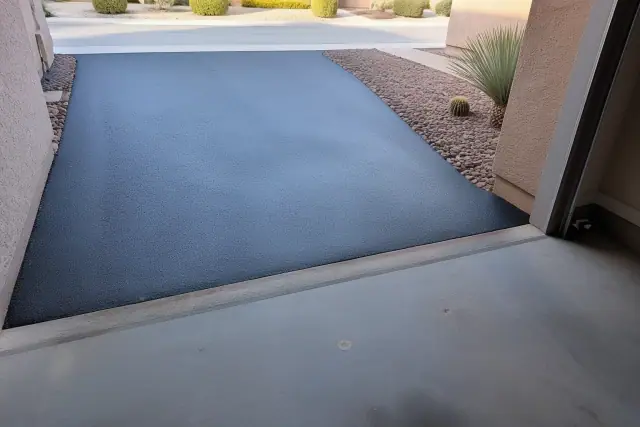
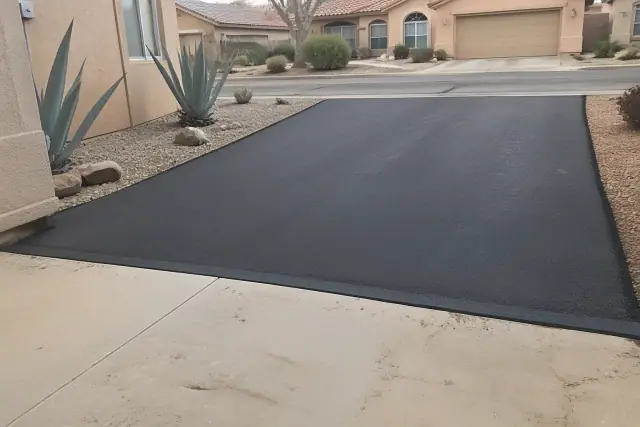
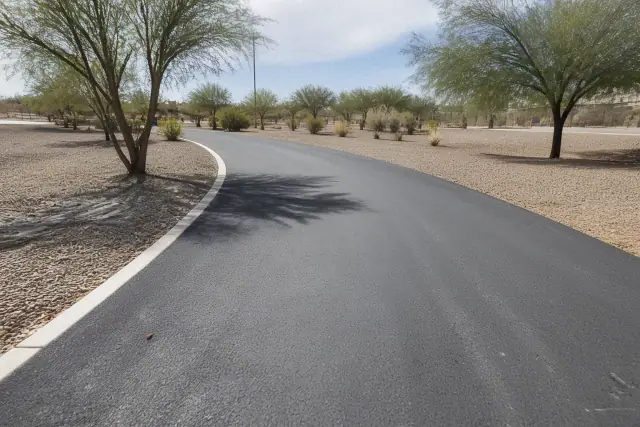
Driveway paving and installation in Mesa, AZ

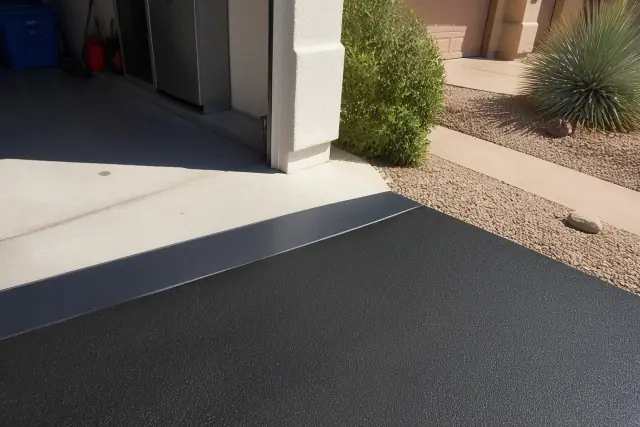
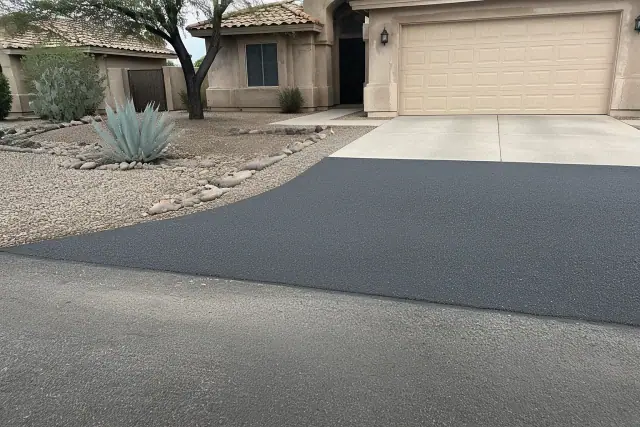
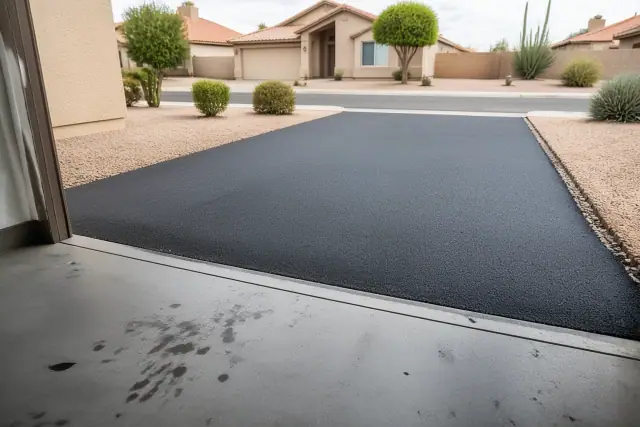
Residential driveways use hot mix asphalt over a properly prepared aggregate base. A typical installation starts with 4 to 6 inches of ABC base material compacted to 95% density, then uses grading that sends water toward the street.

Explore Service

Parking Lot Paving

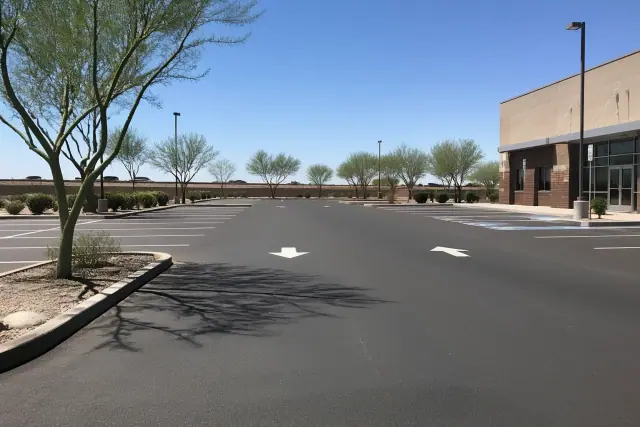
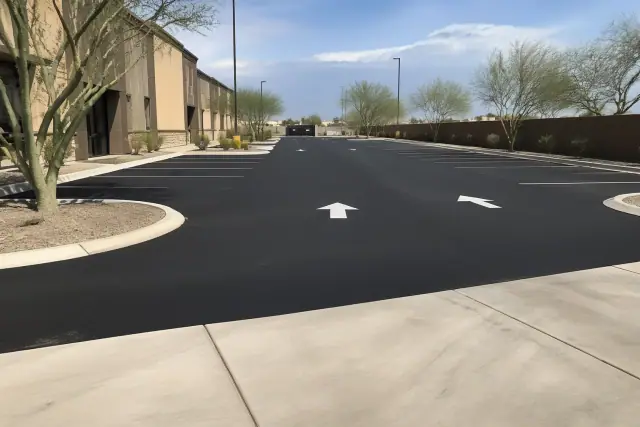
Parking lot paving in Mesa, AZ

Parking lot sections account for vehicle weight, turning movements, delivery traffic, subgrade conditions, and drainage flow. Work can include grading, base compaction, paving, striping, and ADA-compliant accessible parking layouts.

Explore Service

Commercial Asphalt Paving

Commercial asphalt paving in Mesa, AZ

Commercial scopes range from strip-mall lots to larger retail pads, medical offices, restaurants, and multi-tenant properties. Phased paving can preserve customer and tenant access wherever site conditions make that practical.

Explore Service

Residential and HOA Paving

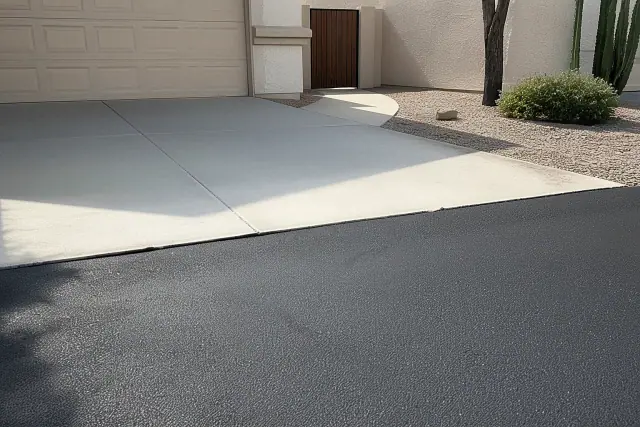
Residential and hoa paving in Mesa, AZ

Residential work includes individual driveways, shared access easements, and private roads in HOA communities. Project sizing can range from one driveway to resurfacing a private road serving a community of forty homes.

Asphalt Sealcoating

Asphalt sealcoating in Mesa, AZ

Coal-tar or asphalt-emulsion sealcoat fills surface voids, limits water penetration, and restores a deep black finish. It helps protect asphalt binder from oxidation during Arizona's 300-plus days of sunshine.

Asphalt Repair and Patching

Asphalt repair and patching in Mesa, AZ

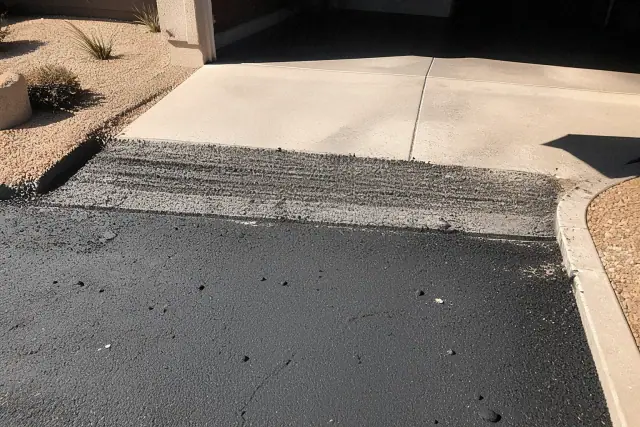
Surface crack sealing addresses hairline cracks before water reaches the base. Full-depth patching removes failed pavement and base where potholes, settlement, or deeper structural damage make a surface-only repair inadequate. Emergency pothole repair is available for commercial liability concerns, and repairs can typically be scheduled and completed within days rather than weeks.

Resurfacing and Overlays

Resurfacing and overlays in Mesa, AZ

When the base remains sound, a new hot mix overlay can correct surface distress without full removal. Typical overlay thickness is 1.5 to 2 inches, but the existing pavement is evaluated first to confirm resurfacing is appropriate.

Asphalt Milling and Grinding

Asphalt milling and grinding in Mesa, AZ

Milling typically removes the top 1 to 2 inches of deteriorated asphalt before an overlay or repaving. It can restore curb reveal, correct pavement elevation near gutters and manholes, and prepare a level bonding surface.

Parking Lot Line Striping

Parking lot line striping in Mesa, AZ

Line striping organizes stalls, traffic flow, and accessible parking after paving, repairs, or seal coating. Layout is coordinated with the lot's size, entrances, circulation, and ADA-compliant accessible spaces.

Municipal Paving Work

Municipal paving work in Mesa, AZ

Municipal paving scopes are planned around engineering standards, compaction, drainage, and traffic requirements. Private driveways, parking lots, and HOA roads remain separate from City-managed public right-of-way pavement.

Project Selection

How We Match Asphalt Work to the Site

The right paving scope depends on what is happening above and below the surface. We compare base condition, traffic, drainage, heat exposure, and remaining pavement strength before recommending new installation, repair, milling, or overlay work. National industry data indicates that publicly funded highway programs account for roughly 65% of the asphalt pavement market, while residential and commercial construction represents more than $105 billion nationally, reflecting the engineering behind proper pavement design.

Base Preparation and Compaction

A stable pavement section starts with excavation to design depth and aggregate base placed in compacted lifts. Proof-rolling or density testing confirms the foundation before hot mix asphalt covers it.

Thickness for Traffic Loads

Driveways typically receive 2 to 3 inches of compacted asphalt over prepared base. Commercial lots need added base depth and asphalt thickness when delivery trucks, heavier vehicles, and frequent turning increase pavement stress.

Positive Drainage Design

Parking lots and driveways are commonly graded to a minimum 1-2% slope toward approved drainage points. Positive drainage keeps monsoon water moving instead of allowing it to pool and weaken the subgrade. Poor grading is a common reason repair is needed on pavement only two or three years old.

Desert Heat Planning

Summer pavement temperatures regularly exceed 150 to 160 degrees, while winter nights can lower pavement temperature by 60 or more degrees before dawn. Mix placement, compaction timing, and maintenance planning need to account for that thermal cycling.

Overlay or Replacement

Surface distress over a sound base may be suitable for an overlay, while widespread base failure calls for deeper removal and reconstruction. Milling helps correct height, raveling, or rutting before new material is placed.

Maintenance Timing

New asphalt is generally scheduled for seal coating within 6 to 12 months. After that first application, many Mesa driveways and lots benefit from resealing every two to three years, adjusted for traffic and sun exposure.

Mesa Pavement Issues

Common Asphalt Problems on Mesa Properties

Heat, ultraviolet exposure, short-duration monsoon rain, and shifting caliche can damage pavement in different ways. The visible symptom matters, but the condition of the base and drainage often determines whether sealing, patching, milling, or reconstruction is appropriate. Ignored grading and drainage are common reasons crews are called to repair pavement that is only two or three years old.

Request Pavement Assessment

UV Oxidation

Unsealed asphalt can oxidize under prolonged sun exposure, fading from black to gray as the binder becomes brittle within a few years. Surface raveling and small cracks often follow when protection is delayed.

Thermal-Cycle Cracking

Asphalt softens during extreme daytime heat and contracts as pavement temperatures fall. Repeated movement stresses the asphalt matrix and can open cracks that admit water.

Monsoon Water Intrusion

Fast monsoon downpours push water through untreated cracks and weak edges. Once moisture reaches the base, it can reduce support and turn a small surface defect into a deeper repair.

Caliche and Settling

Caliche is a dense calcium carbonate layer that drains poorly and can contribute to differential settling when excavation and base work are inadequate. Larger commercial projects may need subgrade testing and an adjusted base depth.

Rutting and Raveling

Rutting forms wheel-path depressions that hold water and disrupt drainage. Raveling sheds aggregate from a brittle or deteriorated surface; both conditions can signal the need for milling before resurfacing.

Potholes and Base Failure

Potholes often appear after water and traffic have broken apart an unsupported pavement section. Full-depth patching addresses failed asphalt and base instead of covering the cavity with a short-lived surface repair.

Why Choose Us

Why Mesa Property Owners Choose Our Crews

Tempe Asphalt brings local pavement knowledge, documented testing, and project-specific planning to Mesa work. Our crews follow City of Mesa, Maricopa Association of Governments, and Arizona Department of Transportation requirements where they apply, while keeping the scope clear for property owners and managers.

Mesa Soil and Climate Knowledge

Older streets from the 1970s and 80s, rapid construction around Eastmark, and commercial corridors each present different pavement demands. The crew evaluates caliche, sun exposure, monsoon drainage, and property use before sizing the work.

Standards and Testing

Base compaction can be checked with a nuclear density gauge or proof-rolling before paving. Commercial documentation can include the scope of work, material specifications, and records needed by property managers.

Licensed, Insured, and Bonded

Tempe Asphalt maintains an Arizona contractor license along with liability insurance and bonding. Unlicensed cash work can leave an owner without recourse if the pavement fails within the first year. The crew also handles City permits when a new driveway apron connects to public right-of-way and a permit is required.

From Site Walk to Finish

Our Mesa Asphalt Paving Process

Every project begins with surface, soil, traffic, and drainage evaluation before equipment arrives. The work then moves through excavation, base preparation, testing, hot mix placement, rolling, curing guidance, and a maintenance plan appropriate to the pavement.

01.

Site Evaluation

We assess existing distress, soil type, drainage patterns, access, and expected traffic. This determines whether the site needs repair, overlay, milling, or a new pavement section.

02.

Excavation and Grading

For new work, crews excavate to the design depth and establish elevations for positive drainage. Existing curbs, gutters, manholes, street connections, and approved drainage points guide the final grade.

03.

Aggregate Base Placement

Aggregate base material is placed and compacted in lifts rather than dumped in one loose layer. Base depth is adjusted for subgrade conditions and the traffic the completed pavement must carry.

04.

Compaction Testing

The prepared base is proof-rolled or tested before asphalt placement. Confirming density at this stage helps find weak areas while they are still accessible for correction.

05.

Hot Mix Paving and Rolling

Hot mix asphalt leaves the plant at roughly 275 to 300 degrees Fahrenheit and travels in insulated trucks. Steel-drum and pneumatic rollers compact the mat behind the paver before the mix cools below its workable range, generally around 185 degrees.

06.

Cure and Maintenance Plan

New asphalt typically becomes drivable within 24 to 48 hours in Mesa heat, while full cure to maximum hardness takes 6 to 12 months. Customers are asked to vary parking positions during the first summer so stationary tires do not indent softer asphalt.

Practical Results

Asphalt Outcomes for Mesa Properties & Businesses

Case Study 1: Residential driveways: Correct base preparation, compaction, asphalt thickness, and street-directed drainage create a section designed for the home's soil and vehicle use.

Case Study 2: Active commercial lots: Phased paving, traffic-aware section design, accessible layouts, and striping help businesses maintain practical access during construction wherever possible.

Case Study 3: Aging pavement: Crack sealing, full-depth patching, milling, or overlay work targets the depth of the distress instead of applying the same repair to every surface.

Plan Your Mesa Project

Request an Asphalt
Paving
Quote

Tell Tempe Asphalt about the property type, pavement condition, drainage concerns, and work you are considering. We will walk the site and prepare a free asphalt paving quote based on the actual base, access, traffic, and scope.

Mesa Asphalt Help

Asphalt Paving FAQs for Mesa, AZ

These answers cover Mesa driveway pricing examples, pavement thickness, cure time, seal coating, repairs, overlays, local soil, drainage, permits, and the paving process. A site evaluation is still needed to turn general guidance into a property-specific scope and quote.

Call Tempe Asphalt

A 20x20 driveway covers 400 square feet. At a typical range of $3 to $7 per square foot, the general example is about $1,200 to $2,800, with the final price affected by base condition, thickness, drainage, excavation, and site access.

A 200-foot driveway at a typical 10 to 12 foot width covers roughly 2,000 to 2,400 square feet. A broad cost range is $6,000 to $16,800 depending on thickness, base work, drainage, access, equipment staging, site conditions, and current mix pricing. Paving-mixture producer prices climbed nearly 30% in a single year before easing slightly, so current material prices matter to the final quote.

Blacktop and asphalt usually refer to the same combination of aggregate and asphalt binder in everyday conversation. The meaningful differences are the mix design, base preparation, asphalt thickness, and compaction achieved during installation.

Properly built and maintained low-traffic residential pavement typically lasts 20 to 30 years. High-traffic commercial surfaces commonly run 10 to 15 years before major rehabilitation, with actual life shaped by base quality, drainage, traffic, heat, repairs, and maintenance.

A typical driveway section uses 2 to 3 inches of compacted asphalt over prepared base, but thickness is adjusted for soil and traffic. Commercial lots need more base depth and asphalt thickness when heavier vehicles and delivery traffic are expected.

New asphalt typically becomes drivable within 24 to 48 hours in Mesa's heat, although full cure to maximum hardness takes 6 to 12 months. During the first summer, avoid repeatedly parking in exactly the same spot because stationary tires can indent softer pavement in extreme heat.

The first seal coat is recommended within 6 to 12 months after installation. Many Mesa driveways and lots then benefit from resealing every two to three years, depending on traffic and sun exposure.

An overlay is considered when the pavement has surface distress but the supporting base is still sound. Pavement-preservation research indicates that adding one inch to a three-inch asphalt section can roughly double fatigue life, turning a modeled 20-year section into about 40 years, but the existing surface must be evaluated before applying that comparison to a property.

Milling removes deteriorated surface asphalt before a new overlay or repaving. It is useful for rutting, severe raveling, excess pavement height, poor curb reveal, and elevations that no longer match gutters or manholes; the reclaimed asphalt is then hauled away for recycling.

Extreme summer surface temperatures soften asphalt binder, while cooler nights make the pavement contract. Repeated thermal cycling and strong UV exposure can accelerate oxidation, brittleness, raveling, and cracking when the pavement is not properly installed and maintained.

Mesa's monsoon season runs roughly June through September, bringing short, intense rain that can overwhelm poorly graded surfaces. Positive drainage moves water toward approved points so it does not stand on the pavement, enter cracks, and undermine the base.

Caliche is a dense calcium carbonate layer that drains poorly. If it is not properly excavated and supported with an appropriate base, seasonal moisture changes can contribute to differential settling beneath a driveway or parking lot.

A new driveway apron connecting to public right-of-way typically requires a permit through the City of Mesa Transportation Department. Public right-of-way pavement is managed separately by the City's Street Maintenance division at 480-644-2160; private driveways, lots, and HOA roads are property-owner responsibilities.

Depending on the project, pavement sections, material gradation, compaction, drainage, and accessible layouts may need to follow City of Mesa Engineering Division, Maricopa Association of Governments, or Arizona Department of Transportation standards. The applicable requirements are identified when the scope and site connection are reviewed.

The process begins with site, soil, drainage, access, and traffic evaluation, followed by excavation and grading when needed. Aggregate base is placed in lifts and tested, then hot mix asphalt is paved and compacted with steel-drum and pneumatic rollers before the mix cools out of its workable range.