Proudly serving Tempe, Mesa, Chandler, Scottsdale, Gilbert & surrounding areasCall or Text 24/7: +1 (480) 571-0856

Residential Driveway Paving, Installation, and Surface Replacement in Tempe, AZ

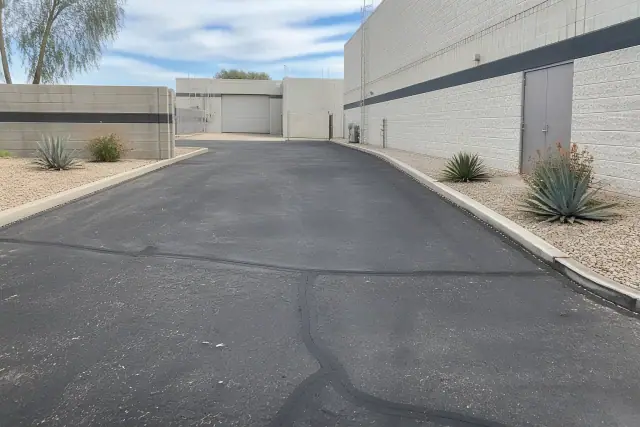
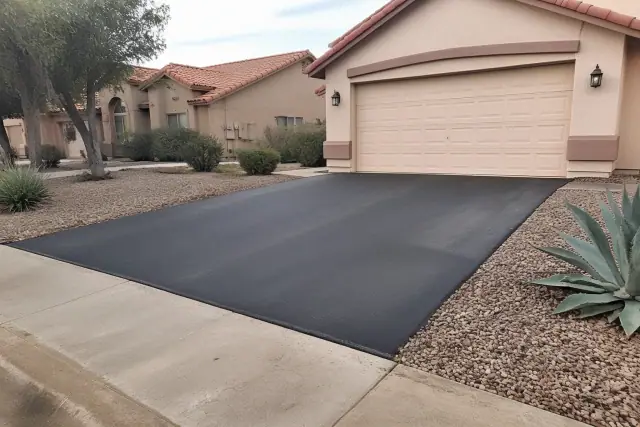
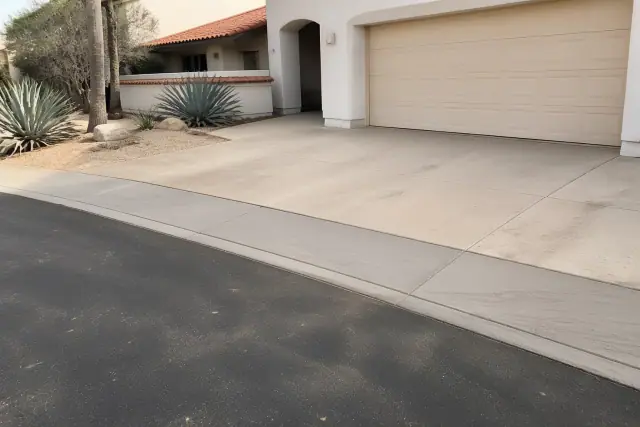
Tempe Asphalt provides driveway paving for homes and commercial properties in Tempe, Arizona. Our services include asphalt driveway installation, concrete driveway installation, driveway replacement, sealcoating, crack repair, mill-and-overlay resurfacing, and full resurfacing. We evaluate the existing surface, subgrade, lot access, and drainage before recommending an approach. The goal is a driveway designed for the property's traffic and Tempe's demanding desert conditions.

Summer pavement surface temperatures in Tempe regularly exceed 140°F, while monsoon storms from July through September can drop an inch of rain in under an hour. Without sound base preparation and grading, those conditions can lead to oxidation, raveling, alligator cracking, or standing water within a decade of installation. Caliche-heavy soils in older neighborhoods and sandy fill near the Loop 101 corridor can also compact differently from one site to the next. We test and grade for the actual lot so water moves away from foundations and the pavement has stable support.

Our crews follow Maricopa Association of Governments (MAG) standard specifications for subgrade compaction, base thickness, and hot mix asphalt placement, and we grade concrete work to ACI 330 requirements. As a licensed paving contractor operating under Arizona Registrar of Contractors requirements, we account for ADA-compliant commercial approaches and coordinate required permits with the City of Tempe Building Safety Division.

Tempe Asphalt provides driveway paving throughout Tempe and the Phoenix metro area, including Mesa, Chandler, and Scottsdale.

★ ★ ★ ★ ★4.9/5 Average Rating · 20+ Years of Experience · Thousands of Customers Helped · Licensed & Insured · Residential & Commercial

Driveway Materials & Benefits

What Does Driveway Paving Involve?

Driveway paving starts with determining whether the project is a new installation, an overlay, or replacement of a failed surface. We inspect soil type, existing cracking, base condition, drainage flow, and equipment access because each one changes the scope.

Homes built in the 1970s and 80s in south Tempe may have shallow original base depths that make a simple overlay a poor fit. When the base is sound, milling and overlaying can restore the surface; widespread base failure or drainage trouble usually calls for removal to subgrade.

The selected material is placed over a properly compacted aggregate base and graded to shed water away from structures. Asphalt offers flexibility and straightforward patching, while concrete offers a clean long-term appearance without periodic sealcoating.

Benefits of a Well-Planned Driveway

A durable driveway balances material, base preparation, drainage, thickness, and maintenance rather than treating paving as a surface-only project.

  • Flexible asphalt accommodates Tempe's thermal expansion and contraction
  • Proper grading directs runoff away from foundations
  • Compacted aggregate base helps limit early settlement
  • Asphalt cracks and patches can be repaired without replacing full panels
  • Concrete provides a clean finish with no recurring sealcoating schedule
  • Mill-and-overlay work can preserve a sound base while renewing the surface
  • Residential and commercial sections can be designed for expected traffic loads
  • Planned sealing and joint care can extend usable pavement life
Installation, Repair & Maintenance

Complete Driveway Services

Tempe Asphalt handles new asphalt and concrete driveways, replacement, resurfacing, crack and pothole repair, and preventive sealcoating. Each service is selected after checking the surface, base, drainage, and intended traffic.

Asphalt Driveway Installation

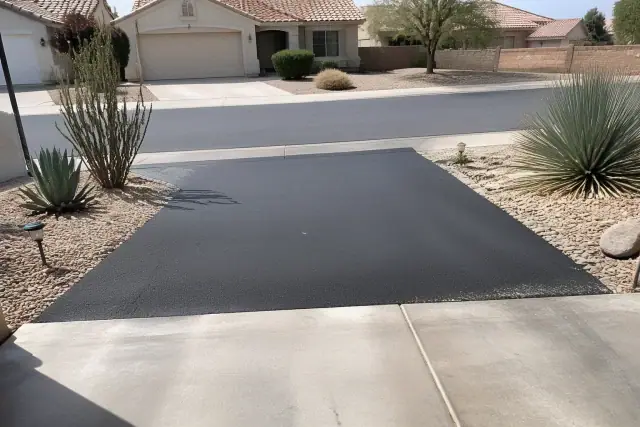
Asphalt driveway installation in Tempe, AZ

Asphalt paving itself in Tempe runs roughly $2.60 to $4.05 per square foot, with statewide averages closer to $3.33 per square foot depending on base condition and thickness. For a typical 500 to 800 square foot residential driveway, the expected range is $1,500 to $4,400 before base repair or drainage correction. Its flexible binder handles thermal movement and remains straightforward to patch.

Request Estimate

Concrete Driveway Installation

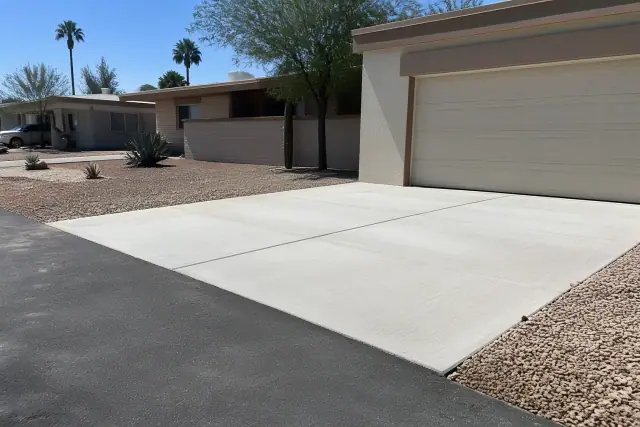
Concrete driveway installation in Tempe, AZ

Basic concrete driveway installation generally runs $8 to $15 per square foot once forming, reinforcement, and finishing are included. With proper pouring and expansion-joint spacing, it can last 25 to 30 years with limited maintenance beyond joint sealing. A cracked concrete section usually requires full panel replacement, while a localized asphalt repair may be handled as a same-day patch.

Request Estimate

Full Driveway Replacement

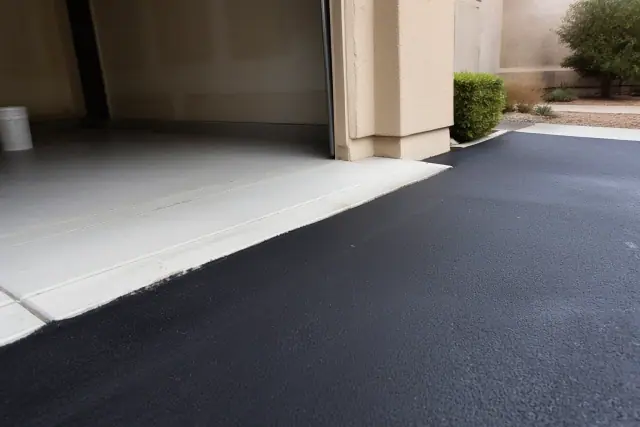
Full driveway replacement in Tempe, AZ

Full replacement removes failed pavement so the exposed subgrade, base depth, and drainage can be corrected before a new surface is installed. It is the appropriate approach when widespread alligator cracking, settlement, or water problems show that damage extends below the wearing course.

Request Estimate

Mill-and-Overlay Resurfacing

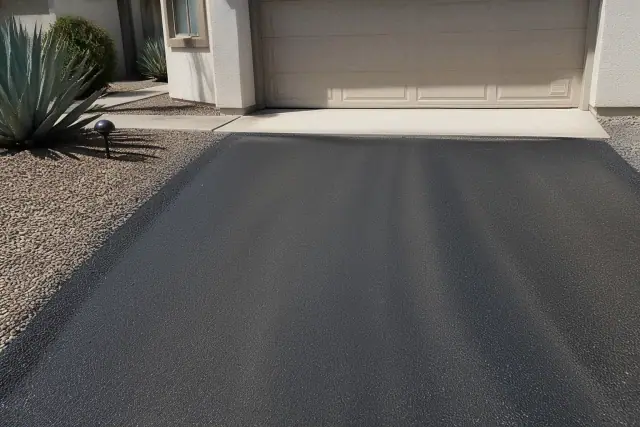
Mill And Overlay resurfacing in Tempe, AZ

When cracking covers less than roughly 30 percent of the surface and the underlying base remains sound, a mill and overlay can add another 10 to 15 years of service at a fraction of full replacement cost. We do not recommend covering widespread alligator cracking, failed base, or drainage defects because the new surface would inherit those problems.

Request Estimate

Crack and Pothole Repair

Crack and pothole repair in Tempe, AZ

Cracks in the quarter-inch to half-inch range can often be filled before water reaches and weakens the base. Once moisture and repeated summer expansion break pavement edges apart, pothole repair must address loose material as well as the visible opening.

Request Estimate

Asphalt Sealcoating

Asphalt sealcoating in Tempe, AZ

Asphalt sealcoating runs roughly $0.33 per square foot and is recommended every 2 to 3 years in Tempe's UV-intense climate. It slows the oxidation that turns asphalt gray and brittle, helping delay raveling and surface cracking.

Request Estimate
Materials & Property Uses

Driveway Paving Options

Property type, appearance goals, traffic, drainage, and budget determine which paving option fits. These choices cover the asphalt, concrete, commercial, recycled, and permeable approaches described for Tempe properties.

Residential asphalt driveways in Tempe, AZ

Residential Asphalt Driveways

Residential asphalt combines an aggregate base with compacted hot mix designed for passenger-vehicle loads. It is the most requested driveway material in Tempe because it balances upfront cost, flexibility, and maintainability.

  • Typically 4 to 6 inches of aggregate base
  • Residential base compacted to 95 percent density
  • Hot mix asphalt placed at 2 to 3 inches compacted thickness
  • Suitable for new installations and full replacements
  • Light traffic generally allowed after 24 to 48 hours
Request Estimate
Concrete and decorative finishes in Tempe, AZ

Concrete and Decorative Finishes

Concrete suits properties where a clean finish and lower recurring surface maintenance matter more than the lowest initial cost. Stamped concrete and decorative paving can add finish detail where appearance is a priority.

  • Minimum 4-inch residential slab thickness
  • Expansion joints spaced every 10 to 12 feet
  • Vehicle loading after a 5 to 7 day cure
  • Stamped concrete available for a decorative finish
  • Occasional joint sealing instead of asphalt sealcoating
Request Estimate
Commercial asphalt paving in Tempe, AZ

Commercial Asphalt Paving

Commercial work includes small business parking pads and larger lots near the Loop 101 and Rio Salado Parkway corridors. Base depth and pavement structure are designed around expected delivery-truck and repeated-traffic loads.

  • Hot mix often 3 to 4 inches thick for heavier traffic
  • Thicker aggregate base than residential applications
  • ADA-compliant accessible spaces and access aisles
  • Traffic-control and drainage planning
  • Striping, restriping, stall counts, and fire-lane markings
Request Estimate
Recycled asphalt (rap) in Tempe, AZ

Recycled Asphalt (RAP)

Recycled asphalt, or RAP, incorporates reclaimed pavement into new hot mix. When properly proportioned, it can reduce material cost while performing comparably to virgin mixes for suitable uses.

  • Reclaimed pavement reused in fresh hot mix
  • Practical for secondary driveways
  • Useful for overflow parking areas
  • Option for budget-conscious commercial lots
  • Specified only where full-strength virgin mix is unnecessary
Request Estimate
Permeable paving in Tempe, AZ

Permeable Paving

Permeable paving lets stormwater filter through the surface rather than running toward adjacent lots. It can be considered where drainage restrictions or tight grading tolerances make conventional runoff management difficult.

  • Allows stormwater to pass through the surface
  • Reduces runoff toward neighboring properties
  • Can address tight grading tolerances
  • Relevant to low-lying sites near Tempe Town Lake
  • Selected after site drainage conditions are assessed
Request Estimate
Finding Your Right Fit

Choosing the Right Driveway Approach

The right approach depends on lot size, existing subgrade, drainage slope, traffic, material preference, and whether the project is new paving or replacement. An in-person assessment identifies which conditions can be preserved and which must be corrected before paving.

Site-Specific Subgrade Testing

Caliche-heavy soil in older Tempe neighborhoods compacts differently from the sandy fill found near the Loop 101 corridor. We test the actual site rather than relying on a standard depth or assuming neighboring lots have the same support.

Standards-Based Construction

Base depth and compaction follow MAG standard details, while concrete slab-on-grade work is graded to ACI 330 requirements. Driveway grading uses a minimum 1 percent slope, and ADA-compliant commercial approaches generally use no more than a 2 percent cross slope.

Straightforward Repair Recommendations

We explain whether repair, mill and overlay, or full replacement fits the observed damage rather than defaulting to the largest scope. Proper base compaction and drainage can avoid repeat patching over 5 to 10 years and help a driveway reach its full 15 to 25 year lifespan instead of failing around year 7 or 8.

What Sets Us Apart

Why Choose Tempe Asphalt for Driveway Paving?

Tempe Asphalt combines site testing, drainage planning, material-specific construction, and required permit coordination in one scope. As a licensed paving contractor operating under Arizona Registrar of Contractors requirements, we confirm City of Tempe requirements before scheduling work that affects an approach, curb cut, or public right-of-way.

Request Site Assessment

Alligator Cracking and Raveling

Interconnected cracks and a loose, gray surface point to oxidation, movement, or weakening below the wearing course. In Tempe's heat, leaving these symptoms untreated lets damage spread and can turn a repairable surface into a replacement project.

Standing Water and Poor Drainage

Monsoon runoff that pools on the driveway or against a foundation signals insufficient slope or a low area. Correcting grade and drainage before resurfacing prevents water from continuing to enter the pavement structure.

Shallow or Failed Base

Shallow original base in some older south Tempe driveways can no longer support a durable overlay. Soft spots, recurring cracks, and movement after patching indicate that the subgrade and aggregate base need direct evaluation.

UV Oxidation and Heat Cycling

UV exposure dries asphalt binder, turning the surface gray and brittle, while pavement temperature changes of more than 80 degrees between a July afternoon and a January night drive expansion and contraction. Timely sealcoating helps slow oxidation before raveling and cracks accelerate.

Open Cracks and Potholes

Open cracks allow rainwater into the base. Repeated summer expansion can pump that moisture deeper until edges break down and a pothole forms, so early crack filling is less disruptive than waiting for structural damage.

Settlement and Sunken Edges

A driveway that settles in its first Arizona summer, drops at the edges, or sends water toward the house may have inconsistent compaction or grading. Testing the support and correcting the cause is more durable than repeatedly patching the visible depression.

How It Works

Our Driveway Paving Process

Every project follows a site-specific sequence from assessment to cure. New installations and replacements differ at demolition, but both rely on measured drainage, verified base support, correct material placement, and a final review before normal use.

01.

Site Visit and Measurements

We measure square footage, inspect cracking and soil, probe the existing base, trace drainage, note equipment access, and determine whether permits are required. This in-person assessment supports an accurate scope instead of a phone-only estimate.

02.

Removal and Subgrade Assessment

For replacement, we demolish and remove old pavement before assessing the exposed subgrade. For new work, we begin at the prepared site and test the caliche or sandy fill rather than assuming uniform conditions.

03.

Aggregate Base and Compaction

We correct weak areas, place the specified aggregate depth, and compact the foundation for expected residential or commercial loading. Compaction testing confirms support before surface material is placed.

04.

Drainage Grading

We establish elevations so runoff leaves the pavement and moves away from foundations. Commercial approaches are checked for applicable ADA slope and cross-slope requirements while still providing drainage.

05.

Paving and Finishing

Hot mix asphalt is placed and compacted to the specified pavement section. Concrete work is formed, reinforced, poured, finished, and jointed for the property's load and layout.

06.

Curing and Final Review

We protect the fresh surface during its material-specific cure, then review edges, drainage, joints, and finish. Asphalt typically permits light traffic within 24 to 48 hours; concrete generally needs 5 to 7 days before vehicle loading.

Plan Your Project

Schedule a Driveway
Paving
Consultation

Request an in-person driveway assessment to review square footage, base condition, drainage, material choice, and any permit needs. Tempe Asphalt will use the site findings to prepare a project-specific scope and estimate.

Driveway Paving Help

Driveway Paving FAQs

Find answers to common questions about driveway materials, cost, maintenance, permitting, and installation in Tempe. A site assessment is still needed to confirm conditions and the right scope for an individual property.

Call About Your Driveway

For driveway paving, applicable city requirements can involve curb cuts, driveway approaches, right-of-way work, and construction activity within Tempe. Because municipal provisions can change, the current requirements should be confirmed with the City of Tempe before work that modifies an apron, curb, or public-street connection.

Tempe has relatively few rainy days, with precipitation concentrated in winter storms from December through March and the North American monsoon from roughly July through September. A monsoon storm can deliver close to an inch of rain in under an hour, so driveway slope and drainage still matter in a dry climate.

Winter daytime highs are typically in the 65 to 70°F range, with overnight lows dropping into the 40s. Those milder conditions can provide a useful window for asphalt installation and concrete curing without the extreme summer heat.

Asphalt paving itself typically runs $2.60 to $4.05 per square foot, while a basic concrete driveway generally runs $8 to $15 per square foot. Existing base condition, removal, access, drainage correction, and decorative finishes can change the final total.

Asphalt usually has the lower initial cost, handles thermal movement well, and is easier to patch, but it needs periodic sealcoating. Concrete costs more upfront and a cracked section can require panel replacement, yet it offers a clean appearance and does not need an asphalt sealcoating schedule.

Asphalt pavement in Arizona generally lasts 12 to 25 years. Residential driveways in Tempe typically reach 15 to 20 years, with some approaching 25 years when base compaction, installation thickness, drainage, and maintenance are all favorable.

Replacing pavement within an existing private-property footprint may not require a separate permit, but altering a driveway approach, curb cut, apron, or public right-of-way connection requires City of Tempe review. Commercial projects commonly involve permitting and site-plan review for ADA access and drainage, so requirements should be confirmed during the site assessment.

The recommended interval is roughly every 2 to 3 years in Tempe's UV-intense climate. Sealcoating slows oxidation, but open cracks should be repaired and the surface condition checked before coating.

A mill and overlay may be appropriate when cracking affects less than roughly 30 percent of the surface and the base remains sound. Full replacement is the better fit when there is widespread alligator cracking, settlement, base failure, or unresolved drainage trouble.

A new asphalt driveway generally allows light traffic after 24 to 48 hours. Concrete usually needs 5 to 7 days of curing before vehicle loading, depending on the project conditions.

The aggregate base distributes vehicle loads and supports the finished surface, while proper compaction helps prevent settlement. Tempe's caliche-heavy soil and areas of sandy fill compact differently, so testing the actual subgrade is more reliable than assuming a uniform base depth.

Commercial pavement is designed for repeated traffic and heavier delivery loads, often using 3 to 4 inches of hot mix over a thicker aggregate base. The scope can also include traffic control, ADA-compliant spaces and access aisles, drainage planning, striping, and fire-lane markings.

An accurate quote starts with an in-person visit to measure square footage, probe the base, inspect cracking, review access, and trace drainage. The scope should also account for old-material removal, material choice, finish details, and any permit requirements before a price is finalized.