Proudly serving Tempe, Mesa, Chandler, Scottsdale, Gilbert & surrounding areasCall or Text 24/7: +1 (480) 571-0856

Asphalt Paving, Replacement, and Repair Services in Glendale, AZ

Tempe Asphalt provides asphalt paving in Glendale, AZ, for homeowners, businesses, and public agencies. Our crews handle new paving, asphalt repair and patching, commercial lots, residential driveways, overlays, and full replacement. We also provide crack filling and sealing, sealcoating, striping and marking, grading, demolition, and haul off. Every recommendation starts with the property's subgrade, drainage, and traffic load.

Glendale pavement faces dark-surface temperatures that regularly climb past 160 degrees, then winter nights in the 40s. That cycling accelerates binder oxidation and cracking, while monsoon runoff can expose weak drainage and caliche-heavy subgrades. We evaluate whether damage is surface-level or structural before recommending a patch, overlay, or replacement. The goal is a scope matched to the site instead of a one-size-fits-all repair.

We work throughout Glendale, including Catlin Court, Downtown Glendale, the areas near State Farm Stadium and Westgate, the Arrowhead Towne Center corridor, and north Glendale, with additional coverage across Peoria, Surprise, El Mirage, Tempe, Phoenix, and Maricopa County.

5-star rating4.9/5 Average Rating - 20+ Years of Experience - Glendale Water Treatment Experts - Residential & Commercial
Asphalt Services

Paving & Maintenance Services in Glendale, AZ

Choose a scope based on pavement condition, vehicle loads, drainage, and long-term plans. Our Queen Creek location page explains how the same evaluation-first approach applies in another Valley community.

Asphalt Paving

Asphalt paving in Glendale, AZ

Hot-mix asphalt is placed over a prepared aggregate base and compacted while it remains within its workable temperature window. We match pavement depth and base preparation to soil, drainage, and expected traffic.

Explore Service

Asphalt Repair & Patching

Asphalt repair & patching in Glendale, AZ

We remove failed material and address potholes, depressions, and localized damage at the source instead of skimming a thin layer over unstable pavement.

Explore Service

Commercial Asphalt Paving

Commercial asphalt paving in Glendale, AZ

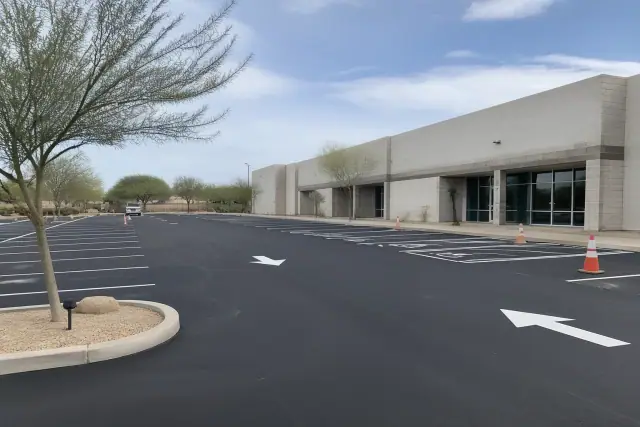
Parking lots, office parks, retail centers, restaurants, and industrial yards need pavement sections built for delivery trucks, forklifts, and continuous sun exposure.

Explore Service

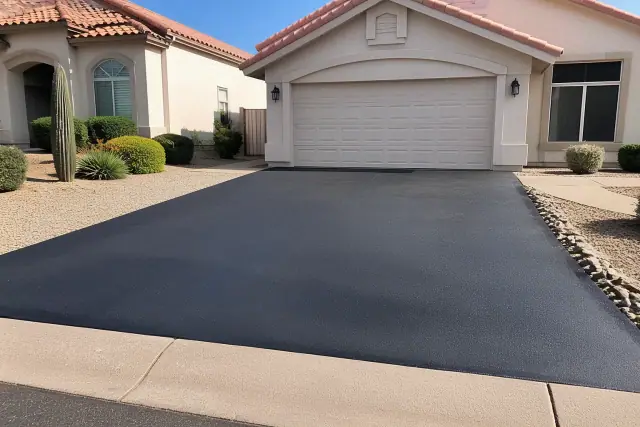
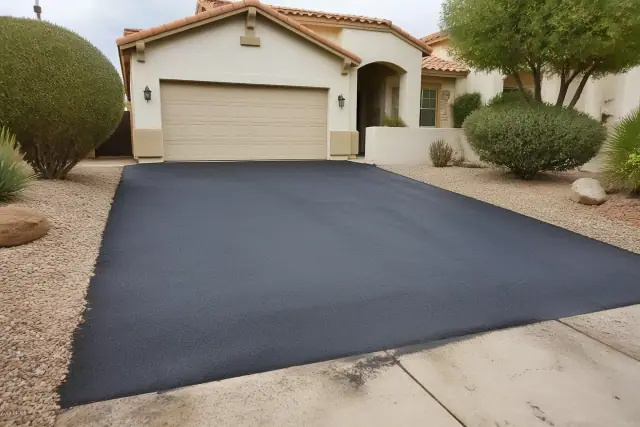
Residential Driveway Paving

Residential driveway paving in Glendale, AZ

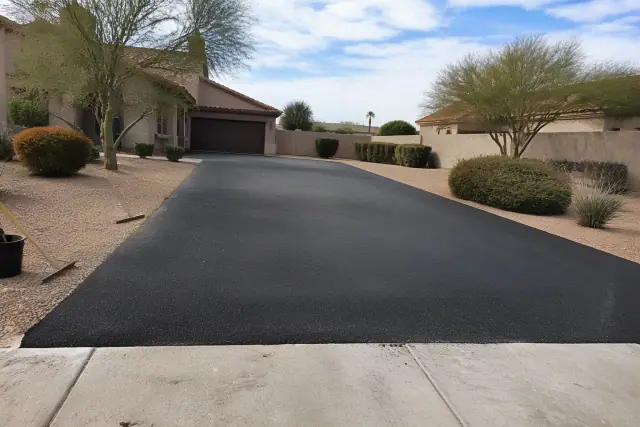
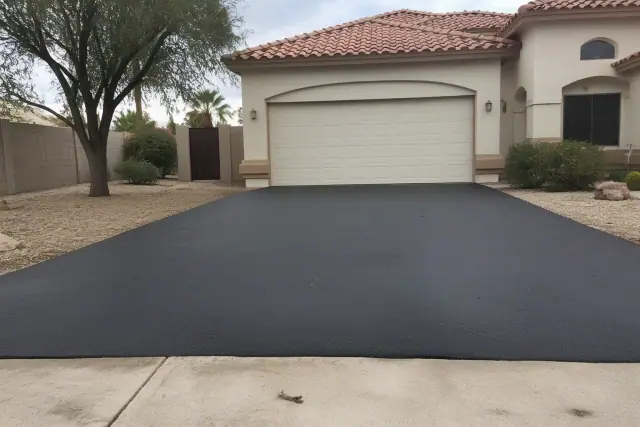
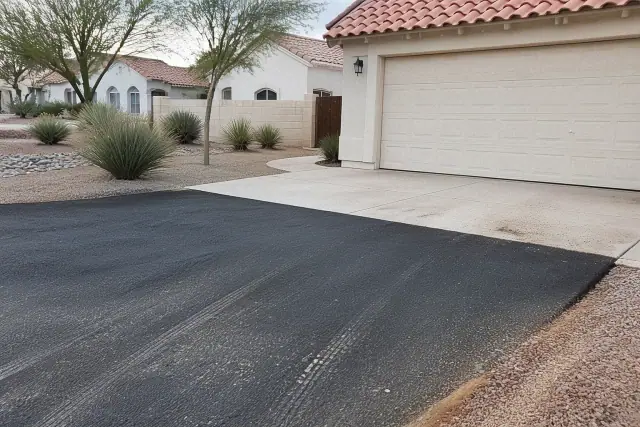
Most standard driveways use 2 to 3 inches of compacted asphalt over a properly graded aggregate base, with the final depth based on soil and vehicle weight.

Asphalt Sealcoating

Asphalt sealcoating in Glendale, AZ

Sealcoating slows UV-driven binder oxidation and helps keep water out of the mat. Most Glendale properties benefit from a 2 to 3 year sealcoating cycle.

Asphalt Resurfacing & Overlay

Asphalt resurfacing & overlay in Glendale, AZ

When existing pavement remains structurally sound, an overlay adds a new wear course without full removal. Even one inch over a stable base can roughly double the pavement's remaining fatigue life.

Asphalt Removal & Replacement

Asphalt removal & replacement in Glendale, AZ

For structural failure, we handle demolition, haul off, subgrade correction, and complete reinstallation so the pavement is rebuilt from the ground up.

Crack Filling & Crack Sealing

Crack filling & crack sealing in Glendale, AZ

Prompt sealing blocks water from reaching the base. Linear cracks wider than a quarter inch deserve attention before heat and runoff widen the failure.

Striping & Marking

Striping & marking in Glendale, AZ

Crisp parking-lot markings organize traffic and refresh commercial properties. We integrate ADA-compliant striping with paving and maintenance when the project requires it.

Grading, Demolition & Haul Off

Grading, demolition & haul off in Glendale, AZ

We establish slope for drainage, remove failed pavement, haul off debris responsibly, and prepare the site for a stable base and new asphalt.

Project Planning

How to Choose the Right Asphalt Approach

The right scope depends on what the pavement supports, what is happening below the surface, and how water leaves the site. A targeted repair can be sensible for isolated failure, while widespread cracking or soft base conditions may call for an overlay or full replacement.

Traffic Load & Pavement Use

Passenger vehicles, delivery trucks, RVs, trailers, and forklifts place very different demands on a pavement section. Traffic type and frequency guide asphalt depth and base design.

Base & Subgrade Condition

Caliche-heavy soils and trapped moisture can undermine the mat long before the surface wears out. Testing the subgrade helps determine whether the existing base can remain or needs correction.

Drainage & Grading

Standing water is one of the fastest ways to damage asphalt. Proper slope and edge drainage help move monsoon runoff away from the pavement and its supporting base.

Asphalt Thickness

Two inches is generally adequate for standard passenger-vehicle driveways over a properly prepared base, while heavier vehicles or poor drainage may justify 3 inches.

Repair, Overlay, or Replacement

Localized damage may respond to full-depth patching, and structurally sound pavement may accept an overlay. Soft spots, pumping, or cracking across more than 25 to 30 percent of the surface often point toward structural work.

Maintenance Timing

Plan for crack sealing as hairline cracks appear, often within the first year or two. Periodic sealcoating plus routine inspection of edges and drainage can catch damage before it reaches the base.

Glendale Pavement Issues

Common Asphalt Problems for Glendale Properties

Heat, UV exposure, monsoon water, drainage problems, and weak base material leave recognizable failure patterns. We assess the symptom and the supporting layers before deciding whether maintenance, patching, overlay, or replacement is appropriate.

Request Pavement Evaluation

Heat & UV Oxidation

Intense UV exposure dries asphalt binder and makes the mat brittle. Daily temperature cycling then drives repeated expansion and contraction that can open early cracks.

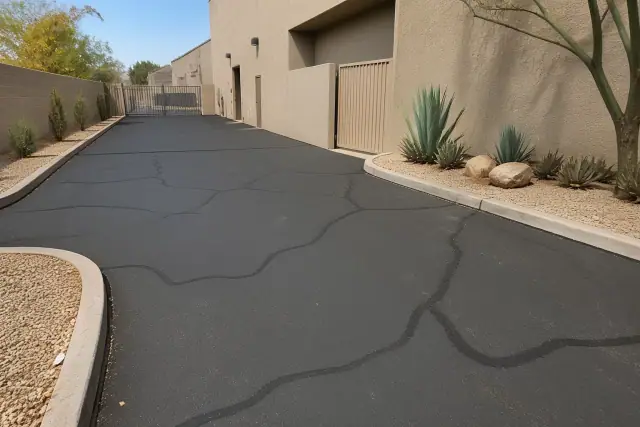
Alligator Cracking

A reptile-skin pattern usually signals base failure, not a simple surface crack. Covering it without correcting the support below tends to leave the underlying cause in place.

Potholes & Depressions

Potholes and birdbath depressions collect monsoon water and expand as weakened edges break away. Full-depth patching may be needed when the failure extends below the surface.

Rutting & Soft Spots

Wheel-path ruts, soft areas, and pumping under vehicles indicate that the pavement or base is no longer carrying loads evenly.

Wide Linear Cracks

Open linear cracks admit water into the base and spread under heat cycling. Sealing them promptly can slow deeper damage when the surrounding pavement remains stable.

Raveling & Loose Aggregate

Raveling occurs when aggregate loosens from an aging surface. Early evaluation helps determine whether preservation can still protect the mat or surface rehabilitation is needed.

Why Choose Us

Why Choose Tempe Asphalt for Glendale Paving?

As a local, licensed asphalt contractor, Tempe Asphalt combines Arizona-specific site evaluation with the equipment and manpower for residential, commercial, and municipal work. We keep grading, demolition, paving, striping, and sealcoating coordinated as one project when the scope calls for it.

Local Climate & Soil Knowledge

Our recommendations account for Glendale's heat cycling, caliche-heavy soils, and monsoon drainage rather than borrowing assumptions from milder regions.

Standards-Based Compaction

Crews compact hot-mix asphalt to density specifications consistent with National Asphalt Pavement Association standards and use Arizona Department of Transportation mix-design principles adapted for local traffic and climate.

Complete Project Coordination

We coordinate City of Glendale permits for commercial paving and right-of-way work, and can carry a project from demolition and grading through paving, striping, and sealcoating.

Simple Process

Our Asphalt Paving Process in Glendale

A durable pavement section begins below the asphalt. We evaluate the site, establish drainage, build the base, place hot mix at workable temperature, compact it to density, and explain the cure and maintenance plan.

01.

Site Evaluation & Scope

We measure existing pavement thickness, review traffic demands, inspect drainage, and determine whether damage is surface-level or structural.

02.

Excavation & Grading

Failed material is removed as needed, and the subgrade is shaped to establish slope so standing water does not collect on or beneath the pavement.

03.

Aggregate Base Installation

We install and compact an aggregate base course, typically 4 to 6 inches depending on soil conditions and expected loads.

04.

Hot-Mix Asphalt Placement

Hot-mix asphalt is placed in one or two lifts at a temperature that allows proper spreading and compaction.

05.

Roller Compaction

Steel-drum and pneumatic rollers compact each lift while the mix remains workable, helping the finished mat reach the specified density.

06.

Cure & Maintenance Guidance

New asphalt needs about 30 days to fully cure. We explain when regular vehicle use is appropriate, how to avoid stationary wheel turns and sharp-edged loads early on, and when to begin maintenance.

Project Outcomes

Asphalt Results for Glendale Homes & Businesses

Case Study 1: Residential driveways: With correct base preparation and compaction, a well-built driveway can provide 15 to 20 years of service before major rehabilitation.

Case Study 2: Commercial properties: Traffic-specific pavement depth and crisp striping can improve durability, circulation, and curb appeal for retail centers, offices, restaurants, and industrial yards.

Case Study 3: Failed pavement: Demolition, haul off, subgrade correction, and full replacement address structural causes instead of covering them with a short-lived surface fix.

Plan Your Project

Request a Glendale
Asphalt Paving
Evaluation

Tell us whether you're dealing with a driveway, parking lot, industrial yard, potholes, cracks, drainage, or a complete replacement. Tempe Asphalt will assess the pavement and base, explain realistic options, and provide a site-specific estimate.

Glendale Asphalt Help

FAQs About Asphalt Paving in Glendale, AZ

These answers cover driveway pricing, new-pavement care, contractor questions, local conditions, service areas, repair decisions, and long-term maintenance. For a site-specific recommendation, request an evaluation.

Call Tempe Asphalt

A 20x20 driveway is 400 square feet. Pricing depends on base condition, asphalt thickness, grading, and access; the draft describes most residential paving as several dollars per square foot, so a small project often lands in the low thousands rather than the tens of thousands associated with larger commercial lots. Tempe Asphalt provides a site-specific quote after checking the base and drainage.

Avoid driving or parking on new asphalt for at least a few days, and avoid turning the wheels sharply while stationary for several weeks. Keep kickstands, jack stands, and narrow furniture feet off the still-curing mat. Full curing takes about 30 days in Glendale's climate, and sealcoat should not be applied before that curing process is complete.

Ask about license and insurance status, the proposed base thickness and asphalt depth, and how drainage and grading will be handled. Ask what compaction equipment will be used and whether density is tested. A written scope should describe base preparation, not only the top asphalt layer.

Two inches of compacted asphalt over a properly prepared base is generally adequate for standard passenger-vehicle traffic. Three inches provides more structural durability when a driveway regularly supports heavier vehicles, RVs, or trailers, or when the site has poor drainage.

The draft highlights Arrowhead Ranch and areas near Sahuaro Ranch Park for newer construction, mature landscaping, and access to retail and schools. Historic Catlin Court offers a different setting with a walkable district and preserved older homes.

Glendale is an economically diverse city of roughly 248,000 residents, so household incomes and home values vary considerably by neighborhood. North Glendale tends to have newer, higher-value housing stock, while other areas include more affordable established neighborhoods.

Glendale manages water carefully in a desert climate and relies in part on Colorado River and Salt River Project allocations. For asphalt projects, the immediate water issue is usually site drainage and monsoon runoff rather than the municipal water supply.

Recent growth described in the draft includes distribution and logistics facilities near major freeway corridors, retail expansion around Arrowhead Towne Center, and residential growth in north Glendale. The State Farm Stadium and Westgate area also continues to see entertainment and mixed-use development.

Most Glendale properties should plan on sealcoating every 2 to 3 years. The coating helps slow UV-driven binder oxidation and keeps water from entering the pavement mat.

Localized potholes and isolated failures may be candidates for full-depth patching. When cracking covers more than 25 to 30 percent of the surface, or soft spots and pumping show base failure, full replacement or a structural overlay is usually the more economical path.

Yes, when the existing pavement and base remain structurally sound. Adding even one inch of asphalt over a stable base can roughly double the pavement's remaining fatigue life without the cost of full removal.

Low-traffic residential streets in mild climates can last 20 to 30 years, but Glendale's heat load and monsoon drainage can shorten that window. The draft estimates 15 to 20 years before major rehabilitation for a well-built local driveway, while noting that correct base preparation and compaction can be the difference between a driveway that lasts 15 years and one that lasts 25 years or more.

Installation begins with excavation and grading for drainage, followed by a compacted aggregate base that is typically 4 to 6 inches depending on soil and traffic. Hot-mix asphalt is then placed in one or two lifts and compacted with steel-drum and pneumatic rollers while the mix remains workable.

Commercial paving and right-of-way work may require permits through the City of Glendale. Tempe Asphalt handles that permit coordination directly as part of the project scope.

Coverage includes Catlin Court, Downtown Glendale, areas near State Farm Stadium and Westgate, the Arrowhead Towne Center corridor, and north Glendale. Tempe Asphalt also serves Peoria, Surprise, El Mirage, Tempe, the Phoenix metro area, and projects across Maricopa County.