Proudly serving Tempe, Mesa, Chandler, Scottsdale, Gilbert & surrounding areasCall or Text 24/7: +1 (480) 571-0856

Asphalt Paving, Driveway Installation, and Pavement Maintenance in Gilbert, AZ

Tempe Asphalt provides asphalt paving in Gilbert, Arizona, for homeowners, property managers, and commercial developers. Our work includes new driveway installation, overlays and resurfacing, hot-mix repairs and patching, seal coating, parking lot paving, striping, and full removal and excavation. We handle single-family driveways, HOA common areas, access roads, and multi-acre commercial lots across the East Valley. Every project follows the same surface-preparation, compaction, and quality-control process regardless of size.

Gilbert's dark pavement can exceed 140 degrees in summer, while monsoon storms can drop an inch of rain in under an hour. Heat softens and oxidizes asphalt binder, and sudden runoff can exploit cracks and wash out the base. We evaluate soil, drainage, traffic load, and existing pavement condition before recommending new paving, an overlay, or targeted repair. That site-specific planning helps protect driveways and lots against rutting, cracking, and premature base failure.

Gilbert's 2023 population of 293,630 has driven continued growth in subdivisions, roads, and commercial corridors. We serve properties near the Heritage District, San Tan Village, Val Vista Lakes, Power Ranch, Seville, and Circle G Ranches, as well as neighboring East Valley communities.

5-star rating4.9/5 Average Rating - 20+ Years of Experience - Gilbert Water Treatment Experts - Residential & Commercial
Asphalt Paving Services

Asphalt Paving Services in Gilbert, AZ

We match each paving service to the property's base condition, drainage, traffic, and intended use. Our regular service area includes Gilbert, Chandler, Mesa, Queen Creek, and Tempe, and our coverage also extends west to Phoenix; we confirm project scope before scheduling an estimate.

Asphalt Driveway Paving and Installation

Asphalt driveway paving and installation in Gilbert, AZ

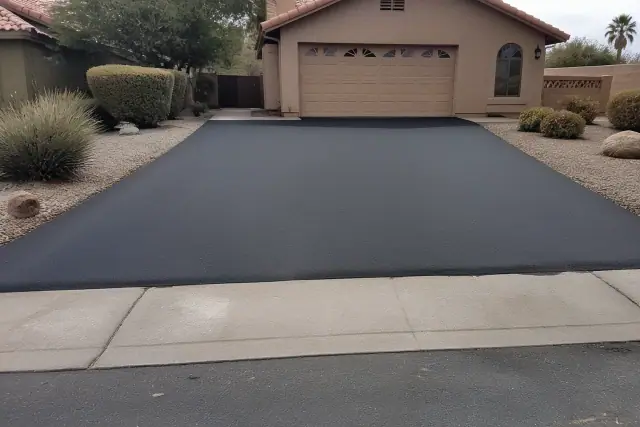
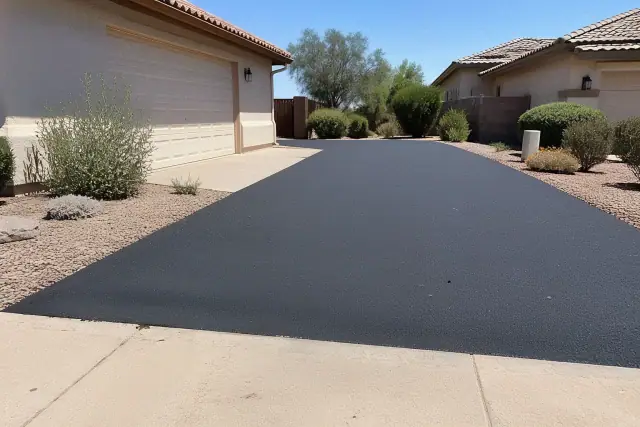
New Gilbert driveways begin with excavation, grading, and a compacted aggregate base. A typical residential design uses a 2 to 3 inch compacted asphalt surface over a 4 to 6 inch aggregate base, placed in one or two lifts and compacted with a vibratory roller according to expected load and soil conditions.

Explore Service

Asphalt Resurfacing and Overlays

Asphalt resurfacing and overlays in Gilbert, AZ

When the pavement surface is cracked but the base remains sound, an overlay can renew it without full removal. We mill the existing surface where needed and bond a new hot-mix layer, typically 1.5 to 2 inches, to restore HOA common areas, commercial lots, and driveways.

Explore Service

Asphalt Repair and Patching

Asphalt repair and patching in Gilbert, AZ

We repair potholes, alligator cracking, and crumbling edges with saw-cut boundaries and hot-mix asphalt compacted to the surrounding grade. Small patch jobs typically take one day, while larger repaired sections may need a curing period before traffic returns.

Explore Service

Asphalt Seal Coating

Asphalt seal coating in Gilbert, AZ

Seal coating helps slow UV oxidation, limit water penetration, and restore a uniform black finish. For Gilbert residential driveways, the recommended interval is every 2 to 3 years, with more frequent attention for commercial lots carrying heavier daily traffic.

Commercial Parking Lot Paving

Commercial parking lot paving in Gilbert, AZ

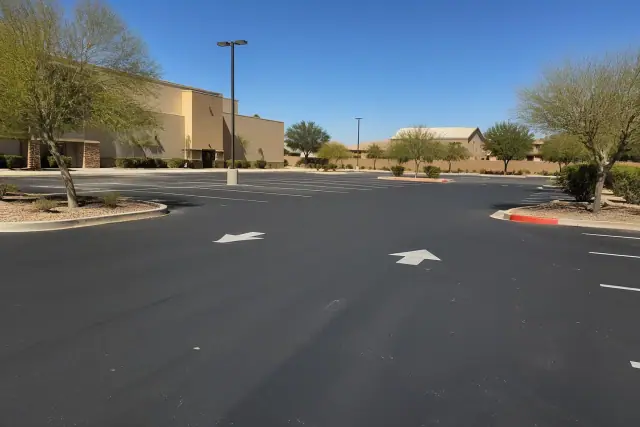
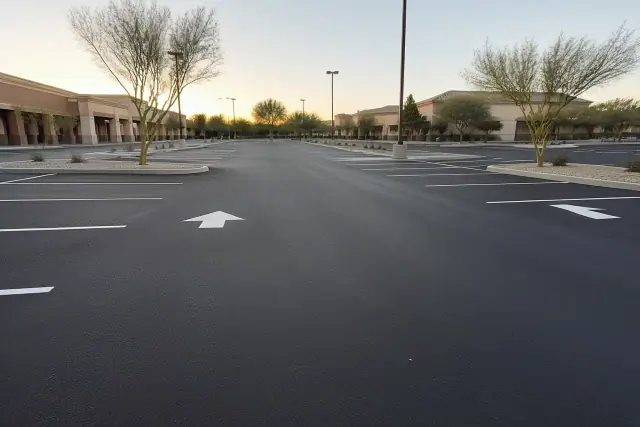
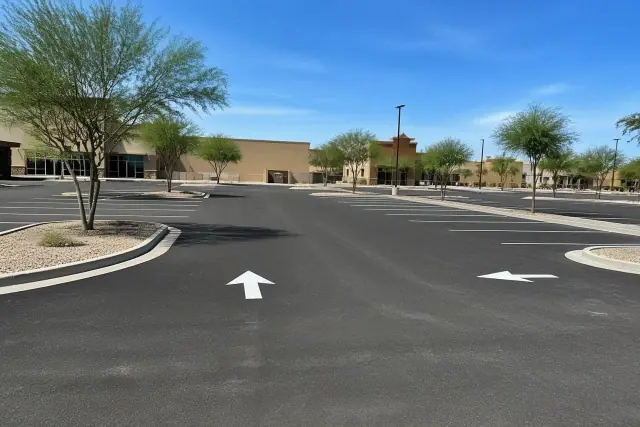
Parking lot designs account for delivery-truck loads, ADA-compliant layouts, drainage slopes, and Town of Gilbert stormwater requirements. Cross-slope grading, reinforced base sections in drive lanes, and compaction testing help reduce rutting at retail centers, medical offices, and industrial properties.

Commercial Asphalt Services

Commercial asphalt services in Gilbert, AZ

Commercial work includes loading docks, access roads, parking areas, and municipal-adjacent projects. We can phase paving to help a business remain operational, coordinate permitting when required, and provide project documentation for facilities that maintain compliance records.

Residential Asphalt Paving

Residential asphalt paving in Gilbert, AZ

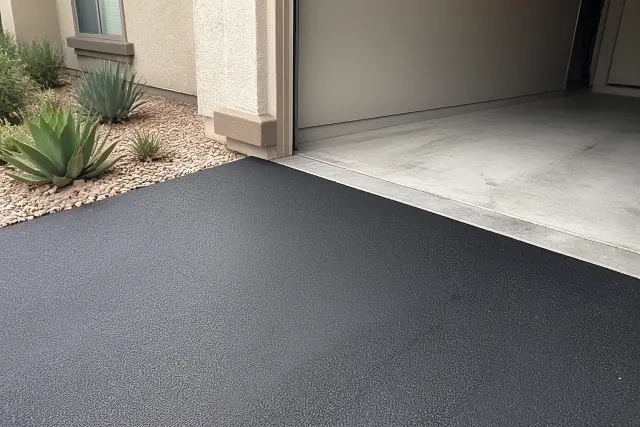
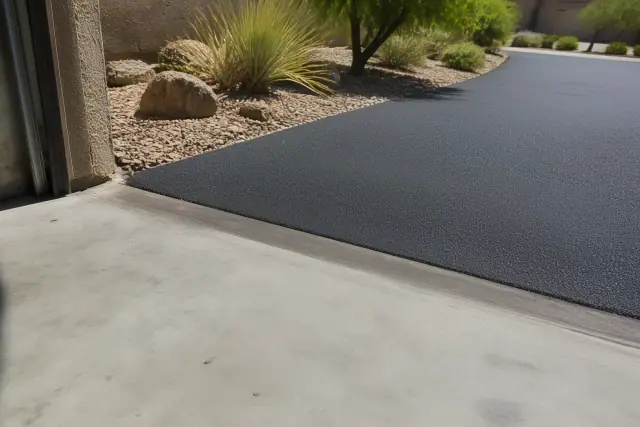
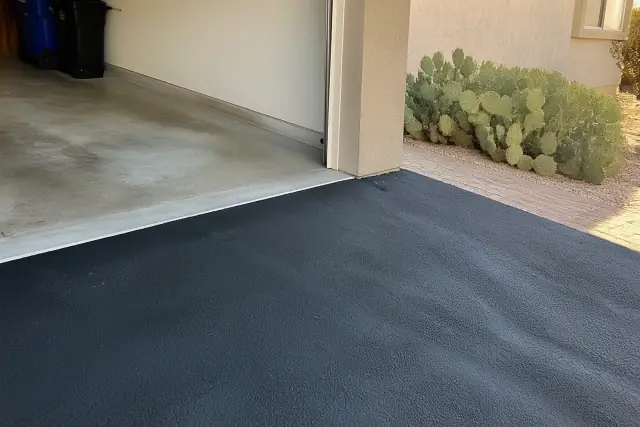
Residential paving ranges from single-car driveways in established neighborhoods to longer, wider drives near Power Ranch and Seville. We grade around landscaping, match garage and sidewalk elevations, and account for HOA design guidelines common in Gilbert's planned communities.

Asphalt Striping and Line Marking

Asphalt striping and line marking in Gilbert, AZ

We lay out and restripe parking stalls, fire lanes, and ADA-compliant accessible spaces with reflective, durable traffic paint rated for Arizona UV exposure. New layouts follow dimensions consistent with local code and accessibility requirements.

Asphalt Removal and Excavation

Asphalt removal and excavation in Gilbert, AZ

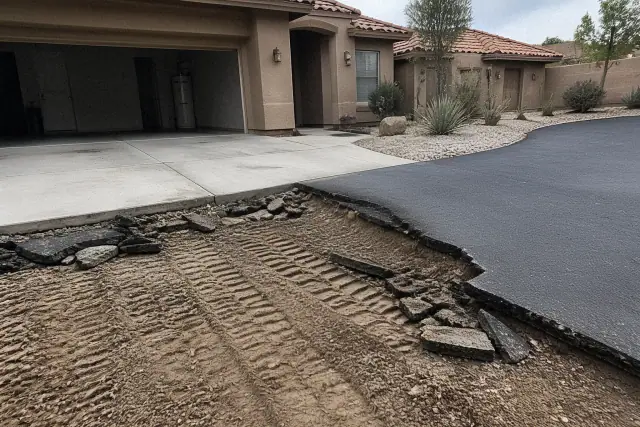
Surfaces that have failed beyond overlay are removed down to the base so unsuitable material can be hauled away and the pavement rebuilt from grade. Full-depth work is often appropriate for original-construction driveways from Gilbert's growth in the 1990s and 2000s that did not receive regular maintenance.

Asphalt Maintenance Planning

Asphalt maintenance planning in Gilbert, AZ

Maintenance planning combines condition checks, timely crack repair, and protective seal coating before damage reaches the base. A well-installed, properly maintained low-traffic residential surface can last 20 to 30 years, while neglected pavement often requires major rehabilitation much sooner.

Project Planning

Choosing the Right Asphalt Approach in Gilbert

The right scope depends on more than the visible surface. We compare the base, soil, drainage, traffic, pavement age, and maintenance goals before recommending a repair, overlay, or full-depth installation.

Base and Soil Condition

Older Gilbert areas may have expansive clay or soil affected by years of agricultural irrigation, while newer subdivisions often sit on recently placed fill. Testing stability and compaction helps determine whether the existing base can remain or needs additional depth and reinforcement.

Expected Traffic Load

A low-traffic residential driveway and a commercial drive lane face different wheel loads, turning forces, and braking patterns. Heavier use may call for a deeper base, reinforced drive lanes, or a two-lift installation to resist movement.

Drainage and Surface Slope

Cross-slope and surrounding elevations should move monsoon runoff away from the pavement base instead of allowing it to pool or enter cracks. Drainage planning is especially important near garage slabs, sidewalks, landscaped areas, and commercial entrances.

Existing Pavement Condition

Surface cracking over a sound base may be suited to milling and overlay, but widespread base failure calls for removal and reconstruction. Saw-cut patching can be the focused option when damage is confined to potholes, edges, or isolated failed sections.

Asphalt Thickness and Mix

Hot-mix design, aggregate-to-binder ratio, lift count, and compacted thickness all affect flexibility and load capacity. We select those details for the property's expected use and Gilbert heat rather than applying one standard blend to every surface.

Long-Term Maintenance Needs

The initial scope should account for future crack repair, seal coating, striping, and traffic patterns. A written estimate identifies base depth, material thickness, and included work so short-term cost can be considered alongside the pavement's maintenance cycle.

Gilbert Pavement Issues

Common Asphalt Problems for Gilbert Properties

Heat, monsoon runoff, traffic, and unstable base material leave recognizable damage patterns. Finding the underlying cause matters because a surface-only fix cannot correct drainage or base failure below the asphalt.

Request Pavement Assessment

Heat and UV Oxidation

Gilbert experiences over 100 days a year above 100 degrees, and pavement runs hotter than the surrounding air. Sustained heat oxidizes binder, dries the surface, and makes unprotected asphalt brittle.

Monsoon Water Infiltration

Sudden rainfall can enter open cracks, erode aggregate below the surface, and weaken pavement edges. Proper joint sealing and drainage slopes help keep runoff moving away from the supporting base.

Rutting and Surface Shoving

Heat-softened asphalt may move under delivery trucks, repeated braking, or sharp turns at driveway entries. The resulting ruts and shoves can hold water and signal that mix, thickness, compaction, or base support needs evaluation.

Alligator Cracking

Interconnected cracks often indicate fatigue or loss of support beneath the asphalt rather than one isolated surface split. The repair scope should address the failed area and its base so water does not accelerate the damage.

Potholes and Edge Crumbling

Potholes and broken edges expose the base to traffic and rain. Saw-cut repair creates clean boundaries so hot mix can be compacted to the surrounding grade instead of leaving a temporary cold patch to settle.

Base Settlement and Expansive Soil

Expansive clay can move with changing moisture, while newly graded fill may settle when initial compaction is insufficient. Depressions, recurring cracks, and uneven transitions can point to a base issue that surface treatment alone will not solve.

Why Tempe Asphalt

Why Choose Tempe Asphalt in Gilbert?

Tempe Asphalt is a licensed asphalt contractor serving the Phoenix metro's East Valley. Our local evaluations, written scopes, and full-service crews connect the recommendations made before work with the preparation, paving, compaction, and finishing completed on site.

East Valley Local Knowledge

Our Gilbert work spans older Heritage District soils, established communities such as Val Vista Lakes, and newer development toward Queen Creek. That familiarity guides decisions about added base depth, drainage, and compaction before asphalt arrives; missing those differences can contribute to major repair as early as year five.

Detailed Site Evaluation

We assess grade, drainage flow, soil type, traffic load, and existing damage before defining the scope. The estimate spells out base depth, material thickness, and included work so property owners can compare approaches clearly.

Full-Service Project Coordination

The crew responsible for surface preparation also handles final compaction, striping, and follow-up repair included in the scope. Commercial work can be phased around access needs, with permitting coordination and documentation when the project requires them.

Paving Process

Our Asphalt Paving Process in Gilbert

Each project moves from site evaluation and scope through base preparation, asphalt placement, sealing, and final access planning. The sequence is adjusted for existing conditions and whether the job is a driveway, repair area, commercial lot, or access road.

01.

Site Evaluation and Written Scope

We inspect existing grade, drainage, soil, pavement condition, and expected traffic. The written estimate defines excavation, base depth, asphalt thickness, finishing work, and any permitting coordination required for the planned scope.

02.

Excavation and Subgrade Preparation

Old asphalt or unsuitable soil is removed down to stable subgrade, and debris is hauled away when full-depth work is needed. Before excavation, utility locates are coordinated through Arizona 811.

03.

Aggregate Base Grading

Aggregate base is graded for support and drainage, then compacted before paving begins. Residential base is typically 4 to 6 inches deep, while commercial applications may need greater depth for heavier vehicles.

04.

Hot-Mix Asphalt Placement

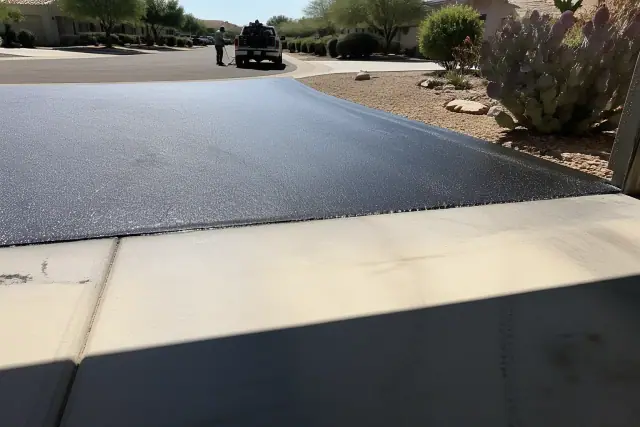
Hot mix is installed in one or two lifts and compacted with a vibratory roller while the material remains in its workable temperature range. Reaching target density helps limit raveling and water infiltration.

05.

Edge and Joint Sealing

Edges, joints, and transitions are finished to match surrounding grades and limit water entry. At driveways and parking lots, these details also support smoother access at garages, sidewalks, and connecting pavement.

06.

Curing, Striping, and Closeout

Vehicle access generally resumes after a 24 to 72 hour curing period, depending on temperature and the completed scope. Final striping or seal coating is completed when included, and commercial or right-of-way work is closed out with the required project documentation.

Project Applications

Asphalt Outcomes for Gilbert Homes & Businesses

Case Study 1: For residential driveways, careful grading and elevation matching create a smoother transition at the garage, sidewalk, and street while keeping runoff away from the base. The installation can also be planned around existing landscaping and HOA guidelines.

Case Study 2: For aging pavement with a stable base, milling and overlay provide a renewed driving surface without the disruption of full removal. Isolated potholes and failed edges can instead receive saw-cut hot-mix patches matched to the surrounding grade.

Case Study 3: For commercial properties, reinforced drive lanes, planned drainage, and clear striping support truck movement, customer access, parking capacity, and accessible routes. Phased construction can keep portions of a site operating while paving progresses.

Request an Estimate

Plan Your
Gilbert Asphalt
Project

Request an on-site evaluation for a Gilbert driveway, parking lot, access road, overlay, repair, or maintenance project. We will review the pavement and provide a written scope based on base condition, drainage, traffic, and access.

Asphalt Paving Help

FAQs About Asphalt Paving in Gilbert, AZ

These answers cover common questions about asphalt cost, construction, maintenance, permits, and service coverage in Gilbert. A site evaluation is still needed to determine the right scope for a specific driveway, lot, or access road.

Call Our Asphalt Team

Cost depends on square footage, base condition, drainage, site access, and whether the work is a new installation, overlay, or full replacement. Nationally, overlay work runs roughly $8 to $12 per square yard for material and labor combined, but excavation and base repair can change that range. Paving-mixture producer prices have also increased significantly over the past two years, so Tempe Asphalt quotes current pricing after evaluating the site.

A 20x20 driveway covers 400 square feet, or roughly 44 square yards. A straightforward installation over an already prepared and compacted base generally falls in the low thousands of dollars, while full excavation, new base material, grading, difficult access, or landscaping removal can raise the total. An on-site measurement and base assessment are needed for an exact quote.

Length alone does not determine price because asphalt is measured by area. A 200-foot driveway at a standard 10 to 12 foot width covers roughly 2,000 to 2,400 square feet and typically calls for a two-lift installation to handle regular turning and braking. Width, grade change, access, and base condition must be measured before pricing.

The site is excavated to stable subgrade, then a compacted aggregate base is installed to support the asphalt. Residential driveways typically use a 4 to 6 inch base, with deeper sections for commercial loads. Expansive clay conditions may call for geotextile fabric or additional base depth.

Avoid driving or parking on the surface for at least 24 to 72 hours, depending on temperature. During the first few weeks, do not repeatedly park in one spot or make sharp power-steering turns that can indent or scuff hot asphalt. Wait at least six months to a year before the first seal coat so the new pavement can cure fully.

The main categories are hot mix asphalt, warm mix asphalt, and cold mix asphalt, named for their production and placement temperatures. Hot mix is the standard for driveways, parking lots, and permanent paving because it compacts into a dense surface. Warm mix is produced at lower temperatures, while cold mix is usually reserved for temporary patches and emergency repairs.

A well-installed and properly maintained low-traffic residential driveway typically lasts 20 to 30 years. Heavier traffic can shorten that span, and Gilbert's UV exposure and monsoon water accelerate deterioration when cracks and oxidation are ignored. Timely maintenance is what helps a surface approach the higher end of the range.

Maintenance pricing depends on pavement area, crack quantity, oxidation, and whether repairs are needed before seal coating. Routine care generally costs far less than replacement, but a deteriorated surface needs more preparation than one treated early. Commercial lots may also require more frequent attention because of heavier traffic.

Most residential driveway paving does not require a separate permit. Commercial lots, new parking construction, and work affecting drainage or public right-of-way often require Town of Gilbert approval. Tempe Asphalt confirms requirements during the site evaluation, coordinates commercial permits when needed, and requests Arizona 811 utility locates before excavation.

Asphalt is a composite of aggregate, binder, and filler engineered for particular loads and climates. Blacktop is technically an asphalt mix with a higher ratio of stone aggregate to bitumen binder and may include recycled material. The terms are often used interchangeably for Gilbert driveways, so expected use and mix design matter more than the label alone.

An overlay is appropriate when the existing base remains sound and damage is mainly at the surface. Milling can correct selected high areas before a new bonded hot-mix layer is installed. Widespread settlement, base failure, or deep structural cracking usually points toward full removal and reconstruction instead.

For most Gilbert residential driveways, Tempe Asphalt recommends a 2 to 3 inch compacted asphalt surface over a prepared aggregate base. Final thickness and lift count depend on vehicle loads, soil stability, drainage, and whether the driveway is long enough to experience repeated turning and braking forces.

Residential driveways generally benefit from seal coating every 2 to 3 years after the initial curing period. Commercial lots with heavier daily traffic may need more frequent service. Cracks should be repaired first so the coating protects a stable surface rather than covering active damage.

Open cracks, potholes, alligator cracking, edge crumbling, standing water, and visible rutting deserve evaluation before monsoon runoff reaches the base. Early saw-cut patching or crack repair may keep a localized issue from becoming a larger full-depth failure.

Tempe Asphalt works throughout Gilbert, including the Heritage District, Val Vista Lakes, Power Ranch, Seville, Circle G Ranches, and the San Tan Village corridor. The regular East Valley service area also includes Chandler, Mesa, Queen Creek, and Tempe, with coverage across much of Maricopa County's southeast valley. Properties outside those immediate areas should call to confirm coverage before scheduling an estimate.