Proudly serving Tempe, Apache Junction, Mesa, Chandler, Scottsdale, Gilbert & surrounding areasCall or Text 24/7: 480-571-0856
Aerial drone view of a suburban neighborhood with stucco houses and desert landscaping in Tempe, AZ.

Asphalt Grading & Site Preparation in Tempe, AZ

Tempe Asphalt provides asphalt grading and site preparation for residential driveways, commercial parking lots, and industrial development sites in Tempe, Arizona. Our work includes site assessment, excavation, subgrade stabilization, aggregate base compaction, fine grading, and drainage planning before paving begins. We also handle old-pavement removal and asphalt leveling courses where an existing surface must be rebuilt or corrected. Each scope is planned around the loads, soils, and water flow present on the property.

Tempe's decomposed granite, sandy loam, caliche hardpan, and moisture-sensitive clay pockets can settle or compact unevenly. Monsoon runoff then finds low areas, while summer heat magnifies rutting above a weak base. We grade open pavement areas to a minimum 2% slope and test subgrade density to at least 95% of maximum dry density using Proctor test methods. Laser-guided equipment and controlled aggregate lifts help establish the pitch and support the pavement needs.

Tempe Asphalt is a licensed and insured Arizona asphalt paving contractor specializing in residential grading and industrial site preparation. A site assessment before the paving bid helps address the foundation work that can separate pavement lasting 12 years from pavement lasting 30.

Tempe Asphalt provides asphalt paving throughout Tempe and nearby Mesa, Chandler, Scottsdale, and Guadalupe.

★ ★ ★ ★ ★4.8/5.0 Customer Rating · 28 Years of Asphalt Experience · 1,000+ Properties Served · Licensed, Bonded & Insured · Paving for Homes & Businesses

Asphalt Grading & Site Preparation Benefits

What Is Asphalt Site Preparation?

Asphalt site preparation is the engineering work that establishes the slope, elevation, and compaction profile beneath a paved surface. The finished pavement depends on that prepared foundation to distribute loads and direct water.

The work can include clearing, excavation, unstable-soil removal, subgrade stabilization, aggregate base placement, drainage grading, and a final precision pass. Each stage prepares the next layer instead of relying on the asphalt surface to hide problems below.

If the base is loose or the grade traps water, those defects can telegraph through the asphalt within a season or two. Correct preparation creates a stable, even plane for the leveling and surface courses that follow.

Benefits of Proper Grading and Base Preparation

A planned grading sequence addresses support, drainage, and surface smoothness before hot mix is placed. It also gives owners and general contractors clear checkpoints for the work hidden beneath the finished pavement.

  • Compaction testing before the next layer advances
  • Controlled aggregate lifts instead of one deep dump-and-roll pass
  • Pitch that moves runoff away from structures and low spots
  • A stabilized foundation over caliche and clay pockets
  • Geotextile separation where unstable soil can contaminate the base
  • Fine-grading checks for high spots, low spots, and uneven wear
  • Documented density results before paving begins
  • Clearing, hauling, grading, and cleanup in one coordinated sequence
Site Preparation Services

Asphalt Grading & Site Preparation Services

Our crews handle the sequence from the initial site review through the final grade check. The scope is adjusted for residential driveways, retail and office parking lots, loading areas, and industrial development sites.

Site Assessment and Drainage Planning

New asphalt driveway transition to a residential garage in Tempe, AZ, with desert landscaping.

We evaluate the existing grade, soil composition, and current stormwater flow before designing the finished elevation. Tempe assessments also account for monsoon runoff and existing City of Tempe drainage easements.

Request Estimate

Excavation and Material Removal

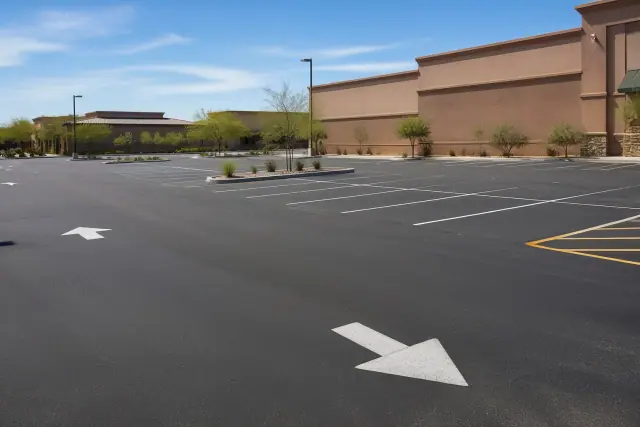
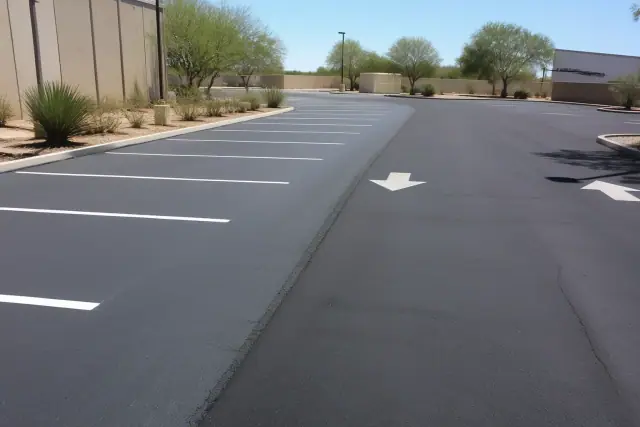
Newly paved retail parking lot with painted stall markers and directional arrows in Tempe, AZ.

Old asphalt, unsuitable soil, vegetation, and debris are removed down to a stable subgrade. Dirt hauling and cleanup are included in this phase so base installation can proceed without a separate mobilization.

Request Estimate

Subgrade Stabilization and Density Testing

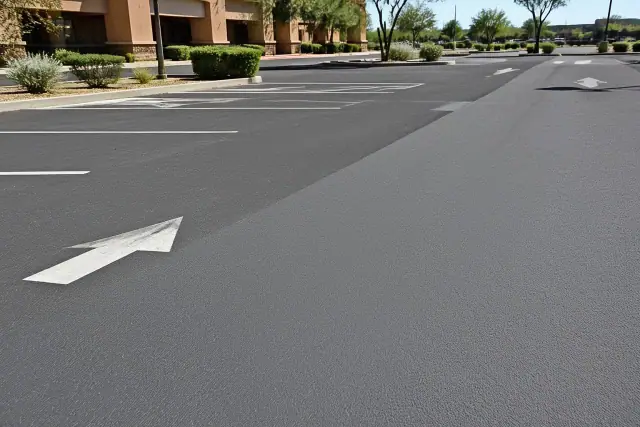
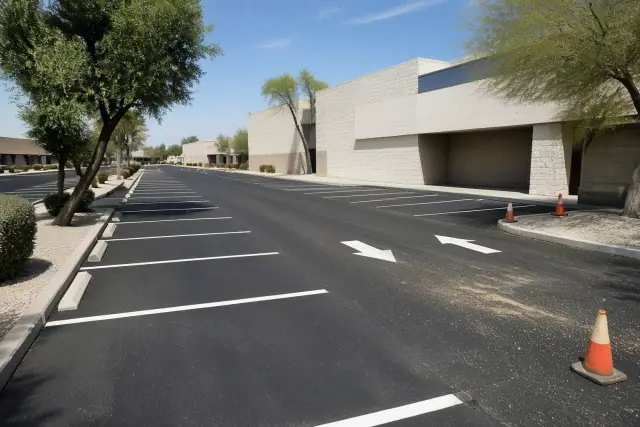
Freshly paved asphalt parking lot with painted stall markers and directional arrows in Tempe, AZ.

Exposed soil is checked for moisture, stability, and soft pockets that require over-excavation or replacement. Where higher clay content threatens base separation, geotextile stabilization fabric can help keep soil fines from migrating into the aggregate.

Request Estimate

Aggregate Base Course Installation

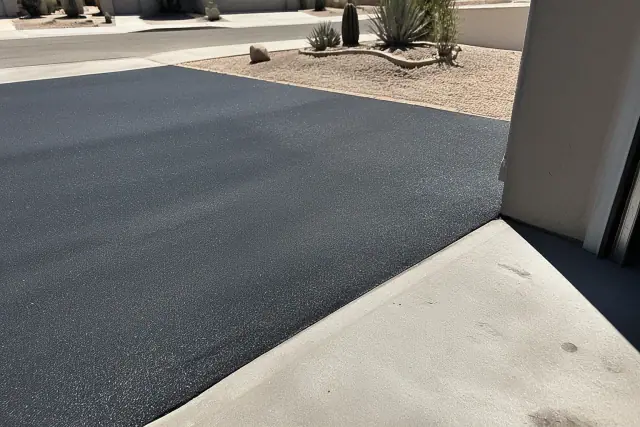
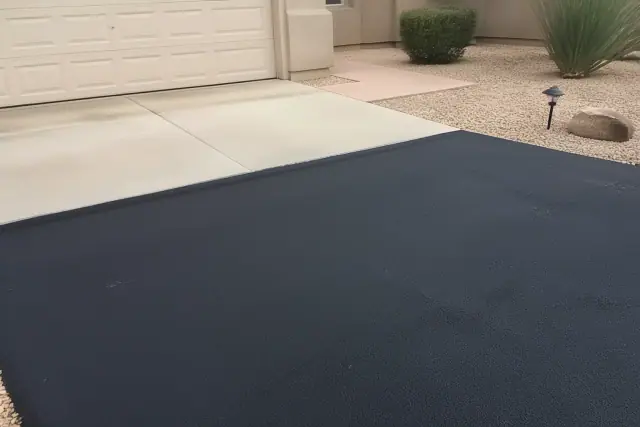
Newly sealed black asphalt driveway meeting a concrete garage slab in a residential yard in Tempe, AZ.

Aggregate base course is placed and compacted in controlled lifts, typically 4 to 6 inches at a time. Each lift is brought to target density before the crew moves to the next layer.

Request Estimate

Fine Grading and Leveling Courses

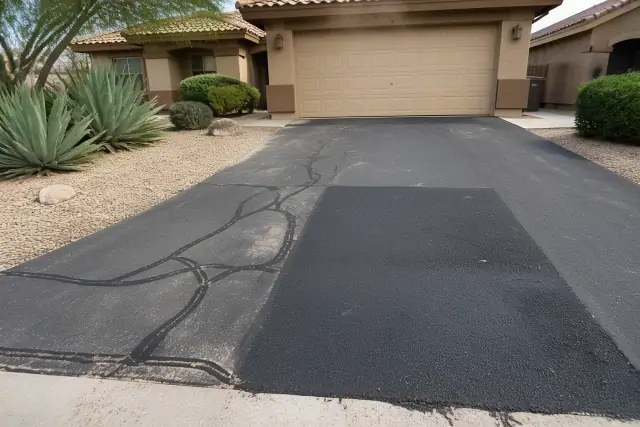
Asphalt crack sealing and pothole repair on a residential driveway in Tempe, AZ.

Laser-guided fine grading corrects elevation, pitch, high spots, and low spots before surface paving. When a surface is irregular, a hot mix leveling course can fill ruts or settlement and create a uniform plane for the final course.

Request Estimate

Commercial Grading and Parking Lot Preparation

Newly paved asphalt parking lot with line striping and chip seal in front of retail stores in Tempe, AZ.

Retail centers, office parks, and industrial sites along the Tempe and Chandler business corridors require grading for repeated traffic, delivery loads, drive lanes, and loading zones. Catch basins, swales, and finished slopes direct water toward approved discharge points under City of Tempe stormwater requirements.

Request Estimate
Project Preparation Options

Site Preparation for Different Projects

Excavation depth, base thickness, drainage features, and compaction sequencing depend on the property's soils and expected traffic. These project types show how the preparation changes before asphalt is placed.

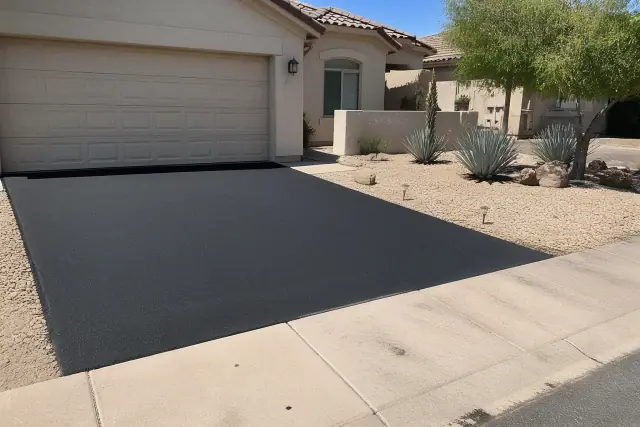
Newly paved asphalt driveway connecting to a residential garage in Tempe, AZ, featuring gravel landscaping.

Residential Driveway Preparation

For driveways near Rural Road, McClintock, and the Kyrene school district corridor, preparation starts by matching the excavation and drainage path to the native soil and the nearby structure.

  • Excavate 8 to 12 inches of unsuitable native soil
  • Remove organic material and expansive clay before stabilization
  • Compact 4 to 6 inches of aggregate base course in two lifts
  • Grade a 1% to 2% slope away from the garage or foundation
  • Plan for 2 to 3 inches of hot mix asphalt above the prepared base
Request Estimate
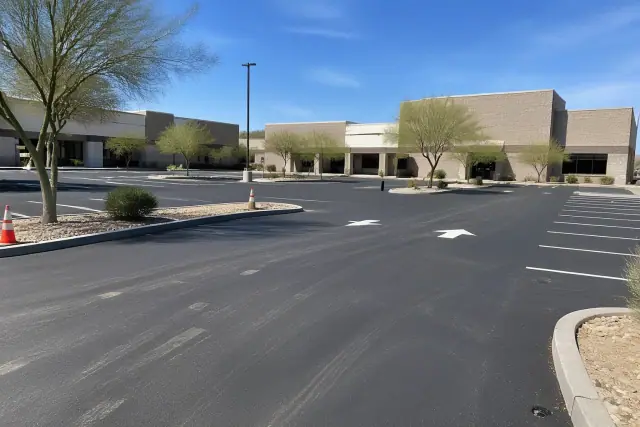
Newly paved retail parking lot with fresh striping and traffic cones in Tempe, AZ.

Commercial Parking Lot Preparation

Commercial lots are prepared for heavier, more concentrated wheel loads than residential driveways. Structural depth and drainage are planned around traffic patterns, especially loading areas and drive lanes.

  • Use a typical 6 to 8 inches of aggregate base course
  • Plan for 3 to 4 inches of asphalt over the prepared base
  • Compact subgrade and base material in multiple phases
  • Test density at each stage instead of relying on one final pass
  • Coordinate slopes, catch basins, and swales for large paved areas
Request Estimate
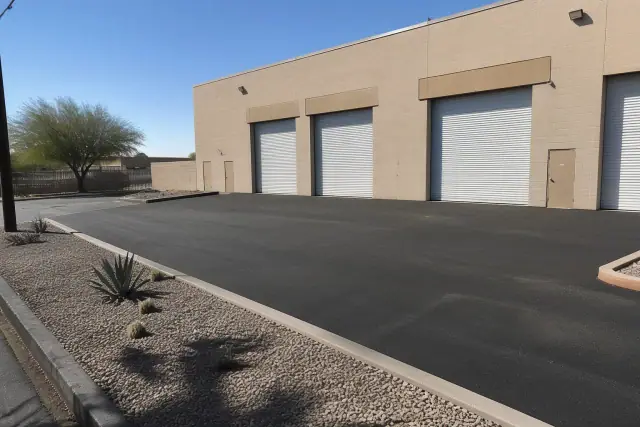
Newly paved asphalt apron in front of a commercial warehouse in Tempe, AZ.

Old Pavement Removal and Base Rebuilding

Rebuilding an existing driveway or lot begins by choosing milling or full-depth excavation based on how far the failure extends. Removing the old surface exposes the base and soil conditions that were previously hidden.

  • Mill the surface course when the underlying base remains sound
  • Use full-depth excavation when damage reaches the foundation
  • Phoenix metro removal typically runs $1 to $2 per square foot depending on thickness and access
  • Check the exposed soil for stability, moisture, and soft areas
  • Replace failed material before rebuilding with tested aggregate base
Request Estimate
Newly paved asphalt parking lanes with directional arrows and desert landscaping in Tempe, AZ.

Fine Grading and Asphalt Leveling

Fine grading is the final precision pass before asphalt placement. A leveling course is added when the prepared or existing surface needs a hot mix layer to correct irregularities before the final surface course.

  • Fill dips, ruts, and settled areas with a leveling course
  • Create a uniform plane for consistent surface-course thickness
  • Fine grade within a quarter inch across a 10-foot straightedge
  • Set finished pitch typically between 1% and 5%
  • Check high and low spots before traffic reaches the surface
Request Estimate
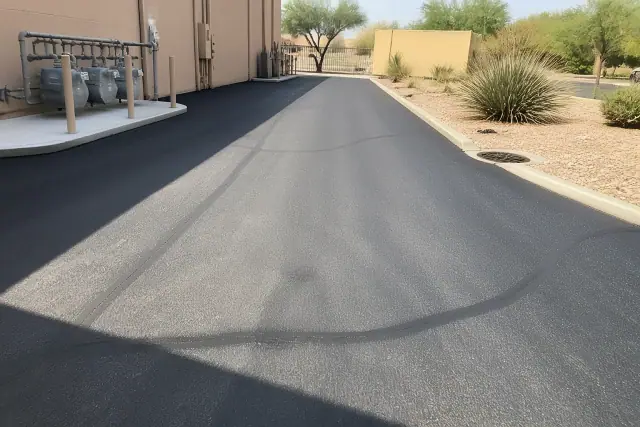
Freshly paved asphalt with repaired cracks at a commercial building utility access point in Tempe, AZ.

Excavation and Site Clearing

Site clearing creates a workable area for the grading sequence without leaving debris or spoil as someone else's staging problem. Equipment is sized for the access and scale of the property.

  • Prepare pool decks, commercial pads, and driveway replacement sites
  • Clear vegetation, old concrete, asphalt, and construction debris
  • Haul and dispose of spoil material after excavation
  • Use skid steers and mini excavators on tighter sites
  • Use motor graders and compaction rollers on larger sites
Request Estimate
Finding Your Right Fit

Choosing the Right Site Preparation Approach

The right approach starts with what the pavement must support and how water must leave the site. Soil stability, access, existing failures, traffic loads, drainage points, and ADA accessibility requirements for commercial properties all shape the grading plan.

Standards-Based Compaction

Projects follow Maricopa Association of Governments Uniform Standard Specifications and Arizona Department of Transportation grading and compaction standards. Compaction results are documented so owners and general contractors have a record of the subgrade condition before paving.

Tempe Soil and Climate Planning

Tempe sees over 300 days of sun a year, and dark pavement surface temperatures regularly exceed 150 degrees in July and August. The grading plan accounts for that heat along with caliche, expansive clay pockets, and monsoon drainage rather than applying a generic national detail.

Equipment Matched to the Site

Skid steers and mini excavators fit tight residential access, while motor graders and compaction rollers support larger industrial work. Laser levels and laser-guided grading equipment help crews stake, shape, and verify the planned elevation without unnecessarily disturbing nearby landscaping or hardscape.

What Sets Us Apart

Why Choose Tempe Asphalt for Site Preparation?

Tempe Asphalt is licensed and insured in Arizona and specializes in both residential asphalt grading and industrial site preparation. We treat drainage, lift placement, density testing, and final elevation as measurable parts of the paving foundation, then document the compaction work before hot mix is placed.

Request Site Assessment

Caliche Hardpan and Clay Movement

Caliche layers can resist uniform compaction, while expansive clay pockets near the Kyrene corridor shift with moisture changes. Soil assessment identifies where stabilization, removal, or separation fabric is needed before the base is installed.

Monsoon Ponding

Monsoon runoff collects in low spots when the grade does not provide a continuous drainage path. Ponding softens the base, damages pavement, and can create liability concerns on commercial properties.

Weak Subgrade Compaction

Paving directly over unprepared dirt can lead to cracking within a year. More broadly, poor grading can produce birdbaths, alligator cracking, and edge failure in the first two or three summers as the weak foundation moves beneath the surface.

Undersized Aggregate Base

An undersized base does not provide the structural section needed for the expected wheel loads. The risk is greatest in commercial drive lanes and loading zones, where repeated truck traffic concentrates stress on smaller pavement areas.

Incorrect Pavement Pitch

A surface that pitches toward a garage, foundation, or inaccessible low point sends water in the wrong direction. Grade must be staked and checked before compaction and paving, when elevations can still be corrected.

Hidden Subgrade Soft Spots

Old pavement can conceal unstable soil, excess moisture, and settled areas for years. Milling or full-depth removal reveals whether isolated soft spots need over-excavation and replacement before the new base is built.

How it works

Our Asphalt Grading & Site Preparation Process

A defined sequence keeps drainage decisions, excavation, stabilization, base placement, testing, and finish grading connected. The crew verifies each hidden layer before covering it with the next one.

01.

Assess the Site and Drainage

Review the existing elevation, soil profile, traffic needs, stormwater path, and any City of Tempe drainage easements. These findings establish the target grade and structural scope.

02.

Clear and Excavate the Site

Remove vegetation, old concrete or asphalt, debris, and unsuitable soil to reach stable material. Haul spoil away so the exposed subgrade is ready for evaluation.

03.

Stabilize the Subgrade

Check soil stability and moisture, then over-excavate and replace weak pockets as needed. Install geotextile fabric where unstable soil or migrating fines could undermine the aggregate base.

04.

Shape the Grade and Place the Base

Stake the elevation with laser levels, shape the planned slope, and place aggregate base course in controlled lifts. This sequence avoids burying loose material beneath a single deep layer.

05.

Compact and Test Each Lift

Compact each lift and verify density with a nuclear density gauge or dynamic cone penetrometer before continuing. Record the results so the hidden foundation can be confirmed before paving.

06.

Fine Grade and Verify the Pitch

Make the final precision pass, checking high spots, low spots, straightedge tolerance, and drainage pitch. Once the grade is even and water has a defined path, the site is ready for hot mix placement.

Prepare the Foundation

Schedule an Asphalt Site
Assessment

Request an assessment for a Tempe driveway, parking lot, commercial pad, or industrial site before paving begins. Tempe Asphalt can review the soil, drainage path, excavation needs, base section, and grading scope for the property.

Grading and Site Preparation Help

Asphalt Grading & Site Preparation FAQs

These answers cover the soil, excavation, base, drainage, testing, and asphalt-layer questions that commonly come up before paving in Tempe.

Call Our Grading Team

Asphalt is commonly described by its role as base course, leveling course, or surface course, with different aggregate sizes and binder contents. Engineers also use performance-grade binder ratings; Arizona specifications often call for PG 70-10 or PG 76-16TR binders to address extreme summer heat and occasional cold nights.

Preparation starts by removing unsuitable soil to a stable subgrade, then compacting that subgrade before aggregate base course is placed. For a typical Tempe driveway, the plan may call for 8 to 12 inches of excavation, 4 to 6 inches of compacted aggregate base, and drainage at a 1% to 2% slope away from structures.

A leveling course is an intermediate hot mix asphalt layer used to correct dips, ruts, settlement, or other irregularities before the final surface course. It creates a more uniform plane so the top layer can cure at a consistent thickness instead of repeating the uneven shape below.

Old pavement removal in the Phoenix metro market typically runs $1 to $2 per square foot. Thickness, access, and whether the project needs milling or full-depth excavation influence where the work falls within that range.

Tempe Asphalt tests subgrade to at least 95% of maximum dry density using Proctor test methods before aggregate base is placed. Meeting the target helps create a uniform foundation and identifies loose areas that need more work before they are buried.

Open pavement areas are graded to a minimum 2% slope, while driveways generally need a 1% to 2% slope away from garages and foundations. Finished pitch commonly falls between 1% and 5%, depending on lot size, drainage points, and commercial accessibility requirements.

A commercial lot carrying delivery trucks and heavy daily traffic typically uses 6 to 8 inches of aggregate base beneath 3 to 4 inches of asphalt. Loading zones and drive lanes receive particular attention because concentrated wheel loads place more stress on the pavement structure.

Aggregate base is placed in controlled lifts, typically 4 to 6 inches at a time, and each lift is tested before the next one is added. A nuclear density gauge or dynamic cone penetrometer can verify the compaction achieved at that stage.

Tempe sites can include decomposed granite, sandy loam, caliche hardpan, and expansive clay pockets. Caliche may compact unevenly, while clay shifts with moisture, so the crew checks for unstable areas that need removal, stabilization, or geotextile separation.

Crews use skid steers, mini excavators, motor graders, and compaction rollers sized to the property. Laser levels and laser-guided grading equipment help establish and check the planned elevation and pitch.

Tempe receives over 300 days of sun a year, and dark pavement surface temperatures regularly exceed 150 degrees during July and August. That heat can accelerate rutting over an improperly compacted base, making subgrade stabilization and density testing especially important.

Geotextile fabric may be installed over unstable soil pockets or on soils with higher clay content. It separates the subgrade from the aggregate base and helps prevent fine soil particles from migrating upward into that base over time.

Tempe Asphalt provides asphalt grading and site preparation in Tempe and the surrounding Maricopa County communities of Mesa, Chandler, Scottsdale, Guadalupe, and South Phoenix. The service covers residential driveways as well as commercial and industrial sites.