Proudly serving Tempe, Mesa, Chandler, Scottsdale, Gilbert & surrounding areasCall or Text 24/7: +1 (480) 571-0856

Asphalt Crack Filling and Pavement Preservation in Tempe, AZ

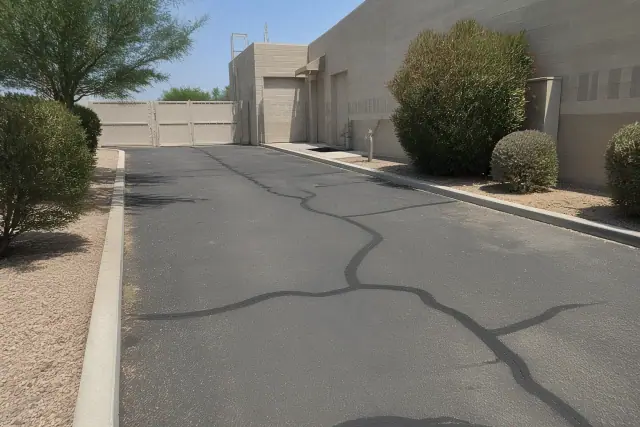
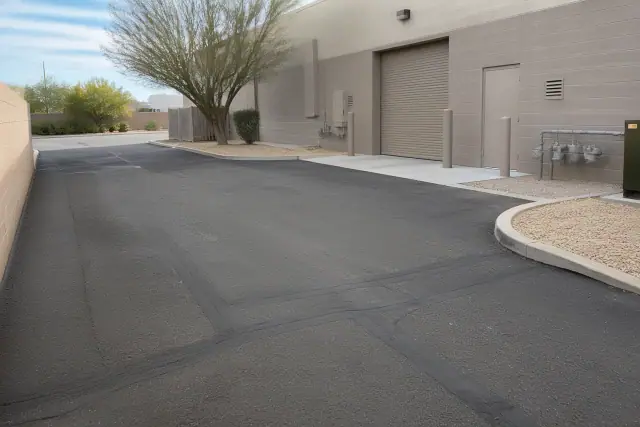
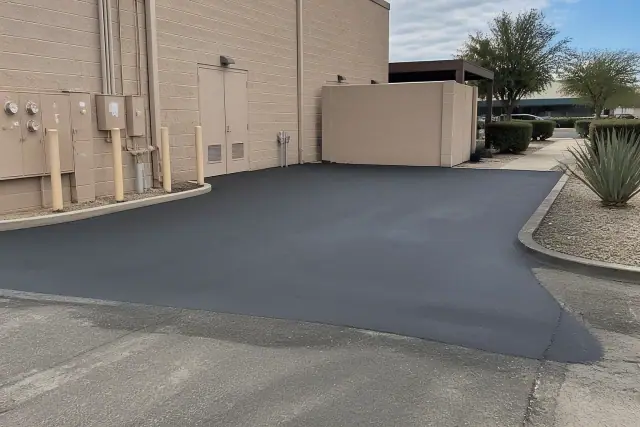
Tempe Asphalt provides asphalt crack filling in Tempe, AZ, for homeowners, HOAs, commercial properties, and municipal pavement programs. Our pavement services include crack sealing, sealcoating, pothole repair, asphalt patching, striping, and resurfacing. We treat open cracks as a pavement-preservation issue because sealing them helps protect the base beneath the surface. Each job starts with an inspection to match the repair method to the crack type, width, depth, and traffic load.

Summer pavement surface temperatures can reach 110-plus degrees, while monsoon downpours can push inches of rain into open cracks in an hour. That combination accelerates oxidation, expansion and contraction, water infiltration, and base erosion. Our crew routes, cleans, and dries cracks before applying sealant because dust, debris, or moisture can cause early bond failure. Tempe Asphalt is licensed through the Arizona Registrar of Contractors and carries the insurance coverage commercial property managers and HOAs require.

For most jobs, we use hot-applied rubberized sealant meeting ASTM D6690 specifications, with cold-pour polyurethane or liquid filler selected when the crack, substrate, and budget call for it. Contact us for a free asphalt inspection and written quote.

Tempe Asphalt provides asphalt crack filling across Tempe and nearby Phoenix metro communities including Mesa, Chandler, Scottsdale, and Guadalupe.

★ ★ ★ ★ ★4.9/5 Average Rating · 20+ Years of Experience · Thousands of Customers Helped · Licensed & Insured · Residential & Commercial

Crack Sealing Options & Benefits

What Is Asphalt Crack Filling?

Asphalt crack filling seals openings before water, debris, and vegetation can work deeper into the pavement. Professional preparation creates a consistent crack profile, removes loose material, and gives the selected sealant clean, dry walls to bond to.

Tempe is in Maricopa County and had a 2020 population of 180,587, with extensive residential and commercial pavement exposed to desert conditions. Unshaded asphalt near Tempe Town Lake or Rural Road can exceed 140 degrees in July and then drop 60-plus degrees overnight, steadily reducing binder flexibility.

Monsoon season between June and September adds intense water exposure to heat- and UV-stressed pavement. Sealing suitable cracks limits infiltration that can erode the base and contribute to potholes or larger failed areas.

Benefits of Professional Crack Sealing

Timely crack sealing is a targeted pavement-preservation step that can slow localized damage and make future maintenance easier to plan. The value comes from choosing the right material and installing it over a properly prepared crack.

  • Blocks common water-entry paths before monsoon storms
  • Helps protect the load-bearing base from erosion
  • Uses flexible materials suited to daily temperature swings
  • Reduces vegetation, dirt, and loose debris inside cracks
  • Creates a low-profile finish that resists tire picking
  • Addresses hairline and linear cracks before they spread
  • Supports planned sealcoating and pavement maintenance
  • Clarifies when patching or resurfacing is the better repair
Asphalt Maintenance Services

Complete Asphalt Services

Crack sealing works best as part of a pavement plan matched to the surface's actual condition. Tempe Asphalt provides the following repair and maintenance services for driveways, HOA pavement, parking lots, and other commercial surfaces.

Asphalt Crack Filling and Sealing

Asphalt crack filling and sealing in Tempe, AZ

We route, clean, dry, and seal suitable cracks with hot-applied rubberized material, cold-pour polyurethane, or liquid filler. Material selection reflects crack width, depth, traffic load, substrate, and the flexibility Tempe pavement needs.

Request Estimate

Asphalt Sealcoating

Asphalt sealcoating in Tempe, AZ

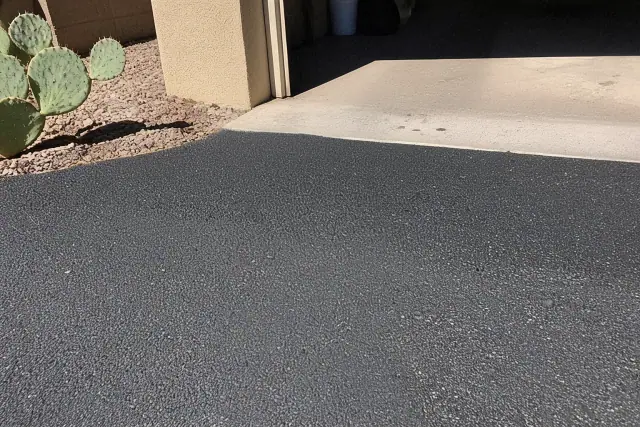
Sealcoating adds a protective surface layer after existing cracks have been filled. It is not a substitute for crack repair, so we complete the crack-filling pass first to keep old openings from immediately showing through the new coating.

Request Estimate

Pothole Repair

Pothole repair in Tempe, AZ

Potholes often develop after water reaches and weakens the pavement base. We assess the failed area to determine whether localized repair can restore the surface or whether surrounding damage calls for a broader patch.

Request Estimate

Asphalt Patching

Asphalt patching in Tempe, AZ

Patching is appropriate when cracking reflects localized base failure rather than a sealable surface opening. The affected section may need removal and replacement so the repair addresses the damaged support beneath the asphalt mat.

Request Estimate

Parking Lot Striping

Parking lot striping in Tempe, AZ

Striping can be coordinated with crack sealing and sealcoating on commercial, HOA, and municipal maintenance calendars. Phased scheduling helps keep sections of a parking lot open while pavement work moves through the property.

Request Estimate

Asphalt Resurfacing

Asphalt resurfacing in Tempe, AZ

Resurfacing becomes more practical when cracks and surface wear are too widespread for repeated spot repairs. We compare crack density and base condition before recommending an overlay instead of patch-by-patch work.

Request Estimate
Sealant and Repair Options

Crack Filling Methods

There is no single material or repair method for every crack. We match hot pour, cold pour, liquid filler, patching, or resurfacing to the crack pattern, width, depth, traffic demand, substrate condition, and project budget.

Hot Applied rubberized sealant in Tempe, AZ

Hot-Applied Rubberized Sealant

Hot-pour rubberized sealant is our standard recommendation for most Tempe driveways and parking lots because it bonds deeply and remains flexible through desert temperature swings.

  • Material meeting ASTM D6690 specifications
  • Heated with a melter and placed by pour pot or applicator
  • Installed into routed, clean, dry crack walls
  • Flexible through summer highs and winter nights
  • Suited to residential and high-traffic commercial pavement
Request Estimate
Cold Pour polyurethane in Tempe, AZ

Cold-Pour Polyurethane

Cold-pour polyurethane is useful for smaller residential repairs and budget-focused work where heating equipment is not warranted. It sets up differently from hot pour and is selected with the expected traffic and service life in mind.

  • No heated melter required for application
  • Practical for smaller residential crack repairs
  • Useful where faster initial setup is a priority
  • Selected according to crack width and surface use
  • Generally less flexible than hot pour in extreme heat
Request Estimate
Liquid crack filler in Tempe, AZ

Liquid Crack Filler

Liquid crack filler can suit minor hairline openings under an eighth of an inch when the pavement condition supports it. The crack still needs cleaning and drying so the material does not sit over dust or moisture.

  • Designed for minor hairline crack conditions
  • Chosen according to substrate and project budget
  • Applied only after dirt and vegetation are removed
  • Tooled to a clean, low-profile finish
  • Used where a heated application is unnecessary
Request Estimate
Patching for alligator cracking in Tempe, AZ

Patching for Alligator Cracking

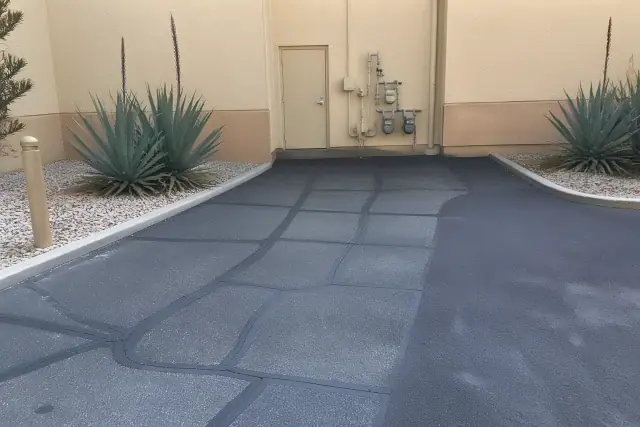
Interlocking alligator cracks indicate that the load-bearing structure has failed, so pouring sealer into the surface pattern will not correct the cause. Patching or removal and replacement is generally required for the affected section.

  • Targets localized base failure
  • Removes pavement that can no longer carry loads
  • Rebuilds the affected area instead of masking it
  • Completed before sealcoating when both are planned
  • Matched to the size and severity of the failed section
Request Estimate
Resurfacing for widespread damage in Tempe, AZ

Resurfacing for Widespread Damage

When cracking covers a large share of the surface, an overlay may provide better value than a series of isolated patches. Inspection helps separate widespread surface deterioration from base failures that need deeper repair first.

  • Evaluates crack density across the full surface
  • Compares spot-repair cost with broader restoration
  • Accounts for underlying base condition
  • Plans around residential or commercial traffic
  • Creates a longer-range pavement maintenance path
Request Estimate
Choosing the Right Repair

Choosing the Right Crack Repair Approach

The right approach starts with crack type, width, depth, density, moisture, and traffic load. Linear and hairline cracks may be sealable, while alligator cracking points to patching and widespread deterioration may justify resurfacing. Our free inspection and written quote explain the recommended scope before work begins.

Climate-Specific Sealant Selection

Tempe pavement needs material that can remain flexible under strong UV exposure and repeated expansion and contraction. We default to rubberized hot pour for many driveways and commercial lots, then use cold-pour or liquid products where the crack and substrate support them.

Routed, Clean, and Dry Preparation

Long-term performance depends heavily on preparation. Mechanical routing establishes a consistent profile, compressed air removes vegetation and debris, and drying prevents moisture from undermining the sealant bond.

Licensed and Insured Crew

Tempe Asphalt is licensed through the Arizona Registrar of Contractors and carries the insurance coverage required by commercial property managers and HOAs. That documentation supports organized maintenance contracts for residential communities and larger properties.

What Sets Us Apart

Why Choose Us for Asphalt Crack Filling?

Our crew uses mechanical routers, heated melter applicators, compressed air, and infrared surface thermometers to control preparation and placement. On a 105-degree afternoon, surface-temperature checks help determine whether application conditions are appropriate, while consistent equipment can cover a full parking lot in a single pass. We recommend crack sealing, patching, or resurfacing according to the pavement condition and provide a free inspection with a written quote.

Request Free Inspection

Thermal and UV Cracking

Strong Arizona UV exposure oxidizes asphalt binder and makes the surface brittle faster than in milder climates. Daily expansion and contraction then open thermal crack patterns that spread as flexibility declines.

Monsoon Water Infiltration

Short, intense monsoon storms drive water into every open crack. Once moisture reaches the base, erosion and loss of support can turn a small surface opening into a pothole or a failed patch area.

Linear and Reflective Cracks

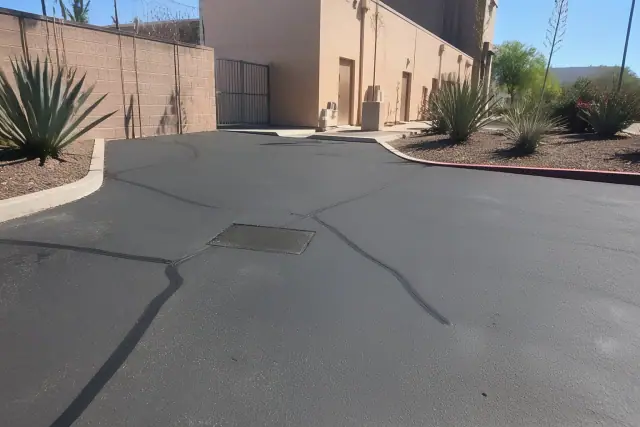
Linear cracks usually run in one direction and may come from thermal stress or an underlying joint reflecting through the surface. They are among the most straightforward cracks to seal when addressed before the opening widens.

Alligator Cracking

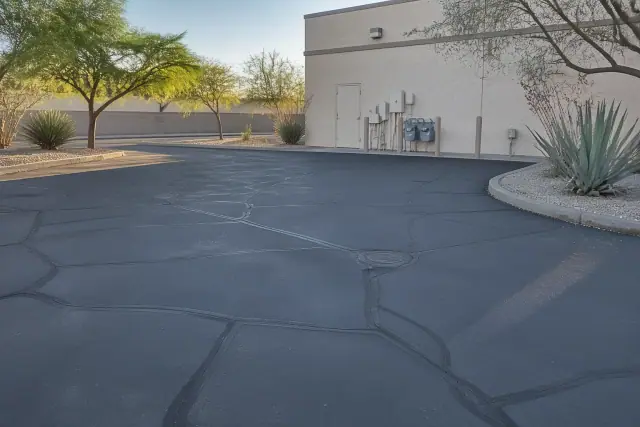
An interlocking, reptile-skin pattern signals base failure rather than ordinary surface wear. Crack filler alone cannot rebuild the load-bearing structure, so the affected pavement generally needs patching or removal and replacement.

Edge and Longitudinal Damage

Edge cracks develop where perimeter support is weakest and can worsen when vehicles park near unsupported shoulders. Longitudinal openings can widen quickly and let water undermine the asphalt mat from the side.

Sealant Tracking and Early Failure

Sealant placed over dust, debris, vegetation, or moisture can lose its bond early. Overfilling also exposes material to tire contact, picking, and tracking, which is why preparation and a controlled finish matter.

How It Works

Our Asphalt Crack Filling Process

Our process moves from condition assessment to a clean, traffic-ready seal. Each step is designed to choose the right repair, prepare the crack walls, control material placement, and set clear reopening and maintenance guidance.

01.

Free Surface Inspection

We walk the entire driveway or lot, identify visible distress, and document where cracks, potholes, or failed areas need attention. The inspection provides the basis for a written quote and a practical repair scope.

02.

Classify Cracks and Select the Repair

We classify crack pattern, width, depth, density, and traffic exposure. That assessment determines whether the surface needs standard filling, localized patching, or broader resurfacing.

03.

Route a Consistent Crack Profile

Mechanical routers open suitable cracks to a consistent width and depth. This creates prepared walls that accept sealant more evenly than a narrow, irregular, untreated opening.

04.

Clean and Dry the Cracks

Compressed air removes vegetation, dirt, loose aggregate, and routing debris. We also confirm that the crack is dry because residual moisture is a major cause of premature bond failure.

05.

Apply and Tool the Sealant

The selected hot-pour, cold-pour, or liquid material is placed flush to slightly below the surrounding pavement and generally no higher than 1/8 inch above grade. Tooling produces a clean, low-profile seal that is less exposed to tires.

06.

Set the Traffic and Maintenance Plan

We provide a material-specific drive-on window so the sealant can set without tracking or deformation. The final guidance may also cover cooler-morning scheduling, future sealcoating, and the areas to watch after monsoon season.

Protect Your Pavement

Schedule a Free Asphalt
Crack Filling
Inspection

Get a condition-based recommendation for crack filling, patching, sealcoating, or resurfacing on your Tempe driveway or parking lot. Tempe Asphalt provides a free on-site inspection and written quote that explains the scope, material, preparation, and pricing factors.

Crack Filling Help

Asphalt Crack Filling FAQs

These answers cover material selection, pricing, preparation, traffic timing, seasonal scheduling, and the point where cracks need more than sealant.

Call Our Crew

For most Tempe driveways, hot-applied rubberized sealant meeting ASTM D6690 specifications is the strongest fit because it stays flexible through extreme temperature swings. Professionally installed hot pour typically lasts 3 to 5 years, while consumer-grade products may fail within a single season. Hairline cracks under an eighth of an inch may instead suit liquid filler, depending on depth and traffic.

Standard residential and commercial crack filling generally runs $1 to $3 per linear foot. Minor driveway jobs commonly total $250 to $600, larger residential or small commercial projects $600 to $1,200, and extensive commercial work $1,200 to $2,500 or more depending on footage and severity. Full sealcoating is separate at $0.88 to $2.10 per square foot depending on sealer and preparation, while some markets quote large commercial pavement sealing as low as $0.10 to $0.25 per square foot.

Yes, suitable cracks should be sealed before water can erode the base. A quarter-inch crack can develop into a pothole within a year or two once monsoon water gets underneath it. The installed material should generally sit no higher than about 1/8 inch above the pavement to reduce tire damage and edge peeling.

The crew first routes suitable cracks to a consistent profile, blows out vegetation, dirt, and debris with compressed air, and confirms that the opening is dry. Hot-applied rubberized sealant, cold-pour polyurethane, or liquid filler is then installed and tooled to a low-profile finish. Skipping routing, cleaning, or drying is a common reason material fails early.

Hot-applied rubberized sealant typically needs about 30 minutes to an hour before light vehicle traffic, although full cure can take up to 24 hours depending on ambient temperature. Cold-pour and liquid fillers may need several hours to a full day. High summer surface temperatures can slow the initial set, so the crew provides a material- and weather-specific reopening time.

Hot-pour rubberized material generally performs better under Tempe's temperature swings because it bonds deeply and retains flexibility. Cold pour is useful for smaller residential cracks, minor touch-ups, or projects where no heating equipment and faster setup are priorities. The better choice depends on crack size, substrate, traffic, and expected service life.

Yes. Sealcoat is a thin protective surface layer and is not designed to bridge moving gaps. Filling cracks first keeps the new coating from reopening immediately along the same damaged lines.

Spring is the recommended window because the sealant can cure before peak summer heat and before monsoon season begins in June. Summer work may be scheduled during cooler morning hours when pavement temperatures are more suitable for bonding.

No. Alligator cracking indicates failure in the load-bearing base, not only a surface opening. The affected area usually needs patching or removal and replacement before any sealcoating is considered.

If crack density covers more than 25 to 30 percent of the surface, resurfacing can make better financial sense than repeated patches. The recommendation should account for base condition and compare the alternatives over a five to ten year horizon.

For Tempe driveways, the recommended maintenance cycle combines crack sealing with sealcoating every two to three years. Existing cracks should be repaired first so the surface coating can protect the pavement instead of trying to bridge open gaps.

Yes. Tempe Asphalt works with property managers, HOAs, and municipal contracts on phased pavement-preservation programs. Commercial schedules can keep parts of a lot open while crews address drive lanes, entry points, parking stalls, striping, and sealcoating.

The main factors are total linear footage, crack width and depth, material choice, traffic load, and the amount of routing and cleaning the surface needs. Alligator cracking may require patching before sealing, while widespread deterioration may call for resurfacing. A free on-site inspection and written quote define the exact scope before work begins.