Proudly serving Tempe, Mesa, Chandler, Scottsdale, Gilbert & surrounding areasCall or Text 24/7: +1 (480) 571-0856

Asphalt Resurfacing, Mill and Overlay Pavement Restoration in Tempe, AZ

Tempe Asphalt provides asphalt resurfacing in Tempe, Arizona, for residential, commercial, industrial, and municipal pavement. Our crews also handle asphalt paving, crack repair, pothole repair, sealcoating, and full-scale commercial paving. Projects range from single-family driveways near Kiwanis Park to parking lots along Rural Road and Priest Drive. We serve the city's 180,587 residents and businesses with work scoped to the actual condition of the pavement.

Tempe pavement faces 110-plus-degree summer days, intense UV exposure, and monsoon downpours that drive water into open cracks. Unshaded blacktop can exceed 150 degrees in July, accelerating binder oxidation and leaving the surface brittle. Standing water and poor slope grading can then undermine the base course. We inspect the surface, base, thickness, and drainage before recommending an overlay, resurfacing, patching, or full replacement.

We build resurfacing projects around Maricopa Association of Governments specifications and hot mix asphalt suited to Arizona heat. Our crews are licensed through the Arizona Registrar of Contractors and carry the insurance coverage required for the residential, commercial, industrial, and municipal projects described here. We also use recycled asphalt pavement integration where appropriate and provide a free asphalt paving estimate after walking the site.

Tempe Asphalt provides asphalt resurfacing in Tempe and the surrounding East Valley, including Mesa, Chandler, Scottsdale, and South Phoenix.

★ ★ ★ ★ ★4.9/5 Average Rating · 20+ Years of Experience · Thousands of Customers Helped · Licensed & Insured · Residential & Commercial

Asphalt Resurfacing Options & Benefits

What Is Asphalt Resurfacing?

Asphalt resurfacing removes a damaged top layer and replaces it with compacted hot mix asphalt while preserving a functional base. When the foundation remains sound, this approach can extend pavement life another 8 to 15 years without the excavation and new base material required for full replacement.

Resurfacing is typically a good fit when surface cracks cover more than 25 to 30 percent of the pavement but the base underneath remains stable. Widespread raveling, gray oxidation, uneven areas, and recurring potholes can also point to a failed wear layer that needs more than isolated patching.

An overlay places new asphalt directly over sound existing pavement without first removing the old surface. Resurfacing includes milling and more extensive preparation, while full replacement is reserved for subgrade failure, extensive alligator cracking, or drainage damage that has compromised the foundation.

Benefits of Asphalt Resurfacing

The main benefit of resurfacing is matching the repair depth to the pavement condition. A sound base can stay in place while the worn surface, drainage details, and traffic demands are addressed with a properly prepared new layer.

  • Preserves a stable base instead of paying for an unnecessary full tear-out
  • Can add another 8 to 15 years of pavement life when the base is sound
  • Removes oxidized, raveling, and uneven surface material before repaving
  • Allows drainage and slope grading issues to be corrected before placement
  • Uses hot mix thickness selected for driveway, parking lot, or industrial traffic
  • Compacts the new layer immediately to reduce voids and water infiltration
  • Can incorporate recycled asphalt pavement where it fits the project
  • Costs less than full replacement when excavation and a new base are not needed
Residential, Commercial & Industrial

Asphalt Resurfacing Services

Tempe Asphalt tailors pavement work to the base condition, traffic load, drainage, access, and surface damage at each property. The service may involve a direct overlay, milled resurfacing, targeted repairs, protective sealcoating, or full replacement when the subgrade cannot support a new surface.

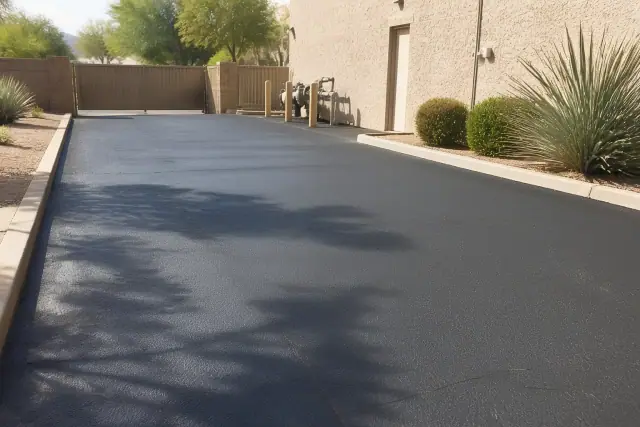
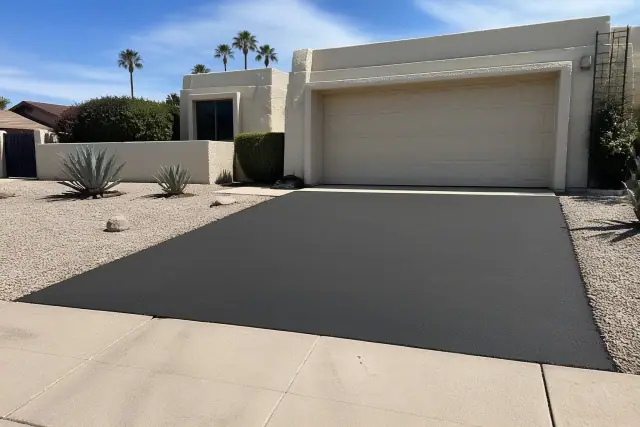
Residential Driveway Resurfacing

Residential driveway resurfacing in Tempe, AZ

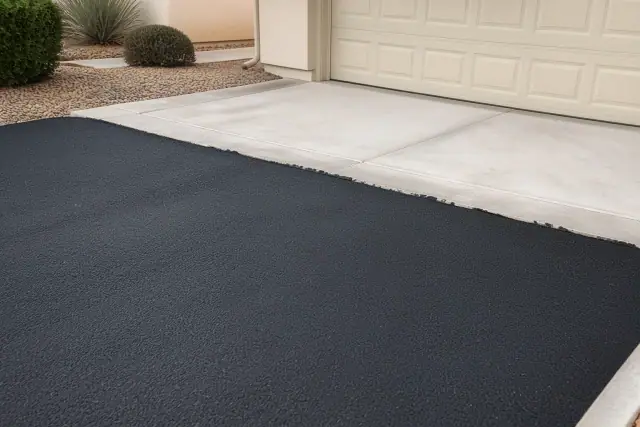
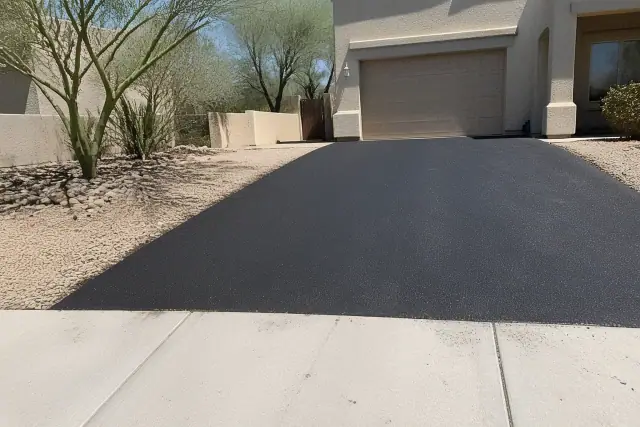
Driveway resurfacing starts with cleaning and crack repair, followed by milling where uneven pavement needs to be removed. We apply and compact a new 1.5 to 2 inch hot mix layer, then finish the edges and slope so water moves away from the garage and foundation.

Request Estimate

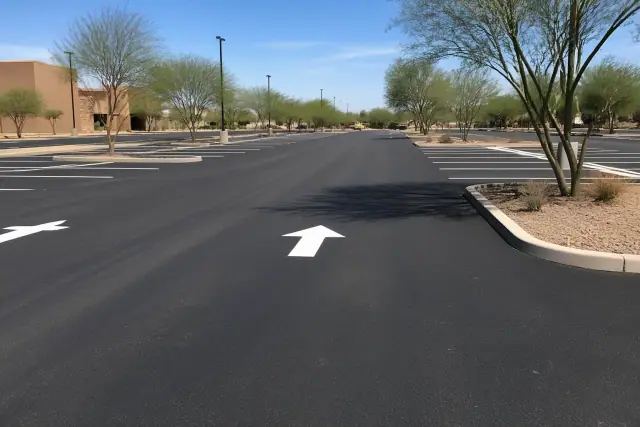
Commercial Parking Lot Resurfacing

Commercial parking lot resurfacing in Tempe, AZ

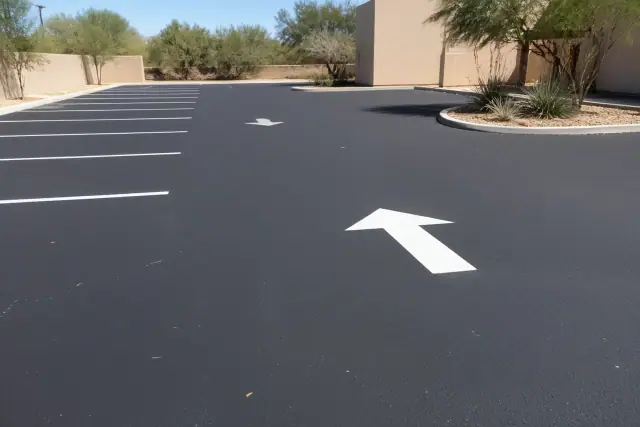
Commercial lots typically require 2 to 3 inches of asphalt for heavier traffic, along with planning for drainage, milling depth, tenant access, and restriping. After the pavement has cured, the scope can include ADA-compliant striping, fire lane markings, and directional arrows that meet City of Tempe requirements.

Request Estimate

Asphalt Overlay

Asphalt overlay in Tempe, AZ

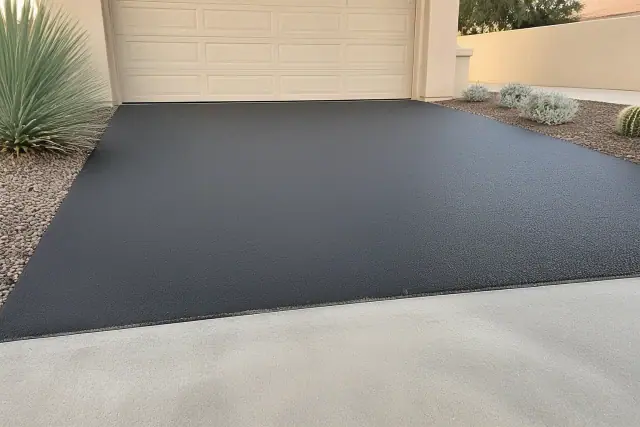
A direct overlay is the lower-prep option when cracks are minor, the pavement is even, the base is solid, and drainage is working. New hot mix asphalt is placed over the existing surface without milling, which reduces labor and cost while leaving unsuitable base problems untouched.

Request Estimate

Full-Depth Asphalt Replacement

Full Depth asphalt replacement in Tempe, AZ

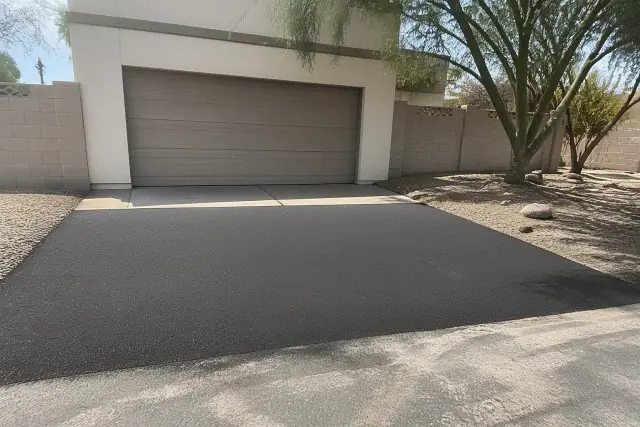
Full-depth replacement is the responsible choice when alligator cracking, subgrade movement, or chronic drainage damage shows that the foundation has failed. The work includes removing the pavement and base, excavating as needed, placing new base material, compacting it, and disposing of the old asphalt.

Request Estimate

Patching and Sealcoating

Patching and sealcoating in Tempe, AZ

Targeted patching paired with sealcoating can buy a few additional years when full resurfacing is not feasible this season. It is not a permanent answer for widespread structural damage, but early crack sealing and sealcoating every 2 to 3 years can slow UV oxidation and water intrusion.

Request Estimate

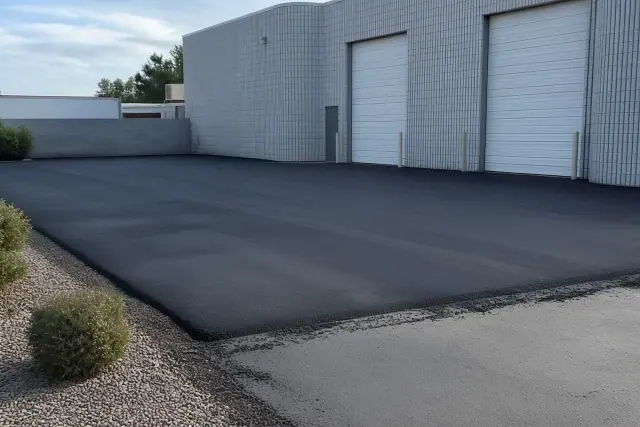
Industrial Asphalt Paving

Industrial asphalt paving in Tempe, AZ

Warehouse and distribution pavement around the Tempe and Guadalupe industrial corridor must handle repeated heavy truck loads without rutting. We assess axle loads and traffic frequency before recommending industrial sections that are often 3 to 4 inches thick with stronger base preparation.

Request Estimate
Match the Work to the Pavement

Asphalt Resurfacing Options

The right option depends on more than the appearance of the top layer. We compare base integrity, cracking, drainage, existing thickness, access, traffic frequency, axle loads, and the preparation required before deciding between an overlay, milled resurfacing, or replacement.

Residential driveways in Tempe, AZ

Residential Driveways

Residential work ranges from single-family driveways near Kiwanis Park to properties in Corbell and South Tempe near Kyrene. Square footage, base condition, milling, drainage corrections, access, and the required asphalt thickness determine the final estimate.

  • A standard single-car driveway resurfacing project typically runs $600 to $2,000
  • Most residential resurfacing jobs fall between $1,500 and $3,000
  • Larger double-wide driveways can reach $3,000 or more
  • A 20x20 driveway covers 400 square feet and commonly falls between $600 and $1,600
  • Driveways needing milling or extensive crack repair cost more than straightforward overlays
Request Estimate
Commercial and public pavement in Tempe, AZ

Commercial and Public Pavement

Commercial lots near Tempe Marketplace and the Elliot Road corridor may price toward the upper end because of traffic volume, drainage, mobilization, and striping. University and municipal work near Arizona State University follows public bid specifications and MAG standard details; Tempe's active street paving and road improvement program runs through 2028.

  • Commercial lots up to 20,000 square feet generally run $10,000 to $50,000
  • Roadway resurfacing is typically listed at $150,000 to $1,000,000 per mile
  • Parking lots commonly use a 2 to 3 inch asphalt layer for heavier traffic
  • Commercial scopes may include milling, drainage correction, striping, and fire lane markings
  • Striping is scheduled during low-traffic hours after the pavement has fully cured
Request Estimate
Direct asphalt overlay in Tempe, AZ

Direct Asphalt Overlay

A direct overlay makes sense only when the old pavement provides a sound, even foundation for the new layer. It avoids milling and extensive base repair, but it cannot correct structural movement or failed drainage below the surface.

  • Best suited to minor surface cracking
  • Requires a structurally sound base
  • Depends on drainage that already functions properly
  • Uses less preparation than milled resurfacing
  • Can reflect underlying defects through the new layer within a year or two when used on unsuitable pavement
Request Estimate
Milled asphalt resurfacing in Tempe, AZ

Milled Asphalt Resurfacing

Milled resurfacing removes the deteriorated top layer before new asphalt is placed. This creates room to correct uneven areas and complete the cleaning, crack work, drainage corrections, and edge preparation needed for a durable new wear surface.

  • Mill damaged or uneven surface material where needed
  • Remove debris and vegetation from open cracks
  • Repair cracks and failed areas before paving
  • Correct slope grading so water moves off the pavement
  • Place and compact new hot mix asphalt over the prepared base
Request Estimate
Full pavement replacement in Tempe, AZ

Full Pavement Replacement

Replacement starts over when the base or subgrade can no longer support resurfacing. It costs significantly more because the scope goes below the wear layer, but it avoids placing new asphalt over a foundation that will continue to move or hold water.

  • Used for widespread alligator cracking and structural fatigue
  • Addresses failed subgrade rather than covering it
  • Includes excavation where damaged material must be removed
  • Adds and compacts new base material
  • Includes removal and disposal of the old pavement
Request Estimate
Finding Your Right Fit

Choosing the Right Resurfacing Approach

We choose the approach after evaluating what is happening below the visible damage. Minor cracks over a stable base may allow an overlay, a worn or uneven surface may need milling and resurfacing, and structural fatigue or failed drainage may require replacement.

Base-First Site Assessment

Every recommendation begins with a site inspection of base integrity, drainage flow, cracking, and existing pavement thickness. We measure thickness against MAG specifications before quoting so a resurfacing estimate is not built on a failed foundation.

Desert-Climate Materials

Our resurfacing work uses hot mix asphalt batched for the compaction and thickness demands of Arizona's climate. Binder selection is suited to desert heat, and recycled asphalt pavement is integrated where appropriate rather than treated as a one-size-fits-all requirement.

Licensed and Insured Crews

Tempe Asphalt crews are licensed through the Arizona Registrar of Contractors and carry the insurance coverage required for the residential, commercial, industrial, and municipal asphalt projects described on this page. That foundation supports work throughout Maricopa County.

What Sets Us Apart

Why Choose Tempe Asphalt for Resurfacing

We recommend the least extensive option that fits the base condition, drainage, surface damage, and traffic load. That may be a lower-cost overlay, a prepared resurfacing project, targeted patching and sealcoating, or full replacement when the subgrade has failed.

Request Free Estimate

Widespread Surface Cracking

Cracks across more than 25 to 30 percent of the surface can signal that isolated repairs are no longer enough. If testing shows the base remains stable, resurfacing can replace the failed wear layer without removing the entire pavement section.

UV Oxidation and Raveling

Asphalt that fades from black to gray and sheds loose aggregate is losing binder to heat and UV exposure. This raveling leaves the surface increasingly brittle and more open to water infiltration during monsoon storms.

Standing Water and Poor Drainage

Water that remains after rain points to slope or drainage problems. Monsoon water entering brittle cracks can undermine the base course, so pooling and grading issues must be addressed before a new surface is placed.

Recurring Potholes

Potholes that return after patching often indicate that the wear layer has failed even when the base is still serviceable. A lasting patch requires cleaning, solid cut edges, and tack coat before new hot mix is placed; ragged, poorly prepared edges tend to separate.

Alligator Cracking and Base Failure

The interlocking pattern known as alligator cracking signals structural fatigue in the base layer, not a cosmetic surface defect. We test the base before recommending resurfacing because widespread subgrade failure calls for full replacement.

Accelerated Desert Aging

Asphalt lifespan in the Phoenix metro often runs 12 to 18 years compared with 15 to 20 years in milder regions. Properties that skip maintenance can show surface deterioration within 5 to 7 years as heat, oxidation, and monsoon water work through unsealed cracks.

How It Works

Our Asphalt Resurfacing Process

Resurfacing is a sequence of inspection, preparation, placement, compaction, and curing. Skipping the base, drainage, or surface-preparation steps is why many low-cost resurfacing jobs fail within two or three years.

01.

Pavement Inspection

We inspect base integrity, drainage flow, existing thickness, and the extent and pattern of cracking. Existing asphalt thickness is measured against MAG specifications before we decide whether the property is suited to an overlay, resurfacing, or replacement.

02.

Milling and Surface Cleaning

Where the surface is uneven or badly worn, we mill off the damaged top layer. Debris and vegetation are cleaned from cracks so repairs and the new asphalt layer bond to a stable, prepared surface.

03.

Crack, Patch, and Drainage Preparation

We repair cracks and failed areas, cut patch edges back to sound pavement, and use tack coat where new hot mix must bond to existing asphalt. Drainage and slope grading are corrected so water moves away instead of pooling on or beside the pavement.

04.

Hot Mix Asphalt Placement

Hot mix asphalt is applied at the temperature and thickness required for the project. Residential driveways typically receive 1.5 to 2 inches, commercial lots 2 to 3 inches, and industrial pavement may require 3 to 4 inches for repeated heavy loads.

05.

Immediate Roller Compaction

Rollers compact the new asphalt immediately after placement. Proper compaction reduces the voids that allow premature raveling and water infiltration while helping the finished layer meet the selected thickness and performance requirements.

06.

Curing and Traffic Reopening

Fresh asphalt needs 24 to 48 hours before foot traffic and typically 3 to 5 days before vehicle traffic, depending on temperature and humidity. Full cure to maximum hardness takes 6 to 12 months, so avoid repeated parking in one spot and dragging kickstands or jack stands during the first season.

Free Site Estimate

Schedule an Asphalt Resurfacing Estimate

Request a free asphalt paving estimate and we will walk the site, assess the base and drainage, and explain whether overlay, resurfacing, patching, or replacement fits the pavement. The estimate accounts for square footage, thickness, preparation, access, and any drainage or edge work.

Resurfacing Help

Asphalt Resurfacing FAQs

These answers cover the condition, cost, thickness, maintenance, and reopening questions Tempe property owners commonly ask before resurfacing. Call Tempe Asphalt when you need a site-specific recommendation based on the actual base and drainage conditions.

Call Tempe Asphalt

Resurfacing is the better value when the subgrade is stable and the damage is limited to the surface layer, because it can add another 8 to 15 years without full removal. Replacement is necessary when extensive alligator cracking, failed drainage, or subgrade damage has compromised the foundation. We test the base before recommending either option.

A 20x20 driveway covers 400 square feet. At typical Tempe resurfacing rates of $1 to $4 per square foot, the stated project range is $600 to $1,600. Base condition, thickness, milling, drainage corrections, and edge work determine the final estimate.

Yes, when the existing pavement is even, the base is structurally sound, and drainage works properly. This direct-overlay approach skips milling and extensive base repair. Significant cracking, settlement, or poor drainage can reflect through the new layer within a year or two.

No. An overlay places new hot mix directly over sound existing pavement without milling, while resurfacing typically mills off the damaged top layer and includes more extensive preparation. Overlay costs less, but resurfacing is better suited to uneven or more heavily cracked surfaces.

Hot mix asphalt needs ambient and ground temperatures above roughly 50 degrees Fahrenheit for proper bonding and compaction. Tempe rarely gets cold enough to interrupt paving, while extreme summer surface heat creates the more common concern about cooling before early traffic.

Yes, if the failed area is cleaned, cut back to solid square or rectangular edges, and prepared with tack coat before hot mix is placed. Skipped preparation and ragged edges are common reasons patches separate prematurely.

Resurfaced asphalt in the Tempe area typically lasts 8 to 15 years when the base is sound. Sealcoating every 2 to 3 years and prompt crack repair help limit UV oxidation and monsoon water intrusion. Pavement without maintenance may begin deteriorating within 5 to 7 years.

Early crack sealing and sealcoating are the lowest-cost ways to slow damage before full resurfacing is needed. For a driveway that already has widespread cracking, a direct overlay is usually the least expensive resurfacing option if the base remains sound and drainage is working.

Look for widespread surface cracking, raveling or loose aggregate, fading from black to gray, recurring potholes, and standing water after rain. Cracks across more than 25 to 30 percent of the surface may support resurfacing when an inspection confirms that the base is stable.

Tempe-area asphalt resurfacing typically runs $1 to $4 per square foot. Most residential jobs fall between $1,500 and $3,000, while commercial pricing also reflects mobilization, milling depth, drainage work, restriping, and traffic requirements.

Residential driveways typically use 1.5 to 2 inches of hot mix asphalt, while commercial lots commonly use 2 to 3 inches. Industrial pavement carrying repeated heavy truck traffic may need 3 to 4 inches after axle loads, traffic frequency, and base strength are evaluated.

Allow 24 to 48 hours before foot traffic and typically 3 to 5 days before vehicle traffic, depending on temperature and humidity. Full cure to maximum hardness takes 6 to 12 months, so avoid repeated parking in the same spot and dragging kickstands or jack stands during the first season.

Sealcoating every 2 to 3 years after resurfacing helps protect the new surface from UV oxidation and monsoon water. Prompt crack repair is also important because open cracks allow moisture to reach the base course.