Wait Before Driving
Keep the surface clear for the first 24-48 hours and wait at least 72 hours before driving in moderate weather. Tempe's summer heat can extend the driving wait to 4-5 days.
Tempe Asphalt paves and maintains driveways across the Valley, including homes near Arizona State University and properties along Rural Road and Southern Avenue. New asphalt remains vulnerable to heat, parked weight, sharp objects, chemicals, and standing water while it cures, so simple early mistakes can appear as ruts, edge cracks, and stains within the first season. The safest approach is to respect the traffic and sealcoating timelines below.
Keep the surface clear for the first 24-48 hours and wait at least 72 hours before driving in moderate weather. Tempe's summer heat can extend the driving wait to 4-5 days.
Pavement temperatures in Tempe can exceed 140°F between June and August, allowing parked tires and concentrated axle weight to leave ruts. Delay parking, avoid sharp tire turns, and keep heavy vehicles off the new surface.
Never sealcoat within the first 30 days. Wait 6-12 months so volatile oils can escape and the binder can harden instead of trapping moisture beneath a premature coating.
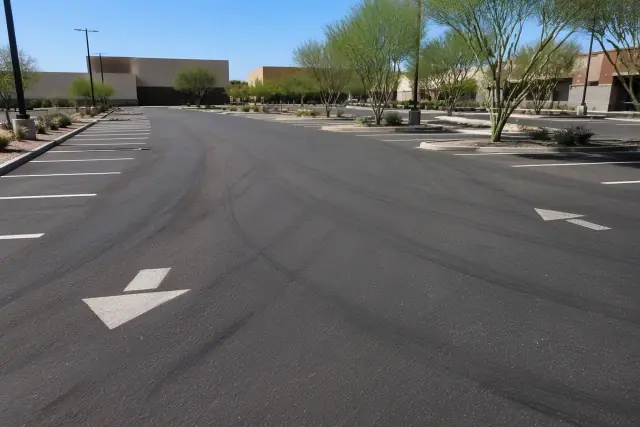
Tire scuffs from sharp turns beside a depression left by a vehicle parked in one place. These marks are most likely while the mat remains soft.
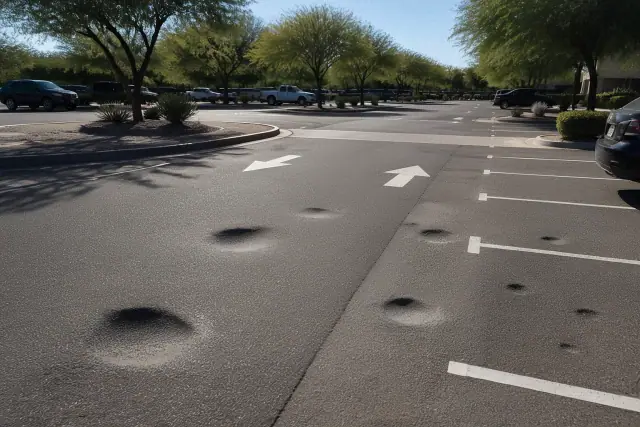
How a kickstand, folding chair leg, high heel, or dropped tool concentrates weight into a small area. A close comparison should make the resulting puncture or depression easy to recognize.
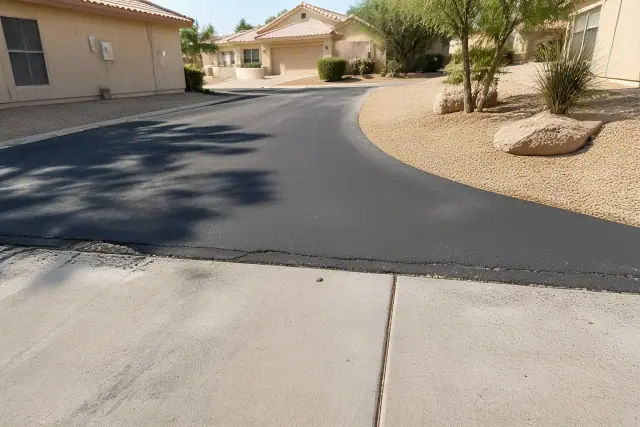
A driveway edge without adequate lateral support, with a tire path and water entering a small crack. This illustrates why edge driving, sprinkler overspray, and monsoon moisture can widen early damage.
Avoid activity for the first 24-48 hours, especially sharp heels and point loads. Wait a minimum of 72 hours before driving a light passenger vehicle.
Use the 4-5 day driving window in peak heat, wait 5-7 days before parking, and avoid heavy vehicles for 2-3 weeks. Rotate parking positions during the first month.
The surface firms considerably within 30 days, but binder oxidation continues through the first year. Schedule the first sealcoat between 6 and 12 months after installation.
Keep vehicles off a new sealcoat for its typical 24-48 hour curing period, allowing longer in humid monsoon conditions. Reapply sealcoat every 2-3 years to maintain UV and moisture protection.
| Time After Paving | Avoid | Safer Approach |
|---|---|---|
| First 24-48 hours | Traffic and sharp heels | Keep the surface clear while initial compaction sets. |
| At least 72 hours | Vehicle traffic | Wait longer if the weather is hot, then drive straight without sharp turns. |
| Days 4-5 in peak summer | Early driving on heat-softened asphalt | Use the longer waiting window before moving a light passenger vehicle. |
| First 5-7 days | Parking in one place | Delay parking and avoid sustained weight. |
| First 2-3 weeks | RVs, trailers, and heavy trucks | Keep concentrated axle loads off the curing mat. |
| First month | Repeated parking in one spot | Rotate parking positions and avoid the hottest afternoon hours. |
| First 6-12 months | Premature sealcoating | Let the binder oxidize and harden before the first sealcoat. |
| After sealcoating | Vehicle traffic for 24-48 hours | Let the coating cure, then plan to reseal every 2-3 years. |
Curing happens in two phases: initial compaction hardening over the first week, followed by slow binder oxidation over 6-12 months. The MAG Standard Specifications for Public Works Construction used throughout Maricopa County set installation density and compaction targets, but even properly compacted asphalt remains pliable under sustained weight while new. Arizona's dry climate can speed surface firming compared with humid regions without eliminating the full curing window.
The first 10 days after paving carry the greatest risk from simple mistakes, and the first two weeks deserve extra caution. During summer, avoid heavy activity from 1 p.m. to 5 p.m., when the surface is hottest; the first summer may still produce temporary shoe imprints or tire scuffs. Parking is harder on fresh asphalt than driving because weight stays in one place, while unsupported edges, tree roots, sprinkler overspray, and monsoon water create separate cracking risks. Freeze-thaw cycling and de-icing salt are minor concerns on most Tempe driveways compared with UV exposure and moisture intrusion.
Can water cool new asphalt? A light spray can temporarily reduce surface temperature, but do not drench the driveway or leave standing water. What should you do about hairline or edge cracks? Keep roots and sprinkler overspray away, document the damage, and have it evaluated before monsoon water moves beneath the surface. What substances should stay off the driveway? Keep oil, gasoline, antifreeze, pool acid, fertilizer chemicals, and other spills away because they can soften the binder or cause permanent stains.
Share the installation date, recent weather, vehicle type, and any ruts, scuffs, stains, or cracks you have noticed. A local paving team can help assess the surface and explain the appropriate curing, repair, or maintenance next action.