Clean the Surface
Sweep leaves, sand, gravel, and dust monthly so they do not trap moisture. Treat oil and rust stains with a degreaser before they soak into the porous surface.
At Tempe Asphalt, routine asphalt maintenance in Tempe centers on cleaning, prompt crack repair, sealcoating, and inspection. Those steps protect driveways and parking lots from UV oxidation, standing monsoon water, petroleum spills, and heat-related stress before small defects become structural failures.
Sweep leaves, sand, gravel, and dust monthly so they do not trap moisture. Treat oil and rust stains with a degreaser before they soak into the porous surface.
Fill new cracks before monsoon water reaches the base, and patch localized damage while it is still repairable. Cracks wider than 1/4 inch should use a rubberized crack filler rated to ASTM D6690.
Sealcoating renews resistance to UV exposure, oil, and gasoline while restoring the dark finish. Pair that 2- to 3-year cycle with a spring inspection and another walk-through after monsoon season.
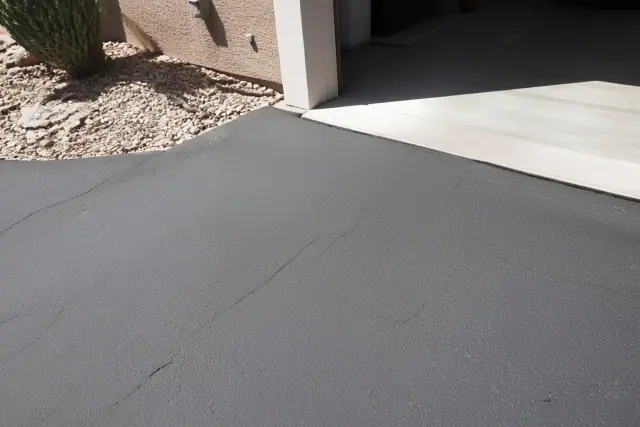
A faded gray surface with fine cracks shows that sunlight has dried out the flexible binder. This is the stage when sealing and prompt crack treatment can help prevent deeper water damage.
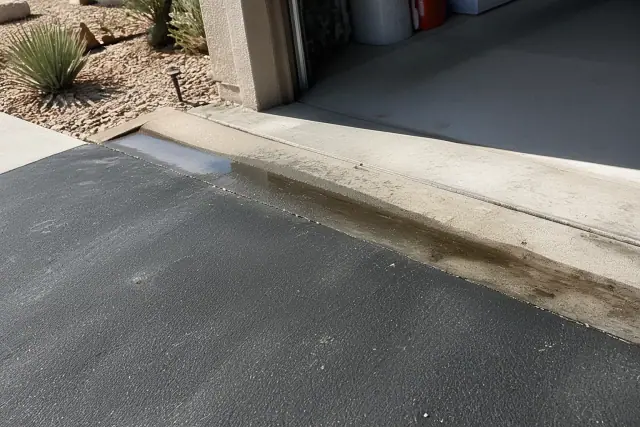
Water collecting along a curb, garage apron, or concrete transition after a storm. These edges and joints often crack first, allowing runoff to saturate the base.
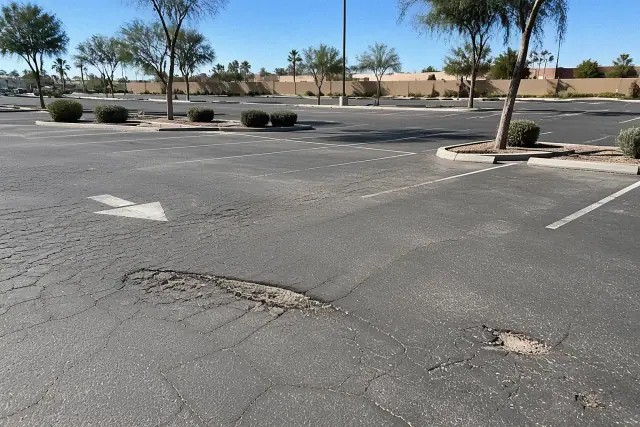
A comparison should show how interconnected cracks, low spots, and potholes differ from an isolated surface crack. Those patterns can point to saturated or weakened base material that needs evaluation before repair.
Walk the pavement in spring and again after monsoon season. Look at cracks, edges, joints, low spots, drainage near curbs or slabs, and any areas that stay wet.
Full-sun exposure, traffic volume, heavy vehicles, base condition, and drainage all affect maintenance timing. Parking lots also need closer attention to oil spots and joints around drains.
Clean petroleum spills immediately and address cracks within days. Sinking areas, crumbling edges, potholes, or widespread alligator cracking deserve an inspection before more vehicle traffic compresses a weakened base.
Do not hold a pressure-washer nozzle in one spot or exceed 3,000 PSI, and do not wash old sealant without a resealing plan. A deeper wash once or twice a year is enough when routine sweeping keeps debris under control.
| Surface Condition | Maintenance Response | Timing or Typical Cost |
|---|---|---|
| Debris, dust, or fresh petroleum spills | Sweep the surface and treat oil or gasoline promptly. | Sweep monthly; clean spills immediately. |
| New cracks, especially over 1/4 inch wide | Use an appropriate crack filler; ASTM D6690-rated rubberized filler is specified for wider cracks. | Act within days; crack repair runs $1 to $3 per linear foot. |
| Fading, gray color, or exposed binder | Sealcoat after cleaning and completed crack repairs. | Every 2 to 3 years, or sooner with full-sun exposure. |
| Localized sinking, crumbling edges, or potholes | Inspect the base and patch the damaged area. | Repairs run $2 to $5 per square foot, depending on base damage. |
| Widespread alligator cracking or an aged surface | Evaluate resurfacing or a milling and overlay. | $3 to $10 per square foot; often considered around the 15- to 20-year range. |
Asphalt needs four recurring forms of care: cleaning, crack sealing, sealcoating, and inspection. Because localized damage can often be filled, patched, or sealed without replacing the whole surface, scheduled preservation can make the difference between a surface lasting 15 years and one reaching 30 years; a typical well-maintained Tempe driveway falls in the 15- to 20-year range. The City of Tempe's Pavement Management Program follows the same general preservation logic on public roadways by scheduling crack sealing and resurfacing before reactive full-depth repair is required.
Tempe summer pavement temperatures regularly exceed 140 degrees, with thermal cycling between 145-degree pavement surfaces in July and 40-degree overnight lows in winter. That heat and intense UV exposure dry the binder; unsealed asphalt can lose flexible oils within 2 to 3 years, and a driveway that skips sealcoating can show significant oxidation and cracking within 5 to 7 years. Monsoon downpours can drop inches of rain in an afternoon, while tree roots, repeated heavy-vehicle parking, and clay-heavy soil around the Kyrene corridor and South Tempe can compound drainage or deformation problems; freeze-thaw cycling is a minor factor because hard freezes are rare.
Pressure washing is safe when kept under 3,000 PSI, the nozzle is not concentrated on one spot, and resealing follows the wash. Asphalt is generally straightforward to maintain because surface damage is often localized, but alligator cracking and depressions can indicate base failure that needs professional evaluation. Resurfacing commonly falls around 15 to 20 years; neglected pavement with widespread cracking may need it in as little as 10 to 12 years, while consistent sealing and patching can move a commercial lot from an overlay around year 10 toward 20 years of service. For driveways, adequate base compaction at installation and sealcoating every 2 to 3 years are the two biggest factors in reaching the upper end of the expected lifespan.
An on-site inspection can distinguish surface wear from base or drainage problems, so the maintenance plan matches the pavement's actual condition instead of a generic timeline.