Crack Sealing and Filling
These focused treatments address cracks while the surrounding asphalt is still largely intact. The exact material and preparation depend on the crack's condition and movement.
Tempe Asphalt explains the main asphalt repair categories so the visible damage can be matched to an appropriate scope. Common approaches include crack sealing or filling, localized patching, resurfacing, and full-depth repair or replacement.
These focused treatments address cracks while the surrounding asphalt is still largely intact. The exact material and preparation depend on the crack's condition and movement.
Patching concentrates repair on a pothole, depression, or other defined failed area. Some patches address only the surface, while deeper patches remove damaged material before rebuilding the area.
Resurfacing places a new wearing layer across a broader area when the support below remains suitable. Full-depth work reaches deeper failed asphalt or supporting material when a surface-only treatment would not address the cause.
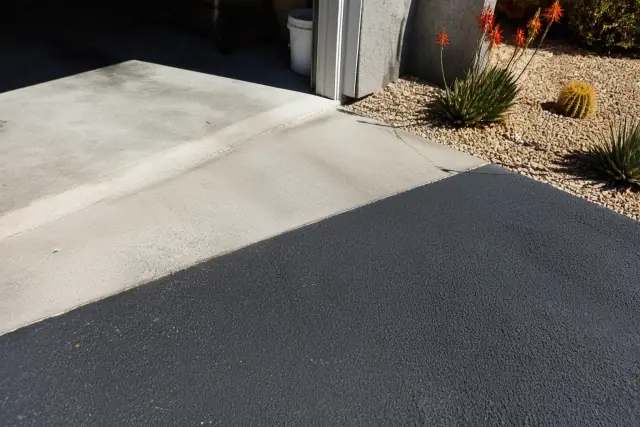
Distinct cracks with otherwise continuous pavement around them. This helps separate a focused crack treatment from repair of a fully failed area.
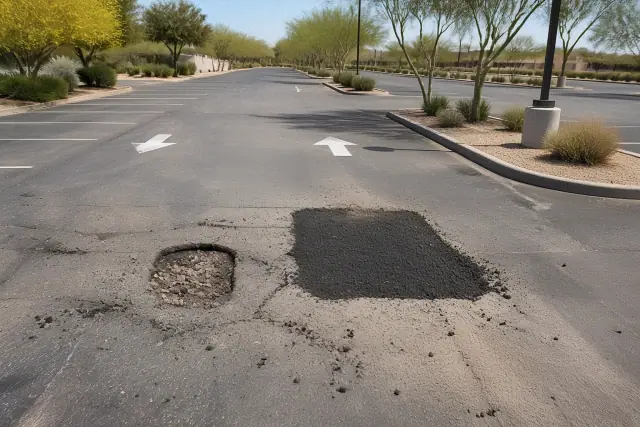
A defined damaged area beside sounder surrounding pavement. The edge, depth, and material below the opening help illustrate why patch scope can vary.
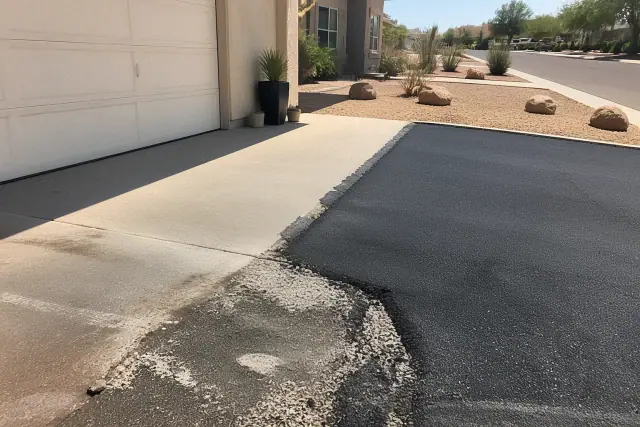
Pavement layers in cross-section, with resurfacing limited to the upper layer and full-depth work extending lower. The comparison makes the difference in scope visible.
Crack sealing or filling may fit when the opening is limited and nearby pavement remains stable enough for a focused treatment.
A patch may fit a pothole or localized failed area, with the repair depth chosen according to how far the deterioration extends.
Resurfacing may be considered when deterioration is broad but the pavement's underlying support remains suitable for a new wearing layer.
Full-depth repair or replacement may be needed when failed asphalt or supporting material below the surface must be removed and rebuilt.
| Repair Approach | Typical Condition | Scope |
|---|---|---|
| Crack sealing or filling | Narrow openings with surrounding pavement still largely intact | Treats the crack and limits further intrusion |
| Localized patching | Potholes or isolated failed areas | Removes or fills damage in a defined area |
| Resurfacing | Widespread surface wear over pavement that remains supportable | Renews a broader wearing surface |
| Full-depth repair or replacement | Damage extending through the asphalt or into supporting layers | Addresses failed material below the surface |
The repair types differ mainly in area and depth. Crack treatments focus on individual openings, patches rebuild defined failed spots, resurfacing renews a broader top layer, and full-depth work addresses deterioration beneath the visible surface.
The visible symptom is only the starting point. The spread and depth of deterioration, the condition of nearby pavement, drainage or water intrusion, and the stability of supporting layers all influence whether a focused treatment or broader reconstruction is appropriate.
Is patching the same as resurfacing? No: patching treats a defined damaged area, while resurfacing renews a broader surface. When is full-depth repair considered? It becomes relevant when the failure extends below the top asphalt layer or the supporting material no longer provides a sound base.
Describe the visible damage, where it appears, and whether it is spreading or recurring. An on-site evaluation can determine how deep the problem extends before a repair scope is selected.