Lower Upfront Cost
Asphalt generally requires less money at installation, making it the lower-cost choice when the immediate project budget matters most.
For Tempe homeowners comparing driveway materials, Tempe Asphalt explains the practical tradeoff: asphalt usually costs less to install, while concrete may cost less over a long ownership period. The right choice depends on budget, timeline, summer heat, monsoon runoff, and how long you expect to own the property.
Asphalt generally requires less money at installation, making it the lower-cost choice when the immediate project budget matters most.
Concrete's higher initial cost is spread across a longer typical lifespan and less frequent routine maintenance when the base, reinforcement, and joints are properly planned.
Asphalt often makes financial sense for a five- to seven-year plan, while concrete can close the cost gap when you expect to stay 15 years or longer.
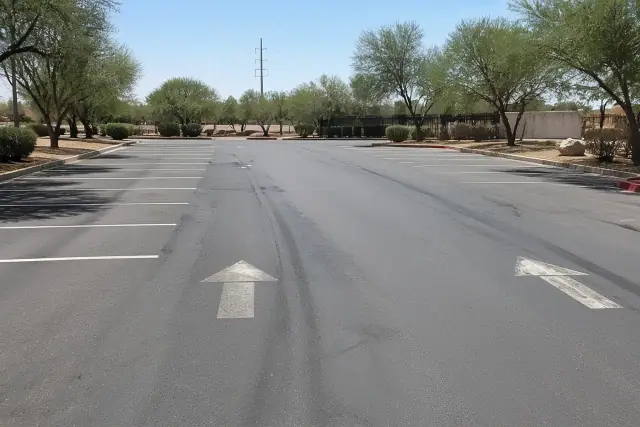
Asphalt under intense July and August pavement heat, when the surface can soften. This condition helps explain the value of UV protection and crack maintenance.
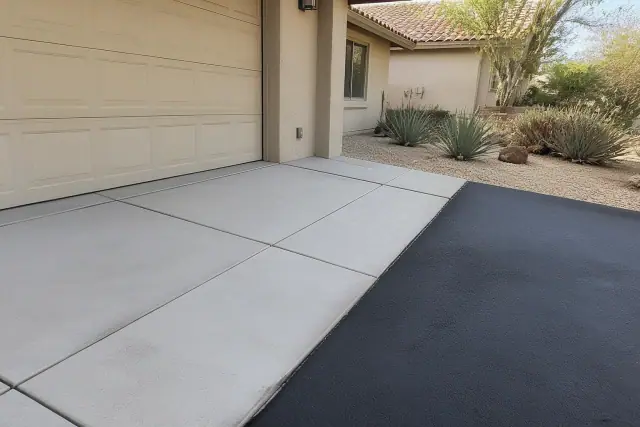
Reinforcement and properly placed joints in a concrete driveway. Those details help rigid concrete manage temperature swings and direct common expansion cracks.
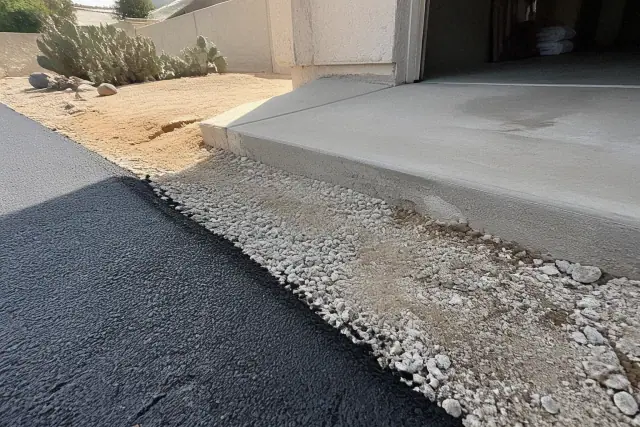
The driveway grade, monsoon runoff path, and prepared aggregate base. These site conditions can change the required scope before either material is installed.
National averages place a standard asphalt driveway just over $5,000 and a concrete driveway just under $6,500 installed.
For an average two-car, 600-square-foot footprint, asphalt typically totals $4,200 to $9,000, while concrete runs roughly $4,800 to $12,000.
Asphalt seal coating is typically recommended every 2 to 3 years in hot climates, while concrete sealing is generally needed only every few years.
Localized asphalt patching can extend service life by several years, and concrete spalls or control joints can often be repaired without replacing the entire driveway.
| Decision Point | Asphalt | Concrete |
|---|---|---|
| Install-day cost | $7-$15 per sq. ft.; usually lower upfront | $8-$20 per sq. ft.; finish and reinforcement can raise cost |
| Typical service life | 10-20 years | 30-40-plus years with proper base preparation |
| Ownership horizon | Often suits a five- to seven-year plan | Can pull ahead at 15 years or longer |
| 30-year view | More seal coating and earlier replacement can add cost | One life-cycle analysis found roughly 20% lower total expenditures |
The cheaper choice depends on whether you mean installation cost or total ownership cost. Asphalt tends to win at installation; on larger commercial driveway jobs, some budget-grade recycled asphalt product may fall near $3 to $4 per square foot. Concrete costs more upfront-especially with stamped or colored finishes-but its longer service life and less frequent routine attention can spread the cost over more years.
Square footage and shape set the basic material quantity, so a one-car driveway off the Kyrene corridor differs from a wide two-car driveway in South Tempe. The depth of aggregate base can change with expansive clay and caliche soils, while slope and drainage near washes or monsoon flow paths affect preparation. Finish, reinforcement, thickness, and whether an old surface must be torn out and disposed of also move the price. Driveway aprons tied to public right-of-way may require permitting through the City of Tempe Development Services Department.
How do the repair needs differ? Asphalt commonly needs crack filling, seal coating, and patches for potholes or alligator cracking, while concrete may need joint resealing, washing, or patches for spalled areas and hairline cracks. When does replacement affect the comparison? Across 20 or 30 years, asphalt may require one or two additional repaving cycles, and full replacement is close to the original per-square-foot installation price plus removal and disposal.
A free driveway estimate can account for square footage, slope, soil, base preparation, drainage, and the condition of the existing surface. Share your plans to compare both materials for the property before committing to a scope.