What Resurfacing and Replacement Mean
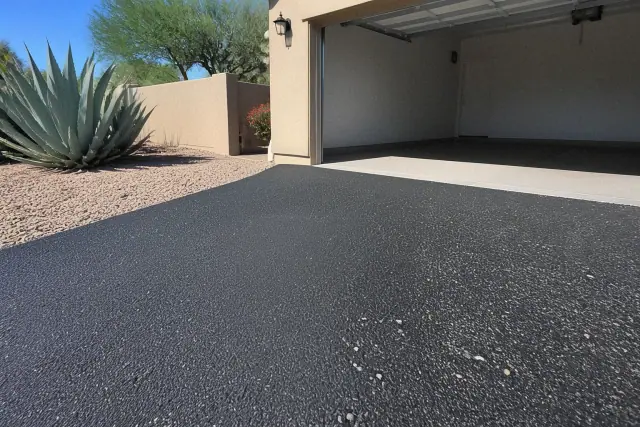
Resurfacing renews only the wearing course; replacement removes the pavement, corrects base or subgrade problems, and rebuilds the driveway from the foundation up. For replacement, subgrade compaction to Arizona Department of Transportation specification standards, positive drainage away from the garage and foundation, and smooth transitions at the apron or street address the causes beneath visible damage. Preparation can determine whether the finished work performs closer to 8 years or 20, while an overlooked base problem can contribute to failure in five years.
Factors That Change the Answer
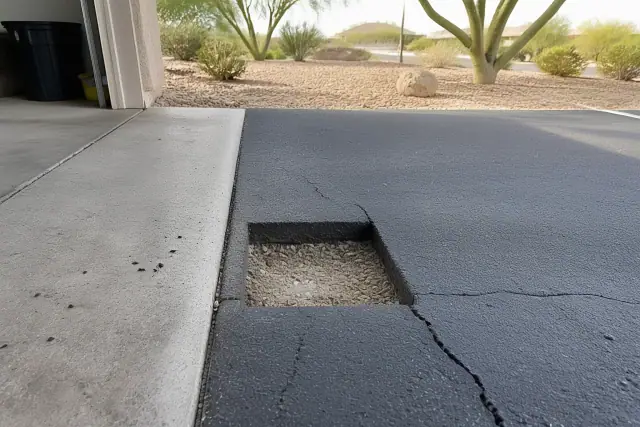
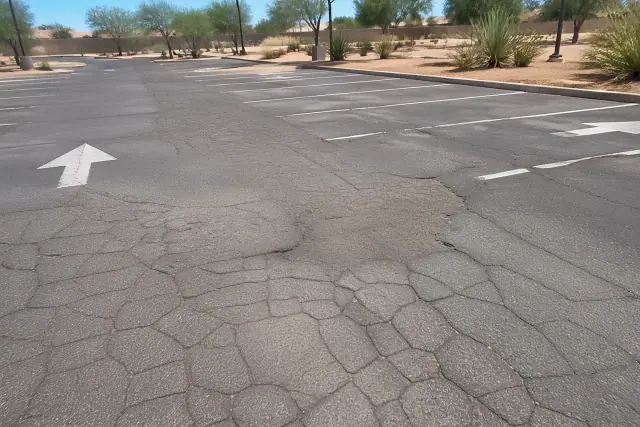
Driveway age, damage coverage and severity, base stability, drainage, access, excavation depth, heat exposure, and original compaction all change the recommendation. For an average two-car driveway, resurfacing is roughly $4,800 versus $7,200-plus for replacement; larger commercial or estate driveways can reach the tens of thousands. Hairline cracks and light oxidation over a stable base favor resurfacing, while soft spots, standing water, and widespread alligator cracking favor replacement.
Common Follow-Up Questions
Straightforward resurfacing on an existing residential driveway usually does not require a permit, while work that changes grading, drainage, or the right-of-way typically needs approval through the City of Tempe Development Services Department. Resurfaced pavement is usually drivable within 24 to 48 hours, while full replacement needs more time for demolition, compaction, and cure. Resurfacing is cheaper long-term only when the base is sound; otherwise the same movement can crack the overlay again in a year or two. A professional estimate should measure square footage and inspect surface coverage, edges, slope, drainage, and subgrade before providing a written cost breakdown.