3-to-4-Inch Baseline
The optimal range for most commercial driveways is 3 to 5 inches of compacted asphalt, with 3 to 4 inches covering most office, retail, and standard commercial use.
Tempe Asphalt typically specifies 3 to 4 inches of compacted hot mix asphalt over a properly built aggregate base for commercial driveways. The section should be increased for delivery trucks, dumpsters, and industrial traffic because an undersized design can develop rutting and alligator cracking long before replacement should be necessary.
The optimal range for most commercial driveways is 3 to 5 inches of compacted asphalt, with 3 to 4 inches covering most office, retail, and standard commercial use.
Repeated wheel loads matter more than vehicle labels: light passenger traffic can use the lower end of the range, while regular service vehicles, delivery trucks, and industrial traffic require progressively thicker pavement.
Confirm that the design states compacted asphalt depth separately from the aggregate base and accounts for soil bearing and drainage before paving begins.
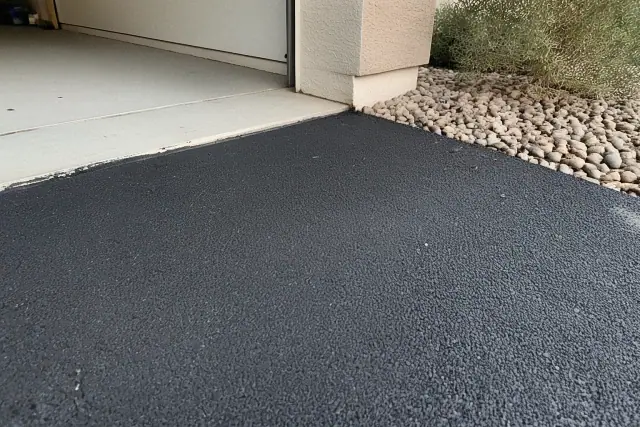
A pavement cross-section should distinguish the compacted asphalt lifts from the separate aggregate base beneath them. This prevents total pavement depth from being mistaken for asphalt thickness.
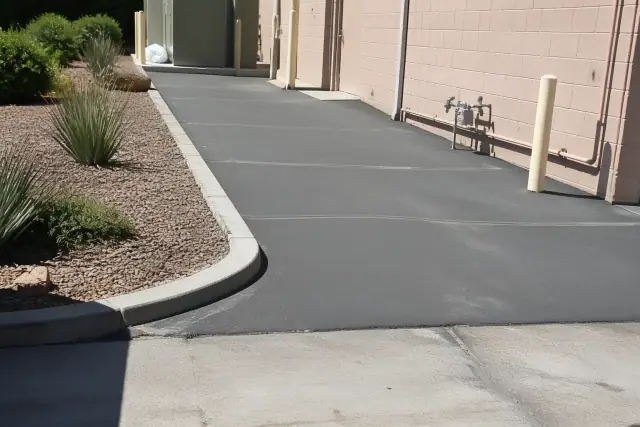
Compare a 3-inch light-duty office entry with a 4-inch delivery lane to show how repeated loading in the same wheel paths changes the design.
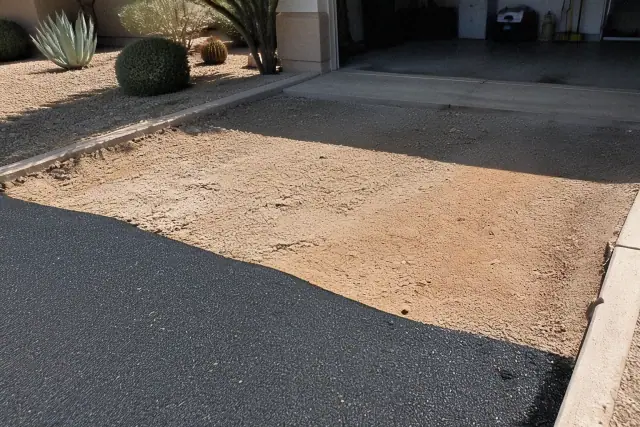
A properly compacted granular base over caliche hardpan with drainage away from the paved surface. This image helps make clear that subgrade preparation supports the asphalt above it.
Office and retail parking used mainly by sedans and light SUVs can use 3 inches of compacted asphalt over a 6-inch aggregate base.
A standard commercial driveway with mixed traffic generally uses 3 to 4 inches of compacted asphalt over 6 to 8 inches of aggregate base.
Routes exposed to recurring delivery and service vehicles generally need 4 inches of compacted asphalt over an 8-inch aggregate base.
Industrial and warehouse yards exposed to heavy trucks can require 4 to 8 inches of compacted asphalt over an 8- to 12-inch aggregate base.
| Commercial Use | Traffic or Load | Compacted Asphalt | Aggregate Base |
|---|---|---|---|
| Office or retail parking | Mostly passenger vehicles | 3 inches | 6 inches |
| Standard commercial driveway | Mixed daily traffic | 3 to 4 inches | 6 to 8 inches |
| Delivery or service route | Repeated commercial vehicles | 4 inches | 8 inches |
| Industrial or warehouse yard | Heavy truck traffic | 4 to 8 inches | 8 to 12 inches |
Thickness is the compacted depth of hot mix asphalt above the aggregate base, not the total pavement structure. A typical commercial section uses two asphalt lifts: a binder course and a wearing course. Because loose mix typically loses 20 to 25 percent of its depth during rolling, a quoted 4 inches should refer to the final compacted mat.
Vehicle weight, traffic frequency, soil bearing capacity, and monsoon drainage all influence the pavement section. A low-volume office driveway with 20 to 30 vehicle trips a day can use a lighter design than a retail center with several hundred daily trips; high-traffic lanes generally need at least 4 inches, while busy delivery areas may benefit from 4 to 5 inches over a thicker base. Tempe's caliche hardpan and summer surface temperatures that regularly exceed 150°F make compaction and paving-day timing critical. Stop-and-go loading near docks may also justify a stone matrix asphalt wearing course for added rut resistance.
Does the stated asphalt depth include the base? No-the aggregate base is a separate layer, commonly 6 to 8 inches for commercial driveways. Full-depth commercial asphalt paving in the Phoenix metro generally runs $4 to $10 per square foot depending on thickness and site preparation. Commercial work in Tempe is built to Maricopa Association of Governments (MAG) Standard Specifications and permitted through City of Tempe Development Services. For a true commercial parking lot in Tempe, the minimum described here is 3 inches of compacted asphalt over 8 inches of granular base; going thinner can risk failure under normal use within a couple of years.
Share the heaviest expected vehicles, daily traffic pattern, delivery routes, drainage concerns, and existing base conditions. A site-specific pavement section can then separate the required compacted asphalt depth from the aggregate base and account for Tempe conditions.