Tempe Lifespan Range
A residential driveway in Tempe typically lasts 12 to 18 years, while Arizona asphalt overall can fall within a broader 12 to 25-year range depending on exposure and construction.
Tempe Asphalt explains that a well-installed residential asphalt driveway can last 15 to 30 years, but Tempe's desert exposure often brings the practical range closer to 12 to 20 years. Installation quality, drainage, traffic, and maintenance timing determine where a driveway lands within that range.
A residential driveway in Tempe typically lasts 12 to 18 years, while Arizona asphalt overall can fall within a broader 12 to 25-year range depending on exposure and construction.
Sealcoating every 2-3 years and repairing cracks promptly can move a maintained surface toward 25-30 years.
Resurfacing can extend service life only when the base is sound. Full replacement resets structural life when base flex or returning potholes indicate deeper failure.
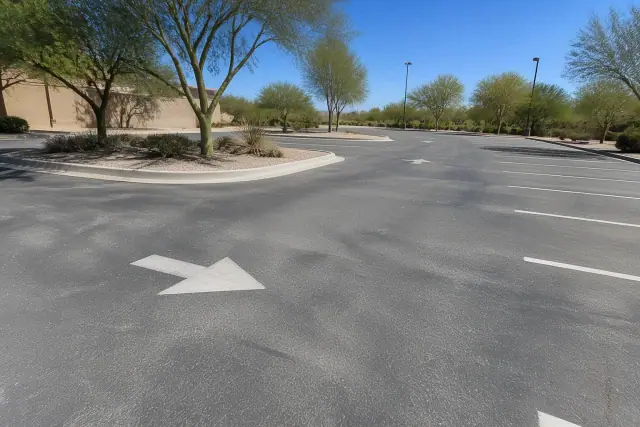
A Tempe driveway with a gray, brittle surface after sustained UV exposure from May through September. This image helps make early oxidation easy to recognize.
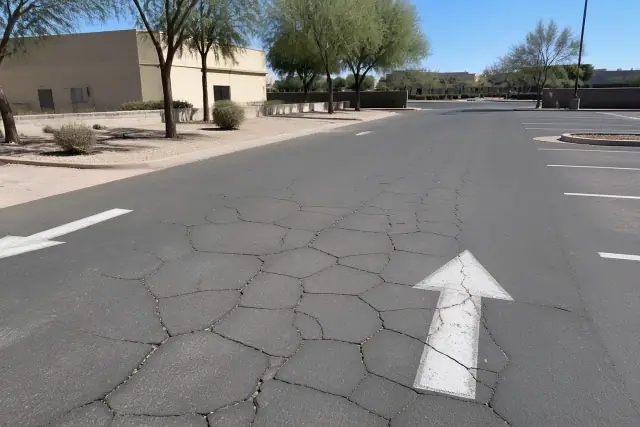
Interconnected cracking spreading across more than 25% of a driveway. This pattern helps distinguish structural replacement signs from an isolated repair area.
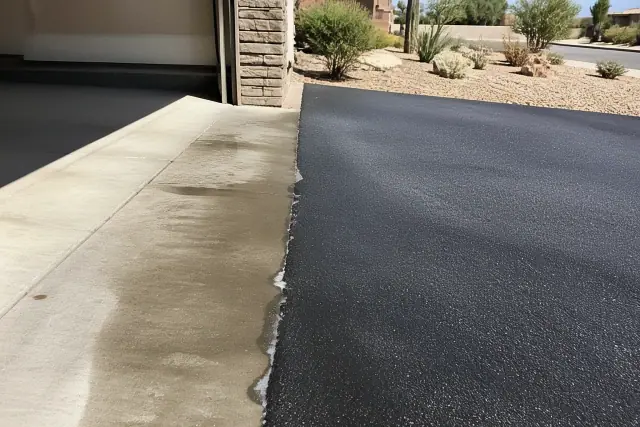
Water entering hairline cracks during the roughly July-through-September monsoon season. Moisture at the base can lead to potholes within a single wet season.
Pavement surface temperatures can exceed 140°F in July and August, accelerating oxidation and shortening the local service range.
The 20-year benchmark assumes standard subgrade preparation and 2-3 inches of hot mix asphalt. Compaction at 92-96% of laboratory density improves resistance to rutting and cracking.
Sealcoating and prompt patching can help one driveway outlast a comparable unmaintained surface by 5 to 10 years.
Delivery trucks, trailers, RVs, trailer jacks, and dumpsters can rut a residential-grade 2-inch section. Tempe's caliche-heavy soils and roughly 9 inches of annual rainfall make consistent slope and aggregate-base compaction to 95% density important.
| Surface Type | Typical Lifespan |
|---|---|
| Residential driveway | 12-20 years |
| Commercial parking lot | 10-15 years |
| Highway / major road | 15-25 years |
| Walkway / bike path | 8-15 years |
Nationally, 20 years is a realistic benchmark for a properly installed residential driveway that receives sealcoating and crack repair every 2 to 3 years. Tempe's UV exposure and summer pavement temperatures often pull actual service life below the national 15-to-30-year range, so condition matters more than age alone. The City of Tempe collects citywide pavement condition data every three years, underscoring how regularly asphalt performance changes are assessed.
Mix design, compaction density, subgrade preparation, installation thickness, drainage, soil movement, maintenance frequency, and vehicle loads work together over time. Passenger vehicles are generally easier on a driveway than delivery trucks, trailers, or RVs, while trailer jacks and dumpsters create concentrated loads. Summer pavement above 115°F and sudden monsoon downpours add thermal expansion and moisture intrusion to those structural stresses.
How much can a driveway cost? A 20x20 (400 sq ft) installation is roughly $1,600-$3,200, depending on base work and access. When is paving best in Tempe? Fall through early spring avoids peak summer heat above 115°F. Can resurfacing replace full replacement? Only when the base is sound; returning potholes or base flex point toward replacement rather than another surface repair.
Share the driveway's age, visible cracking, drainage concerns, and vehicle loads so its condition can be evaluated before you choose crack repair, resurfacing, or replacement.